THE ADVENTURE COLLECTIVE® · Independent discovery and booking for outdoor travel

A 16-day overland pilgrimage from Kathmandu to Mount Kailash and Lake Mansarovar, blending high-altitude trekking, Tibetan plateau drives, and profound cultural encounters. Expect long drives, a challenging three-day kora (parikrama) and simple overnight accommodations.
A 16-day overland pilgrimage from Kathmandu to Mount Kailash and Lake Mansarovar, blending high-altitude trekking, Tibetan plateau drives, and profound cultural encounters. Expect long drives, a challenging three-day kora (parikrama) and simple overnight accommodations.
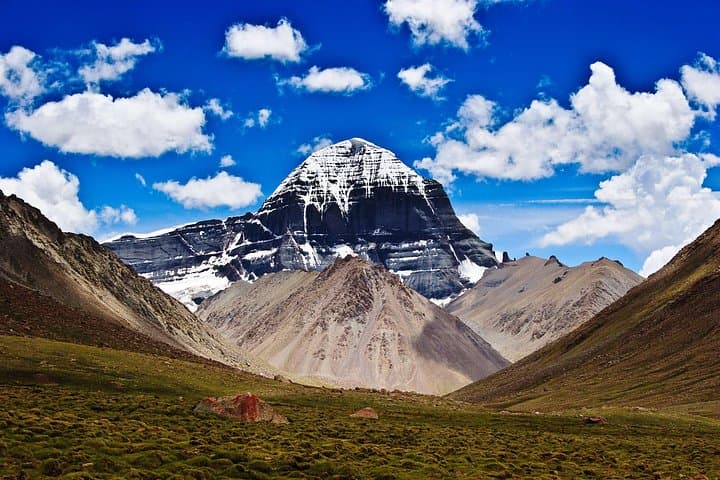
You step out of Kathmandu’s humid bustle into a vehicle that eats asphalt and climbs—hours thin into foothills, then into a high plain where prayer flags rattle like small, persistent conversations. By the time you see the first flattened silhouette of Mount Kailash, the air has a thinner, colder clarity that both sharpens the senses and quiets them.
Verified experiences and guided adventures in the surrounding area.
Operated by Kaleidoscopic Nepal · Darchen, Tibet Autonomous Region
You step out of Kathmandu’s humid bustle into a vehicle that eats asphalt and climbs—hours thin into foothills, then into a high plain where prayer flags rattle like small, persistent conversations. By the time you see the first flattened silhouette of Mount Kailash, the air has a thinner, colder clarity that both sharpens the senses and quiets them.
This overland pilgrimage traces routes carved by pilgrims for centuries: Kathmandu’s temple circuit and the border crossing at Kyirong, followed by the Tibetan plateau’s wide, wind-swept roads. Geologically, Kailash rises from the Transhimalayan ranges as a stark, four-sided massif of metamorphic rock—its isolated profile drawing Hindu, Buddhist, Jain and Bon traditions to perform the parikrama, a clockwise circumambulation said to purify karma. Local culture is austere and hospitable; nomadic yak camps and monastery courtyards offer glimpses of daily rituals and shared meals.
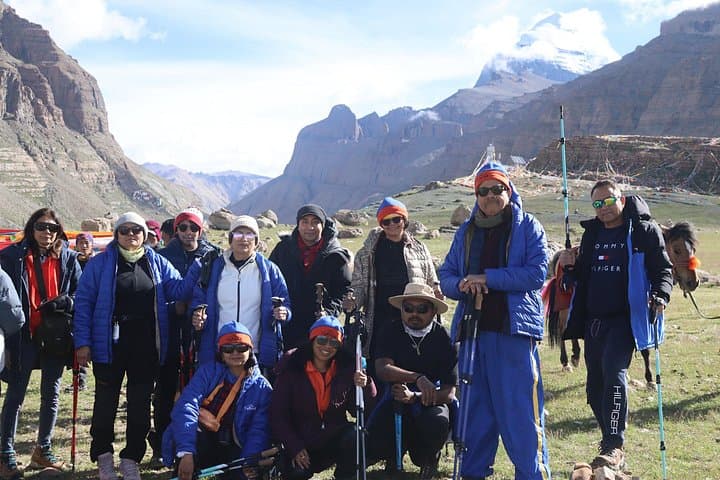
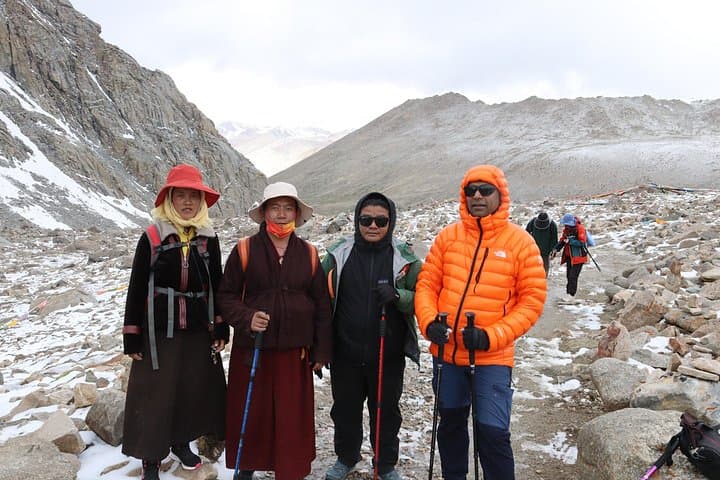
Expect long days on rough roads, high passes (Dolma La reaches roughly 5,600 m) and three days of walking totaling ~46 km with steep sections and scree. Nights are basic—dorm-style or simple guesthouses—and altitude demands respect: acclimatize, monitor oxygen and move deliberately. Practical gear: layered clothing, sturdy boots, poles, and a warm sleeping liner. Hydration and sun protection are non-negotiable; the plateau’s sun is relentless despite the cold.
Time your trip in late spring to early autumn for more stable weather. Travel with permits and a guide familiar with border formalities. The journey is equal parts physical challenge and reflective retreat—raw, elemental, and quietly exacting.
challenging.
15–16 days.
Good aerobic base and experience with multi-day high-altitude trekking recommended; ability to hike 15–25 km over mixed terrain in a day.
Yes—this itinerary includes Tibet entry permits and visa processing; booking requires passport details in advance and a minimum lead time for permit applications.
Dolma La and Darchen sit above 4,500 m; acute mountain sickness (AMS) is possible—monitor symptoms, hydrate, ascend slowly and use supplied oxygen if needed.
The three-day parikrama covers about 46 km with one high pass (~5,600 m); expect long hiking days on uneven terrain and cold winds—good fitness and prior trekking experience help.
Late spring through early autumn (May–September) offers more stable roads and milder temperatures, though summer monsoon may affect some stretches.
Mount Kailash has been a sacred peak for Hinduism, Buddhism, Jainism and Bon for millennia; pilgrims perform clockwise and anticlockwise circumambulations depending on tradition.
The plateau environment is fragile—minimize waste, use refillable water systems where possible, and follow local guidance to avoid disturbing pastures and wetlands.
Kaleidoscopic Nepal operates guided outdoor trips and adventures with an emphasis on safety, stewardship, and memorable experiences.
You step out of Kathmandu’s humid bustle into a vehicle that eats asphalt and climbs—hours thin into foothills, then into a high plain where prayer flags rattle like small, persistent conversations. By the time you see the first flattened silhouette of Mount Kailash, the air has a thinner, colder clarity that both sharpens the senses and quiets them.
You step out of Kathmandu’s humid bustle into a vehicle that eats asphalt and climbs—hours thin into foothills, then into a high plain where prayer flags rattle like small, persistent conversations. By the time you see the first flattened silhouette of Mount Kailash, the air has a thinner, colder clarity that both sharpens the senses and quiets them.
This overland pilgrimage traces routes carved by pilgrims for centuries: Kathmandu’s temple circuit and the border crossing at Kyirong, followed by the Tibetan plateau’s wide, wind-swept roads. Geologically, Kailash rises from the Transhimalayan ranges as a stark, four-sided massif of metamorphic rock—its isolated profile drawing Hindu, Buddhist, Jain and Bon traditions to perform the parikrama, a clockwise circumambulation said to purify karma. Local culture is austere and hospitable; nomadic yak camps and monastery courtyards offer glimpses of daily rituals and shared meals.
Expect long days on rough roads, high passes (Dolma La reaches roughly 5,600 m) and three days of walking totaling ~46 km with steep sections and scree. Nights are basic—dorm-style or simple guesthouses—and altitude demands respect: acclimatize, monitor oxygen and move deliberately. Practical gear: layered clothing, sturdy boots, poles, and a warm sleeping liner. Hydration and sun protection are non-negotiable; the plateau’s sun is relentless despite the cold.
Time your trip in late spring to early autumn for more stable weather. Travel with permits and a guide familiar with border formalities. The journey is equal parts physical challenge and reflective retreat—raw, elemental, and quietly exacting.