THE ADVENTURE COLLECTIVE® · Independent discovery and booking for outdoor travel

See tens of thousands of cranes wheel over the flooded plains of Izumi on a winter morning. This 6–7 hour private tour from Kagoshima pairs crane roost viewing with a stop at the volcanic Imuta Lake Ramsar site.
See tens of thousands of cranes wheel over the flooded plains of Izumi on a winter morning. This 6–7 hour private tour from Kagoshima pairs crane roost viewing with a stop at the volcanic Imuta Lake Ramsar site.
Dawn in Izumi arrives cold and clear; a low sun slices across flooded rice paddies and, for a moment, the plain is a slow-moving fog of wings. Tens of thousands of cranes gather on the west side of Kagoshima Prefecture, their silhouettes rising and falling like a living map of the season.
Verified experiences and guided adventures in the surrounding area.
Operated by Down South · Izumi, Kagoshima Prefecture
Dawn in Izumi arrives cold and clear; a low sun slices across flooded rice paddies and, for a moment, the plain is a slow-moving fog of wings. Tens of thousands of cranes gather on the west side of Kagoshima Prefecture, their silhouettes rising and falling like a living map of the season.
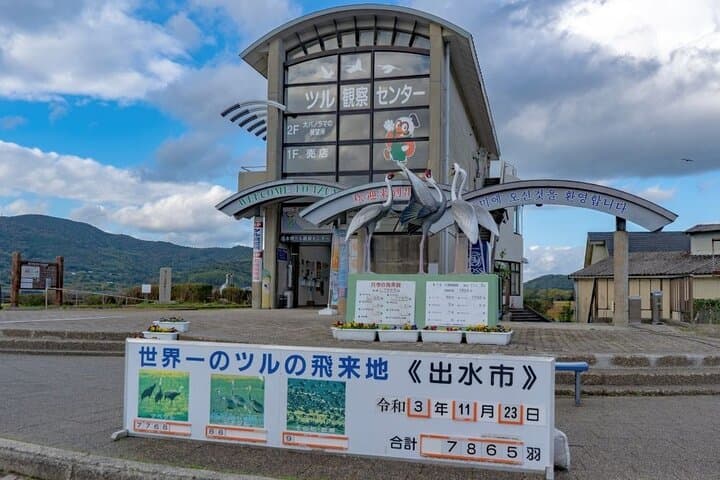
The Izumi migration is one of Japan’s most concentrated winter bird spectacles. Migratory patterns here have long shaped local life, and fields and observation platforms were adapted to protect roosting birds while allowing viewers close, respectful looks. Geologically, the nearby Imuta Lake—a 60-acre freshwater basin formed by volcanic activity roughly 300,000 years ago—adds variety to the itinerary, hosting swans and cormorants and recognized as a Ramsar site.
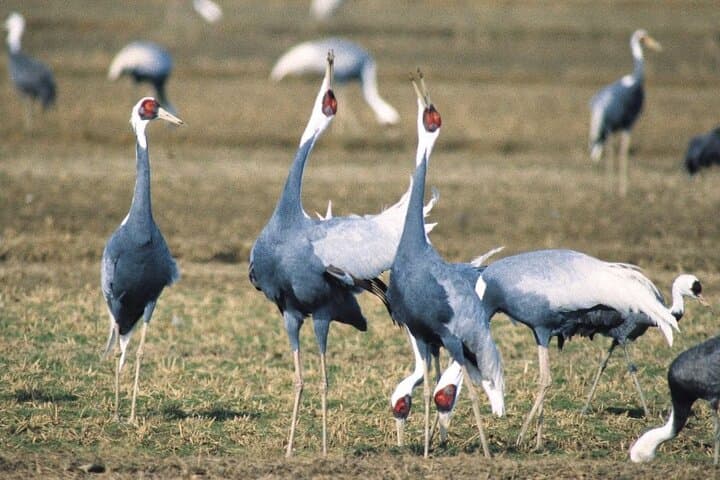
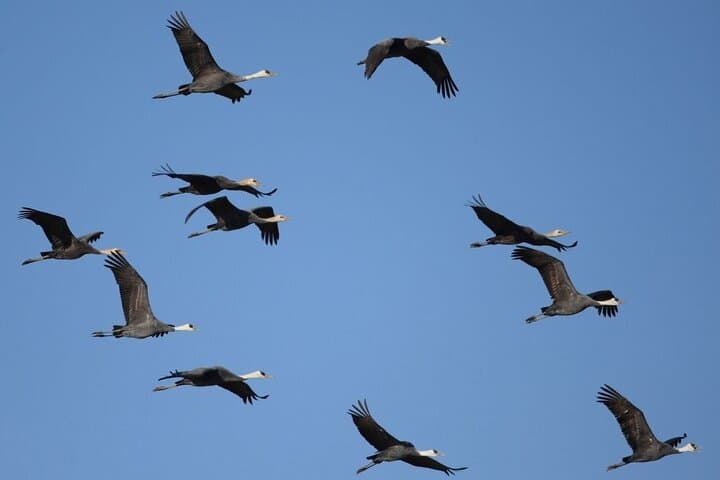
On a typical 6–7 hour day tour (private transport included) expect a roughly two-hour drive from central Kagoshima, a 90-minute viewing window at Izumi’s roosting grounds and a 60-minute stop at Imuta Lake on the return. Species most commonly seen are hooded and white-naped cranes; with luck you might spot rarer visitors.
Practical guidance: dress in warm layers, bring binoculars or a telephoto lens, and plan for early starts—crane activity is strongest at first light and dusk. Observation areas are largely flat with short walks from parking; the tour is suitable for most fitness levels. Keep voices low, follow guide instructions, and favor quiet photography—this is wildlife viewing that rewards patience and respectful distance.
easy.
6–7 hours.
Suitable for most fitness levels; minimal walking on flat ground and short distances to observation platforms.
Peak numbers occur in January, though the migration runs November through February; dawn and dusk are the most active viewing times.
The tour runs about 6–7 hours total with a roughly two-hour drive each way from central Kagoshima, including viewing stops at Izumi and Imuta Lake.
Observation platforms and parking areas are relatively flat and the tour is described as suitable for most fitness levels, but check pickup and specific accessibility needs with the operator ahead of booking.
Common sights include hooded and white-naped cranes; Imuta Lake hosts mute swans, cormorants, and other winter waterfowl.
Izumi has long been a seasonal staging ground for East Asian crane populations; communities and rice-field management evolved to accommodate and protect the wintering birds.
Imuta Lake’s Ramsar designation highlights its ecological value; visitors should minimize disturbance, pack out waste, and follow local guidance to protect feeding and roosting habitat.
Down South operates guided outdoor trips and adventures with an emphasis on safety, stewardship, and memorable experiences.
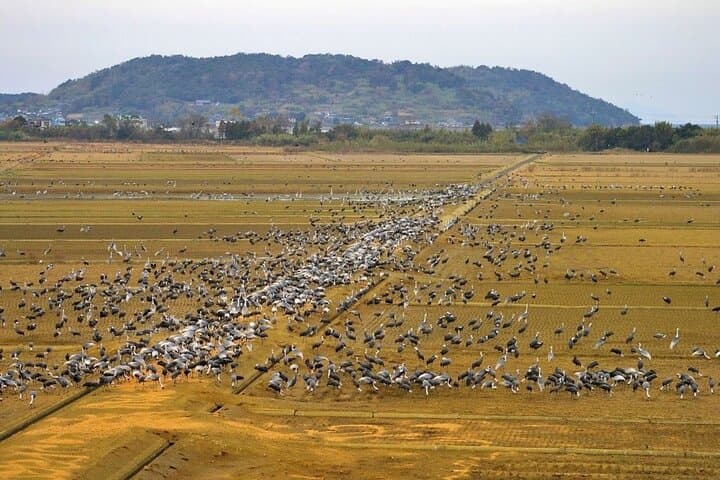
Dawn in Izumi arrives cold and clear; a low sun slices across flooded rice paddies and, for a moment, the plain is a slow-moving fog of wings. Tens of thousands of cranes gather on the west side of Kagoshima Prefecture, their silhouettes rising and falling like a living map of the season.
Dawn in Izumi arrives cold and clear; a low sun slices across flooded rice paddies and, for a moment, the plain is a slow-moving fog of wings. Tens of thousands of cranes gather on the west side of Kagoshima Prefecture, their silhouettes rising and falling like a living map of the season.
The Izumi migration is one of Japan’s most concentrated winter bird spectacles. Migratory patterns here have long shaped local life, and fields and observation platforms were adapted to protect roosting birds while allowing viewers close, respectful looks. Geologically, the nearby Imuta Lake—a 60-acre freshwater basin formed by volcanic activity roughly 300,000 years ago—adds variety to the itinerary, hosting swans and cormorants and recognized as a Ramsar site.
On a typical 6–7 hour day tour (private transport included) expect a roughly two-hour drive from central Kagoshima, a 90-minute viewing window at Izumi’s roosting grounds and a 60-minute stop at Imuta Lake on the return. Species most commonly seen are hooded and white-naped cranes; with luck you might spot rarer visitors.
Practical guidance: dress in warm layers, bring binoculars or a telephoto lens, and plan for early starts—crane activity is strongest at first light and dusk. Observation areas are largely flat with short walks from parking; the tour is suitable for most fitness levels. Keep voices low, follow guide instructions, and favor quiet photography—this is wildlife viewing that rewards patience and respectful distance.