THE ADVENTURE COLLECTIVE® · Independent discovery and booking for outdoor travel

Introduce young children to ropes courses and ziplines in Lane Poole Reserve’s family-focused junior program. Low platforms, guided safety briefings and forest views make this a controlled, memorable first aerial adventure.
Introduce young children to ropes courses and ziplines in Lane Poole Reserve’s family-focused junior program. Low platforms, guided safety briefings and forest views make this a controlled, memorable first aerial adventure.
Dawn light filters through jarrah and karri as little hands grip safety lines and the forest seems to lean in to watch.
Verified experiences and guided adventures in the surrounding area.
Operated by Treetops Adventure Dwellingup · Dwellingup, Western Australia
Dawn light filters through jarrah and karri as little hands grip safety lines and the forest seems to lean in to watch.
Treetops Adventure at Lane Poole Reserve places families in a living classroom of Western Australian forest — pine-scented air, sun-dappled platforms and the river gorge murmuring below. The junior courses are built for ages 3–7: low-to-moderate heights, short ziplines and rope elements that teach balance and confidence while keeping risk controlled.
Geologically, Lane Poole Reserve sits where ancient laterite soils and river-carved sandstones shape gorges and pools; culturally the area is part of the traditional lands of the Noongar people, with the forest long used for seasonal food and ceremony. The course emphasizes safe engagement with the landscape rather than speed — trees here become partners, their branches routing lines and platforms.
Expect clear briefings, helmets and harnesses provided; sessions run about 2.5 hours and include equipment checks and guided turns. Parents must remain onsite and supervise from the ground; groups are kept small to give each child attention. Weather can shift quickly, so plan layers and sun protection; the reserve’s trails can be dusty in summer, muddy after autumn rains.
Practical: arrive 15–30 minutes early for registration, bring a mobile ticket, and limit jewelry and loose clothing. Closed-toe shoes and a small water bottle make the experience smoother. The course is an ideal first aerial adventure — it teaches risk management, rewards curiosity, and leaves kids ready for bigger heights if they want them.
easy.
2–2.5 hours.
Suitable for young children with basic mobility; adults should be able to stand and supervise for the session duration.
Junior levels are designed specifically for children aged 3 to 7 years with equipment and elements scaled for their size.
Parents or guardians must remain onsite to supervise from the ground; they are not required to climb but must actively supervise their child.
Sessions run about 150 minutes and include safety briefing, harness and helmet, guided turns through the junior course and staff supervision.
Cancel at least 24 hours before the scheduled time for a full refund; same-day cancellations are non-refundable.
Lane Poole Reserve protects river gorges used historically for timber and by local Noongar communities; the area became a reserve to conserve water catchments and native forest.
Operators follow strict tree-impact protocols and limit group sizes to reduce canopy wear; visitors are asked to stick to paths and take rubbish out to protect habitat.
Treetops Adventure Dwellingup operates guided outdoor trips and adventures with an emphasis on safety, stewardship, and memorable experiences.
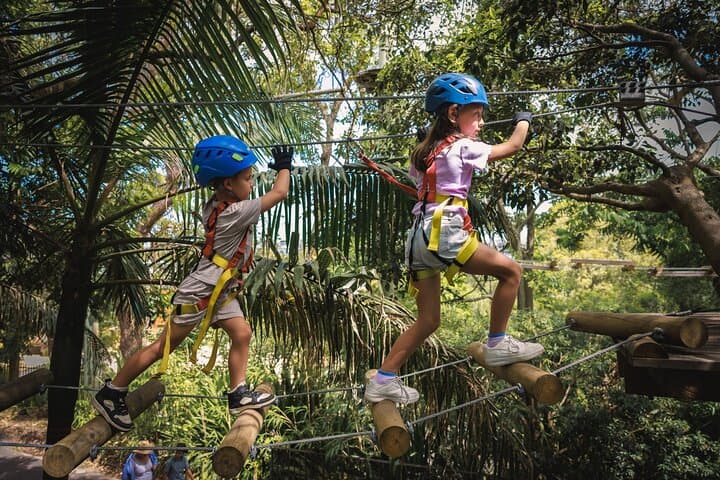
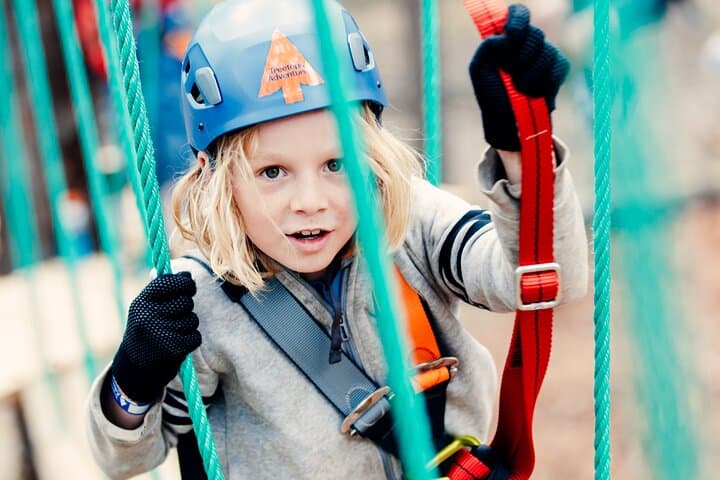
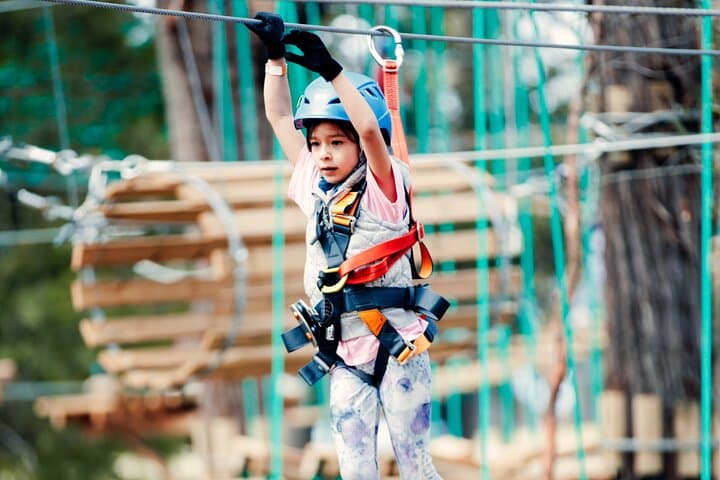
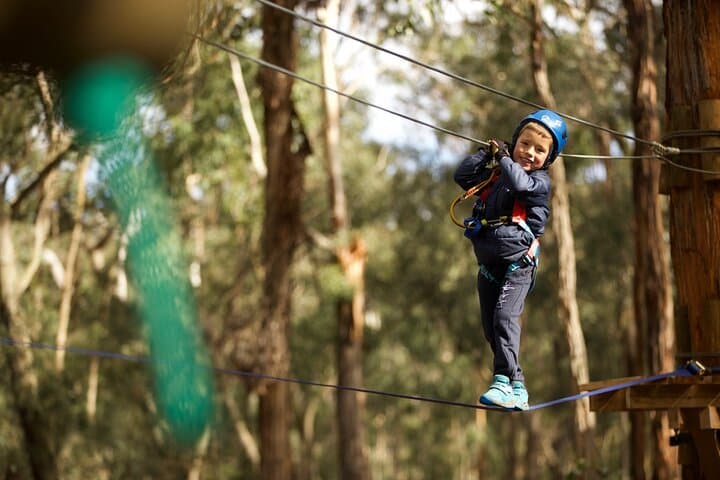
Dawn light filters through jarrah and karri as little hands grip safety lines and the forest seems to lean in to watch.
Dawn light filters through jarrah and karri as little hands grip safety lines and the forest seems to lean in to watch.
Treetops Adventure at Lane Poole Reserve places families in a living classroom of Western Australian forest — pine-scented air, sun-dappled platforms and the river gorge murmuring below. The junior courses are built for ages 3–7: low-to-moderate heights, short ziplines and rope elements that teach balance and confidence while keeping risk controlled.
Geologically, Lane Poole Reserve sits where ancient laterite soils and river-carved sandstones shape gorges and pools; culturally the area is part of the traditional lands of the Noongar people, with the forest long used for seasonal food and ceremony. The course emphasizes safe engagement with the landscape rather than speed — trees here become partners, their branches routing lines and platforms.
Expect clear briefings, helmets and harnesses provided; sessions run about 2.5 hours and include equipment checks and guided turns. Parents must remain onsite and supervise from the ground; groups are kept small to give each child attention. Weather can shift quickly, so plan layers and sun protection; the reserve’s trails can be dusty in summer, muddy after autumn rains.
Practical: arrive 15–30 minutes early for registration, bring a mobile ticket, and limit jewelry and loose clothing. Closed-toe shoes and a small water bottle make the experience smoother. The course is an ideal first aerial adventure — it teaches risk management, rewards curiosity, and leaves kids ready for bigger heights if they want them.