THE ADVENTURE COLLECTIVE® · Independent discovery and booking for outdoor travel

Board a coach in Zurich, ride the Eiger Express and cogwheel train, and arrive at Jungfraujoch — the ‘Top of Europe’— for glacier views, the Ice Palace and the Sphinx Terrace. This full-day excursion combines engineering, alpine terrain and accessible high-mountain panoramas.
Board a coach in Zurich, ride the Eiger Express and cogwheel train, and arrive at Jungfraujoch — the ‘Top of Europe’— for glacier views, the Ice Palace and the Sphinx Terrace. This full-day excursion combines engineering, alpine terrain and accessible high-mountain panoramas.
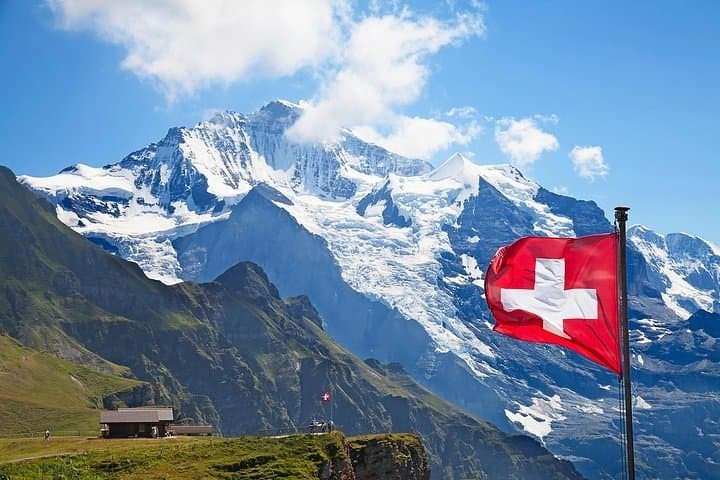
You step onto the coach at Sihlquai before dawn and the city dissolves into green folds of Bernese farmland. As the road climbs, the Eiger’s north face appears like a raw, vertical page — daring you closer. In Grindelwald you trade asphalt for cables: the Eiger Express gondola slices across hanging glaciers, then the cogwheel train rattles through tunnels, surfacing at Jungfraujoch where air thins and glaciers spread like white oceans.
Verified experiences and guided adventures in the surrounding area.
Operated by Best of Switzerland Tours · Interlaken, Canton of Bern
You step onto the coach at Sihlquai before dawn and the city dissolves into green folds of Bernese farmland. As the road climbs, the Eiger’s north face appears like a raw, vertical page — daring you closer. In Grindelwald you trade asphalt for cables: the Eiger Express gondola slices across hanging glaciers, then the cogwheel train rattles through tunnels, surfacing at Jungfraujoch where air thins and glaciers spread like white oceans.
The Jungfrau Railway, finished in 1912, carved a route through rock that opened this high pass to visitors; today the Aletsch Glacier below is protected as part of a UNESCO site and remains an active indicator of climate change. The Bernese Oberland culture—German-speaking mountain communities, alpine dairy traditions, and lake-side towns like Interlaken—frames the technical marvel of the railways.
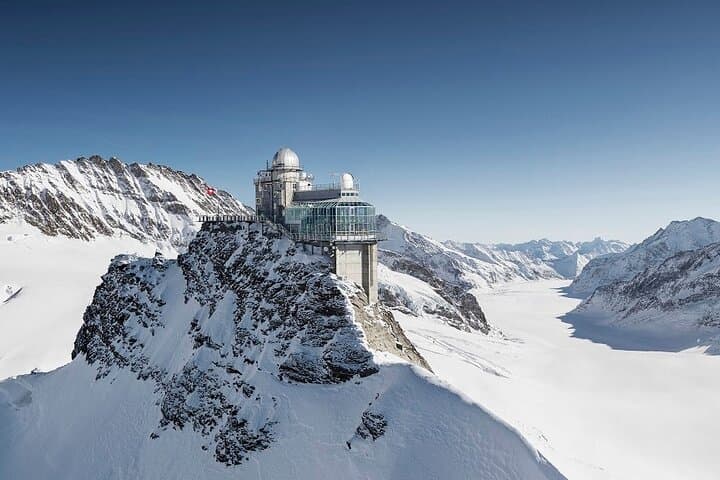
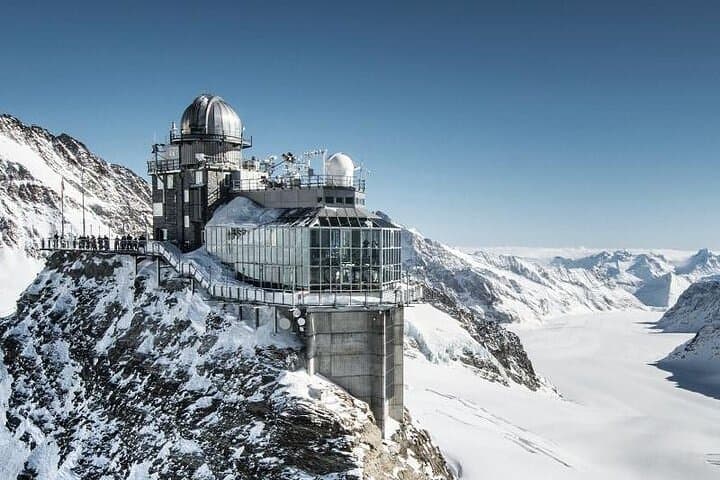
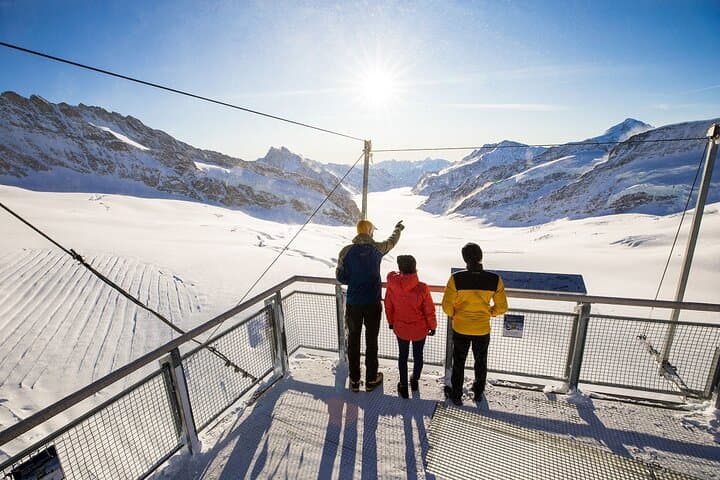
On top, the Sphinx Observation Terrace gives 360-degree views of peaks and the Aletsch glacier; the Ice Palace tunnels let you walk inside glacier ice. Practicalities matter: the trip is a long day (about 12 hours round-trip) with a guaranteed minimum 2-hour stay at the summit. Bring a warm jacket, sunglasses, solid-soled shoes and water; there are staffed facilities but no rentals for extreme cold on the summit. Altitude affects most visitors—move slowly, hydrate, and avoid heavy exertion in the first hour. Check departures at Zurich’s Hauptbahnhof and allow extra time for check-in. For many, Jungfraujoch is less a hike than an engineered ascent into high alpine country—spectacular, brisk, and best approached prepared.
moderate.
10–12 hours.
Moderate fitness recommended—this is mostly passive travel with short walks at altitude; stamina for a long day and basic mobility is required.
Jungfraujoch sits at about 3,454 m (11,332 ft). Most visitors notice breathing changes and should hydrate, move slowly, and avoid vigorous exertion on arrival.
Departure is at Sihlquai Bus Station near Zürich HB; arrive at least 15 minutes before departure and have your voucher and ID ready.
The Sphinx Terrace and Plateau are weather-dependent; indoor attractions like the Ice Palace and Alpine Sensation often remain accessible, but visibility can be limited.
Strollers are allowed in parts of the route, but equalising pressure and cold conditions make the summit inadvisable for children under 2 and late-stage pregnancies.
The Jungfrau Railway, completed to the Jungfraujoch in 1912, was a major early 20th-century engineering project that opened high alpine terrain to tourism.
The Aletsch Glacier below is a UNESCO site and is retreating; operators and visitors are increasingly focused on low-impact travel and carbon-balanced options.
Best of Switzerland Tours operates guided outdoor trips and adventures with an emphasis on safety, stewardship, and memorable experiences.
You step onto the coach at Sihlquai before dawn and the city dissolves into green folds of Bernese farmland. As the road climbs, the Eiger’s north face appears like a raw, vertical page — daring you closer. In Grindelwald you trade asphalt for cables: the Eiger Express gondola slices across hanging glaciers, then the cogwheel train rattles through tunnels, surfacing at Jungfraujoch where air thins and glaciers spread like white oceans.
You step onto the coach at Sihlquai before dawn and the city dissolves into green folds of Bernese farmland. As the road climbs, the Eiger’s north face appears like a raw, vertical page — daring you closer. In Grindelwald you trade asphalt for cables: the Eiger Express gondola slices across hanging glaciers, then the cogwheel train rattles through tunnels, surfacing at Jungfraujoch where air thins and glaciers spread like white oceans.
The Jungfrau Railway, finished in 1912, carved a route through rock that opened this high pass to visitors; today the Aletsch Glacier below is protected as part of a UNESCO site and remains an active indicator of climate change. The Bernese Oberland culture—German-speaking mountain communities, alpine dairy traditions, and lake-side towns like Interlaken—frames the technical marvel of the railways.
On top, the Sphinx Observation Terrace gives 360-degree views of peaks and the Aletsch glacier; the Ice Palace tunnels let you walk inside glacier ice. Practicalities matter: the trip is a long day (about 12 hours round-trip) with a guaranteed minimum 2-hour stay at the summit. Bring a warm jacket, sunglasses, solid-soled shoes and water; there are staffed facilities but no rentals for extreme cold on the summit. Altitude affects most visitors—move slowly, hydrate, and avoid heavy exertion in the first hour. Check departures at Zurich’s Hauptbahnhof and allow extra time for check-in. For many, Jungfraujoch is less a hike than an engineered ascent into high alpine country—spectacular, brisk, and best approached prepared.