THE ADVENTURE COLLECTIVE® · Independent discovery and booking for outdoor travel

Lift above coastal rainforest and land on Herbert Glacier for a guided walk across ancient ice. This compact shore excursion pairs a 25–30 minute helicopter flight with a guided 20–25 minute glacier stop—ideal for first-time glacier visitors who want maximum impact in a short time.
Lift above coastal rainforest and land on Herbert Glacier for a guided walk across ancient ice. This compact shore excursion pairs a 25–30 minute helicopter flight with a guided 20–25 minute glacier stop—ideal for first-time glacier visitors who want maximum impact in a short time.
Fog thins over the Gastineau Channel as the helicopter lifts, and Juneau shrinks into a patchwork of water and forest. Within minutes the aircraft climbs above spruce and alder, the Juneau Icefield unfurling like a living map. The pilot eases down onto Herbert Glacier; the ice exhales cold and bright. Guests step out into an otherworldly plain of crevasses, blue melt pools, and wind-swept ridges, guided by the pilot who doubles as interpreter of the terrain.
Verified experiences and guided adventures in the surrounding area.
Operated by Coastal Helicopters · Juneau, Alaska
Fog thins over the Gastineau Channel as the helicopter lifts, and Juneau shrinks into a patchwork of water and forest. Within minutes the aircraft climbs above spruce and alder, the Juneau Icefield unfurling like a living map. The pilot eases down onto Herbert Glacier; the ice exhales cold and bright. Guests step out into an otherworldly plain of crevasses, blue melt pools, and wind-swept ridges, guided by the pilot who doubles as interpreter of the terrain.
Herbert Glacier is an outlet of the greater Juneau Icefield, a remnant of Pleistocene carving that still shapes local hydrology and microclimates. The Tlingit people have long occupied these islands and coastal valleys; modern Juneau grew with mining and maritime trade near the glacier’s terminus. Geologically, the surface reveals layered ice, moraine deposits, and seasonal melt channels that move and creak with summer warmth.
Practically, the excursion is compact: about 25–30 minutes of flightseeing and roughly 20–25 minutes on the glacier, with total trip time near 2.5 hours including transport. Expect uneven footing, bright reflected light, and quickly changing weather. Guides provide overshoes and rain protection; wear layered, moisture-wicking clothing and steady-soled shoes. Cameras are essential but follow guide instructions for safe zones and no-bag rules on the tarmac. Weigh-in and accurate passenger data are required for aircraft balance; accessibility options exist but notify the operator in advance. If weather cancels flights you’ll be offered an alternative time or refund. The trip delivers concentrated alpine spectacle—an accessible, carefully managed way to stand on ice that once dominated the entire coastline.
moderate.
2–3 hours.
Light to moderate fitness; able to climb in/out of a helicopter and walk on uneven, icy surfaces for 20–30 minutes.
Yes; accurate passenger weights are required at booking and will be verified at check-in to ensure safe aircraft balance.
The guided stop involves short, easy walks on uneven ice—most people in basic good health can participate; guides adjust pace to the group.
If weather prevents flying you will be offered an alternate time or a full refund depending on availability and operator policy.
A no-bag policy applies on the tarmac; essential medical items should be declared at booking—nonessential bags are stored at the base.
The Herbert Glacier drains part of the Juneau Icefield, an area shaped by repeated glaciations and adjacent to Tlingit traditional territories; Juneau later developed as a mining and port town in the late 19th century.
The icefield is retreating due to regional warming; operators emphasize leave-no-trace practices and limit on-ice time to reduce impact and preserve fragile features.
Coastal Helicopters operates guided outdoor trips and adventures with an emphasis on safety, stewardship, and memorable experiences.
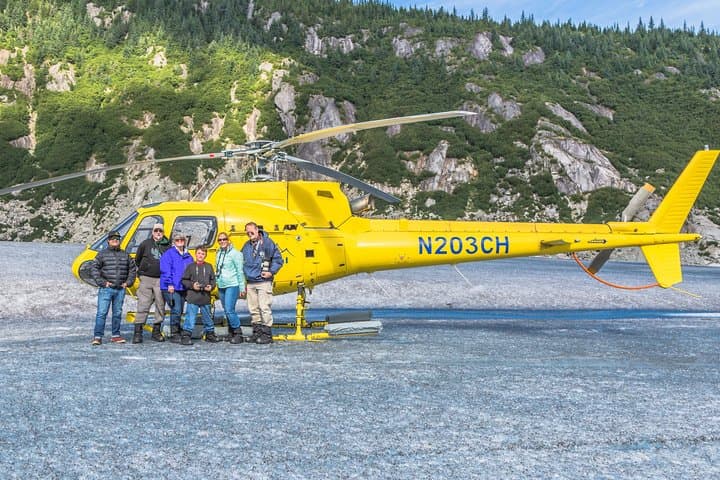
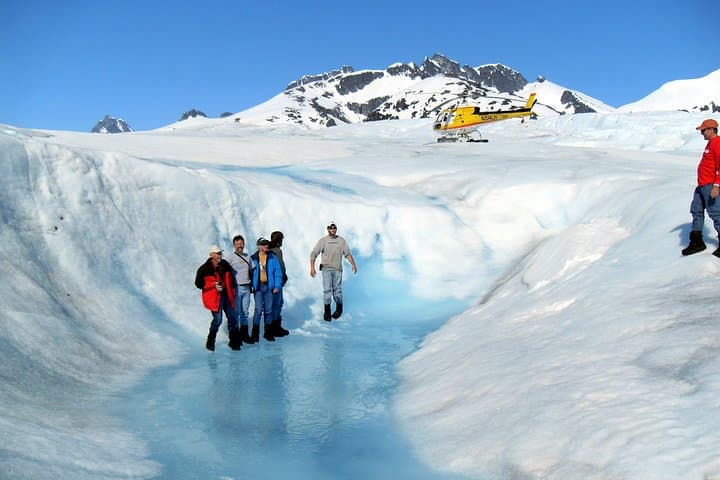
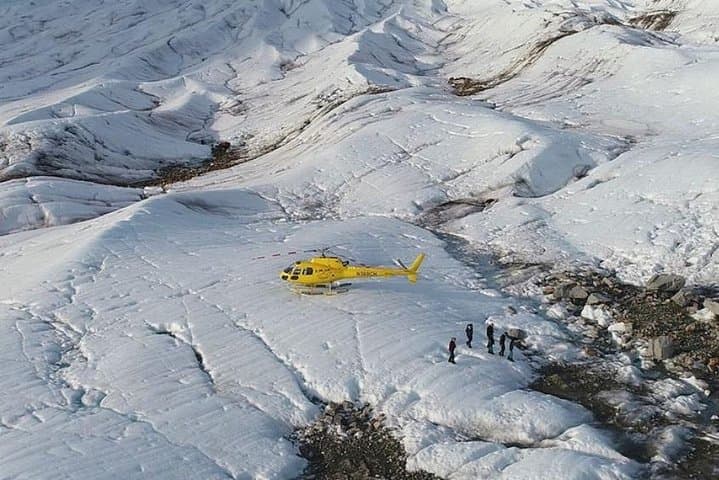
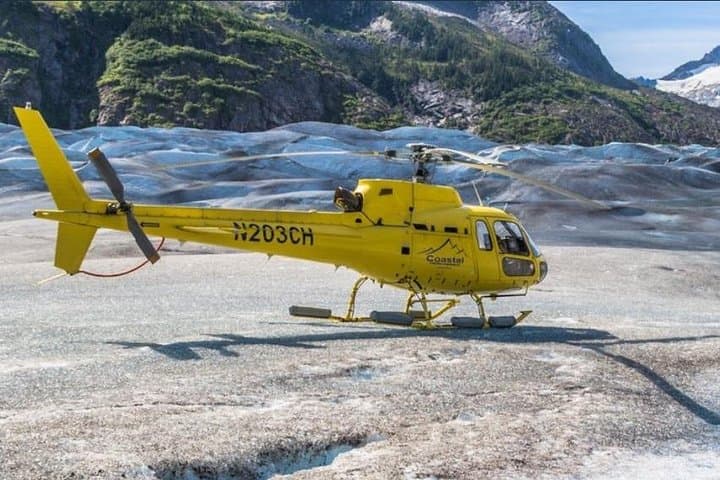
Fog thins over the Gastineau Channel as the helicopter lifts, and Juneau shrinks into a patchwork of water and forest. Within minutes the aircraft climbs above spruce and alder, the Juneau Icefield unfurling like a living map. The pilot eases down onto Herbert Glacier; the ice exhales cold and bright. Guests step out into an otherworldly plain of crevasses, blue melt pools, and wind-swept ridges, guided by the pilot who doubles as interpreter of the terrain.
Fog thins over the Gastineau Channel as the helicopter lifts, and Juneau shrinks into a patchwork of water and forest. Within minutes the aircraft climbs above spruce and alder, the Juneau Icefield unfurling like a living map. The pilot eases down onto Herbert Glacier; the ice exhales cold and bright. Guests step out into an otherworldly plain of crevasses, blue melt pools, and wind-swept ridges, guided by the pilot who doubles as interpreter of the terrain.
Herbert Glacier is an outlet of the greater Juneau Icefield, a remnant of Pleistocene carving that still shapes local hydrology and microclimates. The Tlingit people have long occupied these islands and coastal valleys; modern Juneau grew with mining and maritime trade near the glacier’s terminus. Geologically, the surface reveals layered ice, moraine deposits, and seasonal melt channels that move and creak with summer warmth.
Practically, the excursion is compact: about 25–30 minutes of flightseeing and roughly 20–25 minutes on the glacier, with total trip time near 2.5 hours including transport. Expect uneven footing, bright reflected light, and quickly changing weather. Guides provide overshoes and rain protection; wear layered, moisture-wicking clothing and steady-soled shoes. Cameras are essential but follow guide instructions for safe zones and no-bag rules on the tarmac. Weigh-in and accurate passenger data are required for aircraft balance; accessibility options exist but notify the operator in advance. If weather cancels flights you’ll be offered an alternative time or refund. The trip delivers concentrated alpine spectacle—an accessible, carefully managed way to stand on ice that once dominated the entire coastline.