THE ADVENTURE COLLECTIVE® · Independent discovery and booking for outdoor travel

Float through the root-mazes of Jimbaran’s mangrove on a traditional jukung, sip tea beneath the canopy and learn how local fishers rebuild the coast. This 4-hour tour blends easy exploration with hands-on conservation insight.
Float through the root-mazes of Jimbaran’s mangrove on a traditional jukung, sip tea beneath the canopy and learn how local fishers rebuild the coast. This 4-hour tour blends easy exploration with hands-on conservation insight.
A narrow wooden jukung parts the still, tannin-stained water and the mangrove leans in close — roots braided like living scaffolding, kingfishers flicking through the shadows. The boat’s low profile keeps you under the mangrove canopy, where the air smells of salt and earth and the chatter of the fishing village comes faintly from shore.
Verified experiences and guided adventures in the surrounding area.
Operated by Tour East Indonesia · Jimbaran, Bali
A narrow wooden jukung parts the still, tannin-stained water and the mangrove leans in close — roots braided like living scaffolding, kingfishers flicking through the shadows. The boat’s low profile keeps you under the mangrove canopy, where the air smells of salt and earth and the chatter of the fishing village comes faintly from shore.
This southern Bali mangrove sits on the eastern edge of Kedonganan and has been developed by the Wana Segara Kertih fishing group as a conservation and education site. Geologically it’s a coastal wetland built on recent alluvial deposits; the dense Rhizophora and Avicennia stands slow the tide and trap sediment, creating nurseries for fish and crustaceans that sustain local fisheries. Culturally, the mangrove is part working landscape and part classroom — guides often explain traditional uses of the wood and local efforts to replant and stabilize shoreline.
Practical details: tours run about four hours and include a guided jukung ride, tea/coffee and snacks, life jackets, and hotel transfers from much of South Bali. Expect easy paddling or motorized drifting rather than strenuous activity — the pace is observational. Bring sun protection, closed-toe shoes you don’t mind getting muddy, and a camera with a polarizer for shots beneath the canopy.
Timing matters: morning light and lower tides make wildlife easier to see; afternoon trips can be mellow and cooler under the canopy. Weather and tides dictate departures, so confirm pickup and allow flexibility. For a short, low-impact nature outing close to Jimbaran’s beaches, this jukung mangrove tour is an intimate way to see Bali’s coastal ecology and community-led conservation in action.
easy.
4 hours.
Suitable for most fitness levels; involves short periods of sitting and gentle transfers on and off a low wooden boat
The tour runs about four hours and includes a guided jukung ride through the mangrove, tea/coffee and snacks, life jackets, and (for many locations) hotel pickup and drop-off.
Yes — children aged 6–11 are accepted per the operator’s policy; infants and very young children may require special arrangements and supervision.
This activity is not recommended for travelers with spinal injuries, serious heart conditions, or for pregnant guests due to boat transfers and uneven surfaces.
Expect shorebirds, kingfishers and small crabs and fish; sightings vary with tide, time of day and season.
The Wana Segara Kertih fishing group established local mangrove planting and shoreline protection projects to support fisheries and prevent erosion.
Tours support community-led conservation and awareness; avoid littering, keep to boats and marked paths, and ask guides about local replanting efforts before collecting anything.
Tour East Indonesia operates guided outdoor trips and adventures with an emphasis on safety, stewardship, and memorable experiences.
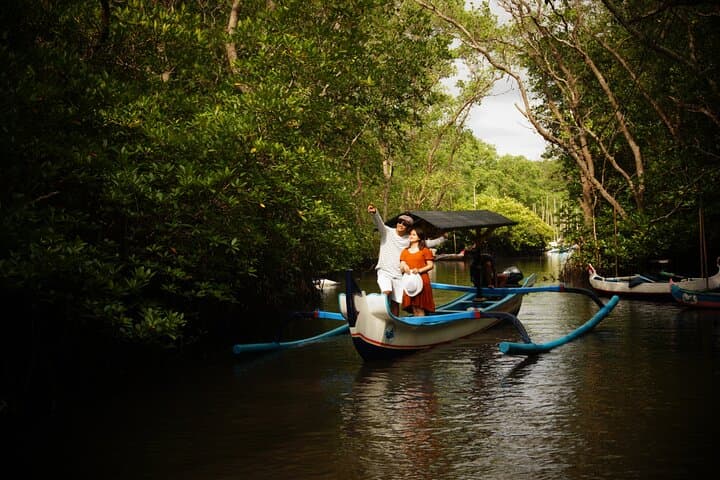
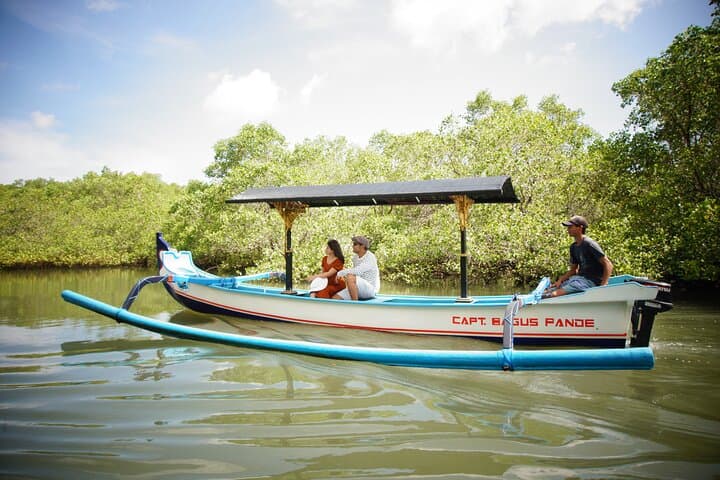
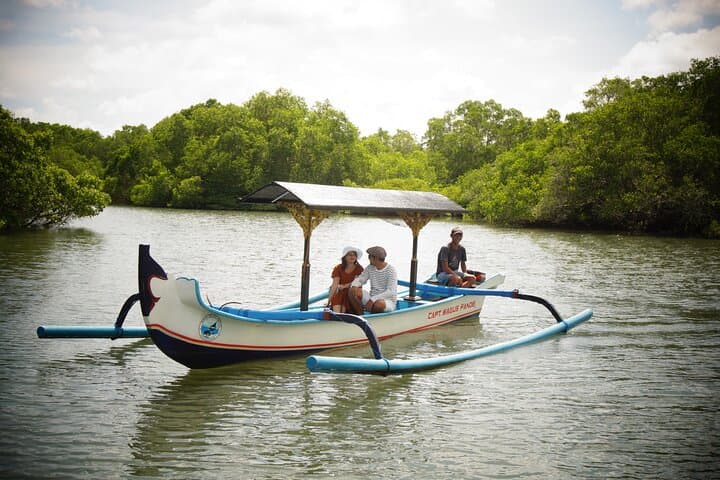
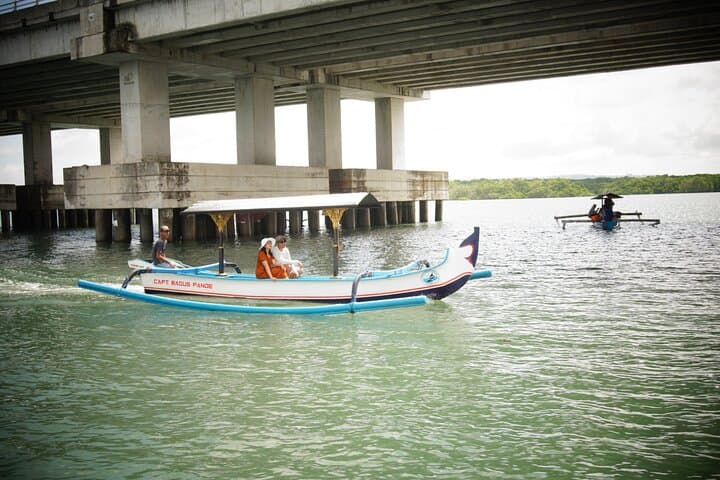
A narrow wooden jukung parts the still, tannin-stained water and the mangrove leans in close — roots braided like living scaffolding, kingfishers flicking through the shadows. The boat’s low profile keeps you under the mangrove canopy, where the air smells of salt and earth and the chatter of the fishing village comes faintly from shore.
A narrow wooden jukung parts the still, tannin-stained water and the mangrove leans in close — roots braided like living scaffolding, kingfishers flicking through the shadows. The boat’s low profile keeps you under the mangrove canopy, where the air smells of salt and earth and the chatter of the fishing village comes faintly from shore.
This southern Bali mangrove sits on the eastern edge of Kedonganan and has been developed by the Wana Segara Kertih fishing group as a conservation and education site. Geologically it’s a coastal wetland built on recent alluvial deposits; the dense Rhizophora and Avicennia stands slow the tide and trap sediment, creating nurseries for fish and crustaceans that sustain local fisheries. Culturally, the mangrove is part working landscape and part classroom — guides often explain traditional uses of the wood and local efforts to replant and stabilize shoreline.
Practical details: tours run about four hours and include a guided jukung ride, tea/coffee and snacks, life jackets, and hotel transfers from much of South Bali. Expect easy paddling or motorized drifting rather than strenuous activity — the pace is observational. Bring sun protection, closed-toe shoes you don’t mind getting muddy, and a camera with a polarizer for shots beneath the canopy.
Timing matters: morning light and lower tides make wildlife easier to see; afternoon trips can be mellow and cooler under the canopy. Weather and tides dictate departures, so confirm pickup and allow flexibility. For a short, low-impact nature outing close to Jimbaran’s beaches, this jukung mangrove tour is an intimate way to see Bali’s coastal ecology and community-led conservation in action.