THE ADVENTURE COLLECTIVE® · Independent discovery and booking for outdoor travel

See Zanzibar’s wildlife, history and flavors in a single day: walk Jozani’s mangrove boardwalk to meet red colobus monkeys, explore Stone Town’s UNESCO streets, then taste spices at a working farm. This full-day trip blends nature and culture with easy logistics.
See Zanzibar’s wildlife, history and flavors in a single day: walk Jozani’s mangrove boardwalk to meet red colobus monkeys, explore Stone Town’s UNESCO streets, then taste spices at a working farm. This full-day trip blends nature and culture with easy logistics.
You step off the coastal road into a humid pocket of forest where mangroves hold the shoreline and a chorus of insects keeps time. Sunlight sifts through broad leaves as a red colobus pauses above the trail, curious and unhurried — an immediate reminder that Zanzibar’s interior still belongs to wildlife.
Verified experiences and guided adventures in the surrounding area.
Operated by Noun Travel · Stone Town, Zanzibar
You step off the coastal road into a humid pocket of forest where mangroves hold the shoreline and a chorus of insects keeps time. Sunlight sifts through broad leaves as a red colobus pauses above the trail, curious and unhurried — an immediate reminder that Zanzibar’s interior still belongs to wildlife.
The day moves like a stitched itinerary: Jozani Chwaka Bay National Park first, where flat, shaded trails and a raised mangrove boardwalk cross swampy ground and put you face-to-face with Piliocolobus kirkii, the island’s endemic red colobus monkey. Geologically, the island is a coral-built platform; soils are shallow, and the coastal mangroves buffer tidal flow while feeding local fisheries.
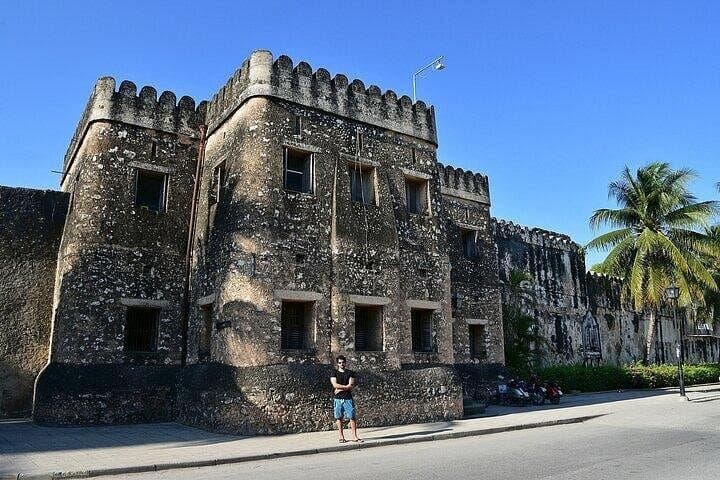
From forest to Stone Town, the mood shifts to marble doorways, carved wooden balconies and labyrinthine alleys shaped by Omani, Persian and European traders. Key stops include the House of Wonders, the Old Fort and the Former Slave Market — each a chapter in Zanzibar’s role as a crossroads of the Indian Ocean.
A spice farm closes the loop: cloves, cinnamon, cardamom and vanilla arranged for tasting and hands-on learning about cultivation and trade. Practicalities are straightforward — this is a full-day tour (~10 hours) with hotel pickup and an air-conditioned vehicle, moderate walking on mostly even ground, and chances to sit in shade between stops.
Bring insect repellent, sun protection and modest clothing for Stone Town. Plan for a morning start to catch animal activity and the coolest part of the day, and carry cash small bills for market purchases and tips.
easy.
10 hours.
Suitable for most fitness levels; requires standing and walking on flat to mildly uneven paths for several short segments.
The tour runs about 10 hours and typically includes hotel pickup/drop-off, an air-conditioned vehicle, entrance fees, guided walks in Jozani and Stone Town, and a spice farm visit; check your booking for exact inclusions.
Wildlife sightings can’t be guaranteed, but red colobus are commonly seen on the Jozani trails and boardwalk, especially in the morning when they are most active.
No — walking is generally easy with short distances on flat trails and paved alleys, though uneven surfaces and steps are present in parts of Stone Town.
Light, breathable clothing works well; cover shoulders and knees in Stone Town out of cultural respect and bring a hat for farm sun exposure.
Stone Town’s architecture reflects centuries of Omani, Persian and European influence and the island’s central role in Indian Ocean trade, including the 19th-century spice and slave trades.
Jozani is a protected area focused on endemic species and mangrove restoration; visitors are encouraged to follow trails and avoid feeding wildlife to minimize impact.
Noun Travel operates guided outdoor trips and adventures with an emphasis on safety, stewardship, and memorable experiences.



You step off the coastal road into a humid pocket of forest where mangroves hold the shoreline and a chorus of insects keeps time. Sunlight sifts through broad leaves as a red colobus pauses above the trail, curious and unhurried — an immediate reminder that Zanzibar’s interior still belongs to wildlife.
You step off the coastal road into a humid pocket of forest where mangroves hold the shoreline and a chorus of insects keeps time. Sunlight sifts through broad leaves as a red colobus pauses above the trail, curious and unhurried — an immediate reminder that Zanzibar’s interior still belongs to wildlife.
The day moves like a stitched itinerary: Jozani Chwaka Bay National Park first, where flat, shaded trails and a raised mangrove boardwalk cross swampy ground and put you face-to-face with Piliocolobus kirkii, the island’s endemic red colobus monkey. Geologically, the island is a coral-built platform; soils are shallow, and the coastal mangroves buffer tidal flow while feeding local fisheries.
From forest to Stone Town, the mood shifts to marble doorways, carved wooden balconies and labyrinthine alleys shaped by Omani, Persian and European traders. Key stops include the House of Wonders, the Old Fort and the Former Slave Market — each a chapter in Zanzibar’s role as a crossroads of the Indian Ocean.
A spice farm closes the loop: cloves, cinnamon, cardamom and vanilla arranged for tasting and hands-on learning about cultivation and trade. Practicalities are straightforward — this is a full-day tour (~10 hours) with hotel pickup and an air-conditioned vehicle, moderate walking on mostly even ground, and chances to sit in shade between stops.
Bring insect repellent, sun protection and modest clothing for Stone Town. Plan for a morning start to catch animal activity and the coolest part of the day, and carry cash small bills for market purchases and tips.