THE ADVENTURE COLLECTIVE® · Independent discovery and booking for outdoor travel

Spend three focused hours in Jozani Chwaka Bay National Park watching the endemic Zanzibar red colobus and walking an elevated mangrove boardwalk. This half-day tour combines wildlife viewing with clear conservation context for a compact nature experience.
Spend three focused hours in Jozani Chwaka Bay National Park watching the endemic Zanzibar red colobus and walking an elevated mangrove boardwalk. This half-day tour combines wildlife viewing with clear conservation context for a compact nature experience.
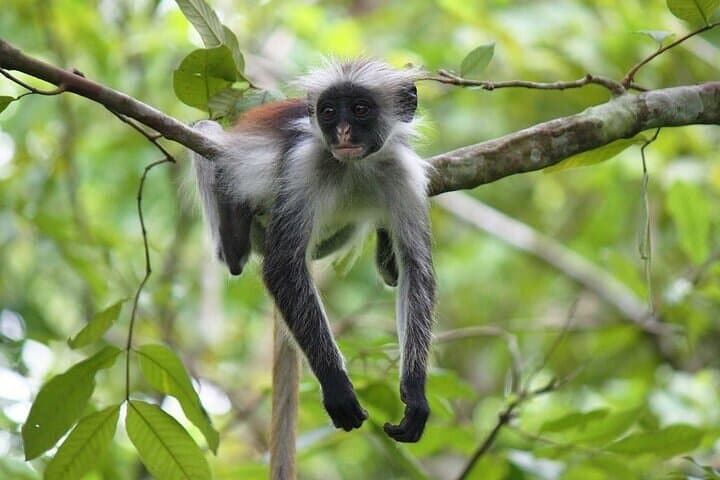
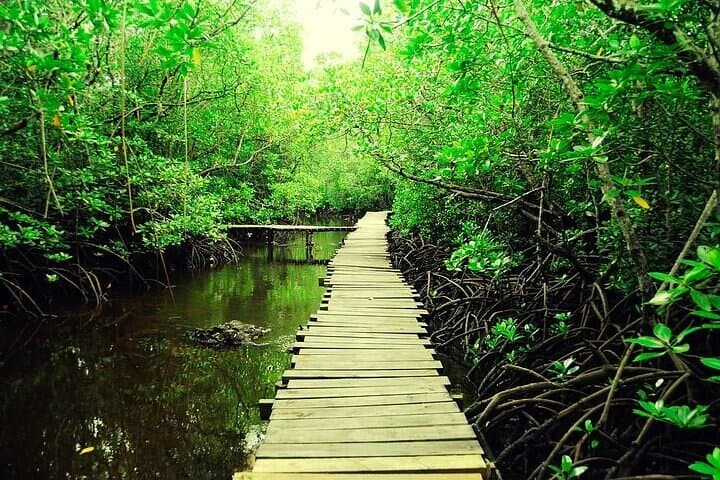
You step off the shaded track and into a humid hush: leaves drip, roots knot the soil, and a distant chittering threads through the canopy. In three hours at Jozani Chwaka Bay National Park you move from closed-canopy forest to an elevated mangrove boardwalk, watching Zanzibar’s rare red colobus weave through the treetops and mangrove roots press into tide-dark water.
Verified experiences and guided adventures in the surrounding area.
Operated by Noun Travel · Jozani, Zanzibar
You step off the shaded track and into a humid hush: leaves drip, roots knot the soil, and a distant chittering threads through the canopy. In three hours at Jozani Chwaka Bay National Park you move from closed-canopy forest to an elevated mangrove boardwalk, watching Zanzibar’s rare red colobus weave through the treetops and mangrove roots press into tide-dark water.
Jozani sits on central Zanzibar’s low coral rag and alluvial flats, a meeting place of lowland forest and coastal swamp shaped by centuries of tides and human use. The park protects endemic species — most famously the endangered Zanzibar red colobus — and reveals local connections to seaweed farming, timber history, and traditional village life that fringe the reserve.
Your guide sketches ecology as you walk: mahogany and jackfruit trunks, shrubby undergrowth where bushbabies hide by day, and butterflies that flicker like punctuation. The mangrove boardwalk exposes root systems that filter the sea and cradle juvenile fish; at high tide the water seems to breathe around the stilts.
Practicalities matter: the route is easy but rooty and can be muddy after rains, so wear grippy shoes, bring water, and pack insect repellent and sun protection. Morning tours yield the best wildlife viewing and cooler air; afternoons bring heat and more mosquitoes. The experience is compact — accessible for most fitness levels — but not wheelchair-friendly. Expect a small-group pace, close encounters rather than staged viewing, and a clear thread of conservation education woven through the walk.
easy.
3 hours.
Suitable for most fitness levels; walking on uneven ground for up to three hours with short, gentle inclines.
The experience runs about three hours, typically including hotel pickup and drop-off within Zanzibar City.
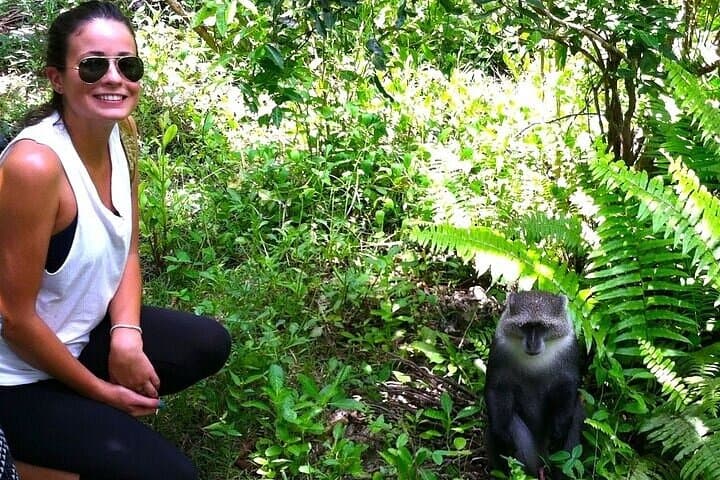
Sightings are common but not guaranteed; guides maximize chances by visiting known feeding areas and using quiet observation techniques.
No — paths include roots, narrow stretches, and the mangrove boardwalk which are not suitable for wheelchairs.
Yes — the walk is family-friendly, but infants must sit on laps during transport and guardians should monitor kids on uneven sections.
The forest and surrounding communities have long been shaped by coral rag geology and coastal trade; the park was established to protect declining forest fragments and endemic wildlife.
Jozani’s management blends community-based initiatives with protected-area rules to limit logging and support eco-tourism that benefits local livelihoods.
Noun Travel operates guided outdoor trips and adventures with an emphasis on safety, stewardship, and memorable experiences.
You step off the shaded track and into a humid hush: leaves drip, roots knot the soil, and a distant chittering threads through the canopy. In three hours at Jozani Chwaka Bay National Park you move from closed-canopy forest to an elevated mangrove boardwalk, watching Zanzibar’s rare red colobus weave through the treetops and mangrove roots press into tide-dark water.
You step off the shaded track and into a humid hush: leaves drip, roots knot the soil, and a distant chittering threads through the canopy. In three hours at Jozani Chwaka Bay National Park you move from closed-canopy forest to an elevated mangrove boardwalk, watching Zanzibar’s rare red colobus weave through the treetops and mangrove roots press into tide-dark water.
Jozani sits on central Zanzibar’s low coral rag and alluvial flats, a meeting place of lowland forest and coastal swamp shaped by centuries of tides and human use. The park protects endemic species — most famously the endangered Zanzibar red colobus — and reveals local connections to seaweed farming, timber history, and traditional village life that fringe the reserve.
Your guide sketches ecology as you walk: mahogany and jackfruit trunks, shrubby undergrowth where bushbabies hide by day, and butterflies that flicker like punctuation. The mangrove boardwalk exposes root systems that filter the sea and cradle juvenile fish; at high tide the water seems to breathe around the stilts.
Practicalities matter: the route is easy but rooty and can be muddy after rains, so wear grippy shoes, bring water, and pack insect repellent and sun protection. Morning tours yield the best wildlife viewing and cooler air; afternoons bring heat and more mosquitoes. The experience is compact — accessible for most fitness levels — but not wheelchair-friendly. Expect a small-group pace, close encounters rather than staged viewing, and a clear thread of conservation education woven through the walk.