THE ADVENTURE COLLECTIVE® · Independent discovery and booking for outdoor travel

Experience Jozani’s red colobus monkeys, a mangrove boardwalk, and hands-on spice farm demonstrations in a single day. This guided tour blends wildlife viewing with local agricultural culture and practical insights for planning your visit.
Experience Jozani’s red colobus monkeys, a mangrove boardwalk, and hands-on spice farm demonstrations in a single day. This guided tour blends wildlife viewing with local agricultural culture and practical insights for planning your visit.
You step off the air-conditioned vehicle and the humidity closes in like a held breath. The path into Jozani Forest is a shaded corridor where palms and native trees bend low, and the forest floor gives off damp, loamy perfume. Guides move with practiced silence; the island’s endemic red colobus monkeys appear as sudden rust-coloured flashes among the canopy.
Verified experiences and guided adventures in the surrounding area.
Operated by Zanzibar Tour Guide Francophone/Anglophone · Jozani / Chwaka, Zanzibar
You step off the air-conditioned vehicle and the humidity closes in like a held breath. The path into Jozani Forest is a shaded corridor where palms and native trees bend low, and the forest floor gives off damp, loamy perfume. Guides move with practiced silence; the island’s endemic red colobus monkeys appear as sudden rust-coloured flashes among the canopy.
Jozani Chwaka Bay National Park is Zanzibar’s primary protected area, established to conserve rare flora and the island’s only endemic primate. Geologically, this eastern coastal plain sits on coral rag and alluvial soil, feeding a web of mangroves that edge Chwaka Bay. Culturally, the spice farms nearby reflect centuries of agroforestry: cloves, cinnamon, and cardamom still shape local kitchens and livelihoods.
The tour pairs a 2–3 hour guided forest walk and a mangrove boardwalk with a hands-on visit to a spice farm where you can sample fresh vanilla pods and roasted nutmeg. Expect uneven, root-strewn trails, brief boardwalk sections over tidal mud, and close animal encounters that require calm movement and quiet voices.
Practical guidance: go early to avoid mid-day heat and maximize wildlife activity; wear sturdy, closed shoes and insect repellent; carry cash for small purchases at the spice stalls. The outing runs about six to seven hours with hotel transfer included on most departures. Photography is excellent but maintain distance from monkeys—do not feed them. This is a low-impact, accessible way to experience Zanzibar’s natural and agricultural landscapes in one day.
easy.
6–7 hours.
Suitable for most fitness levels; expect walking on uneven ground for 2–3 hours with short standing periods
Most departures include private pick-up and drop-off in an air-conditioned vehicle; confirm your pickup point at booking.
Yes; the tour price typically covers entrance fees to Jozani, the mangrove boardwalk, and a provided lunch at the spice farm.
No feeding or direct contact is allowed—guides will position you for viewing and photography while keeping wildlife disturbance to a minimum.
The tour advertises wheelchair-accessible transportation and boardwalk areas, but some forest paths are uneven—check specific accessibility needs with the operator before booking.
Jozani Chwaka Bay was set aside to protect endemic species and the island’s mangrove systems; spice cultivation has shaped Zanzibar’s economy and culture since the Omani era.
The park balances tourism and protection—visitors are asked not to feed wildlife, to keep to paths, and to avoid single-use plastics to reduce stress on sensitive mangrove habitats.
Zanzibar Tour Guide Francophone/Anglophone operates guided outdoor trips and adventures with an emphasis on safety, stewardship, and memorable experiences.
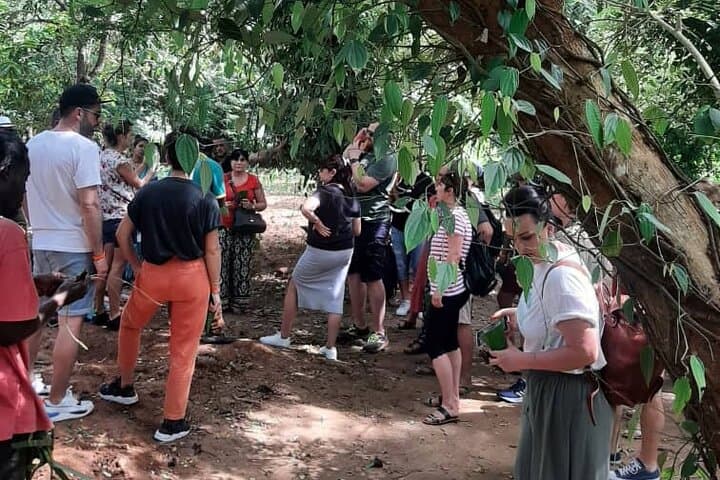
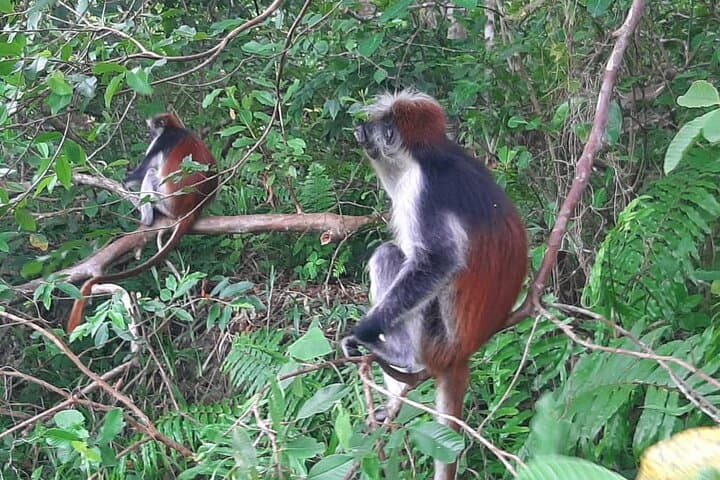


You step off the air-conditioned vehicle and the humidity closes in like a held breath. The path into Jozani Forest is a shaded corridor where palms and native trees bend low, and the forest floor gives off damp, loamy perfume. Guides move with practiced silence; the island’s endemic red colobus monkeys appear as sudden rust-coloured flashes among the canopy.
You step off the air-conditioned vehicle and the humidity closes in like a held breath. The path into Jozani Forest is a shaded corridor where palms and native trees bend low, and the forest floor gives off damp, loamy perfume. Guides move with practiced silence; the island’s endemic red colobus monkeys appear as sudden rust-coloured flashes among the canopy.
Jozani Chwaka Bay National Park is Zanzibar’s primary protected area, established to conserve rare flora and the island’s only endemic primate. Geologically, this eastern coastal plain sits on coral rag and alluvial soil, feeding a web of mangroves that edge Chwaka Bay. Culturally, the spice farms nearby reflect centuries of agroforestry: cloves, cinnamon, and cardamom still shape local kitchens and livelihoods.
The tour pairs a 2–3 hour guided forest walk and a mangrove boardwalk with a hands-on visit to a spice farm where you can sample fresh vanilla pods and roasted nutmeg. Expect uneven, root-strewn trails, brief boardwalk sections over tidal mud, and close animal encounters that require calm movement and quiet voices.
Practical guidance: go early to avoid mid-day heat and maximize wildlife activity; wear sturdy, closed shoes and insect repellent; carry cash for small purchases at the spice stalls. The outing runs about six to seven hours with hotel transfer included on most departures. Photography is excellent but maintain distance from monkeys—do not feed them. This is a low-impact, accessible way to experience Zanzibar’s natural and agricultural landscapes in one day.