THE ADVENTURE COLLECTIVE® · Independent discovery and booking for outdoor travel

A four-day private itinerary that trades Arequipa’s colonial calm for Cotahuasi’s vertiginous canyons, hot springs and towering cacti. Expect long transfers, high passes near 4,850 m, and a landscape defined by dramatic drops and quiet highland villages.
A four-day private itinerary that trades Arequipa’s colonial calm for Cotahuasi’s vertiginous canyons, hot springs and towering cacti. Expect long transfers, high passes near 4,850 m, and a landscape defined by dramatic drops and quiet highland villages.
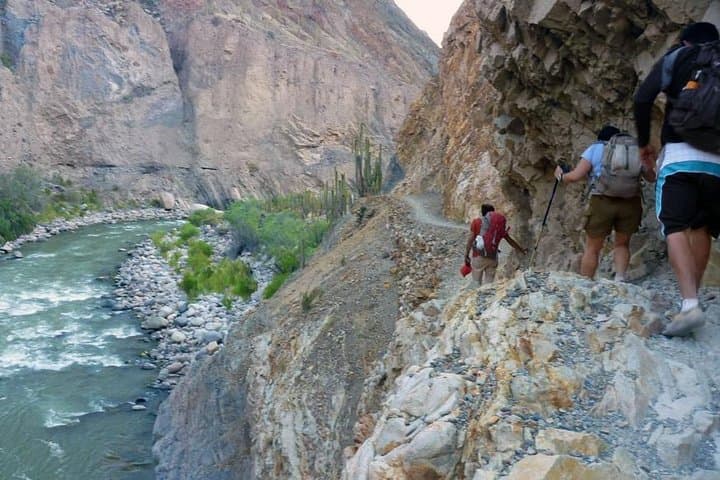
The road leaves Arequipa at dusk and the city lights shrink behind a bus full of travelers, but it’s the slow reveal of the highlands that defines this trip. By first light the Andes have taken over: terraces and adobe hamlets slip by as the valley walls deepen and, eventually, the gorge drops away so suddenly it feels like the world has been cut in two. Cotahuasi Canyon — one of Peru’s deepest — frames the next three days with plunging cliffs, high puna lagoons and stands of towering cactus that look older than the republic itself.
Verified experiences and guided adventures in the surrounding area.
Operated by VIAJES POR PERU · Arequipa, Arequipa
The road leaves Arequipa at dusk and the city lights shrink behind a bus full of travelers, but it’s the slow reveal of the highlands that defines this trip. By first light the Andes have taken over: terraces and adobe hamlets slip by as the valley walls deepen and, eventually, the gorge drops away so suddenly it feels like the world has been cut in two. Cotahuasi Canyon — one of Peru’s deepest — frames the next three days with plunging cliffs, high puna lagoons and stands of towering cactus that look older than the republic itself.
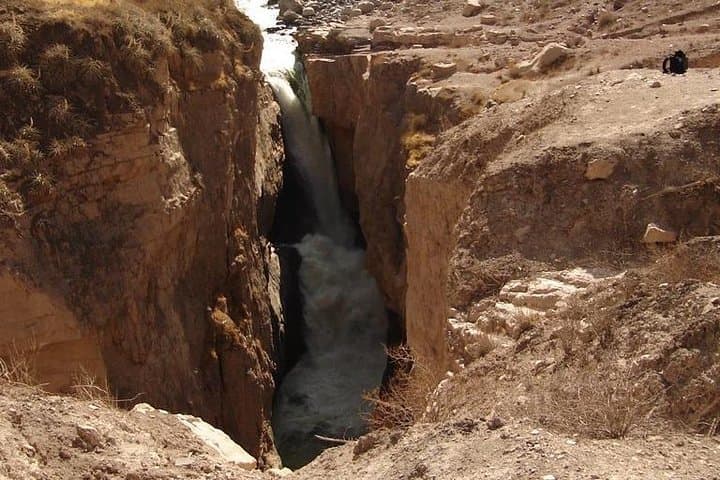
Cotahuasi’s human history is quiet but dense. Pre-Inca and Inca trails still trace the ridgelines; scattered ruins and sacrificial sites around Humanhuarco speak to a ceremonial landscape shaped for millennia. Geologically, the canyon’s folds and basalt terraces tell a story of uplift and erosion: rivers have carved vertical relief exceeding 3,500 meters from rim to river in places, producing narrow gorges where the walls compress to under 10 meters across — a dramatic contrast to the wide plateaus above.
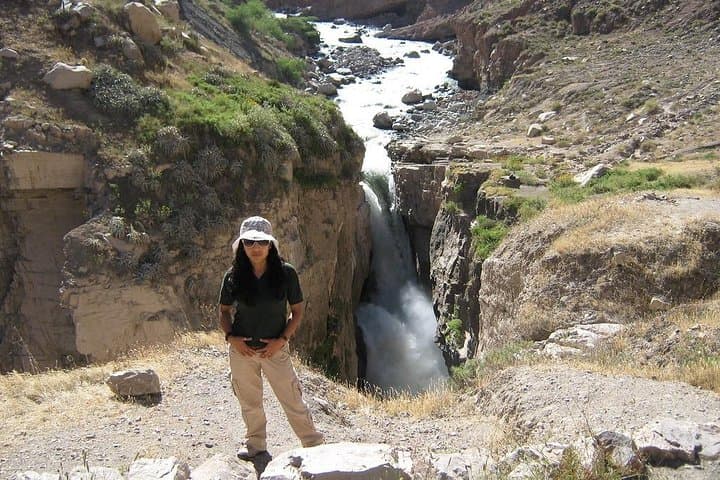
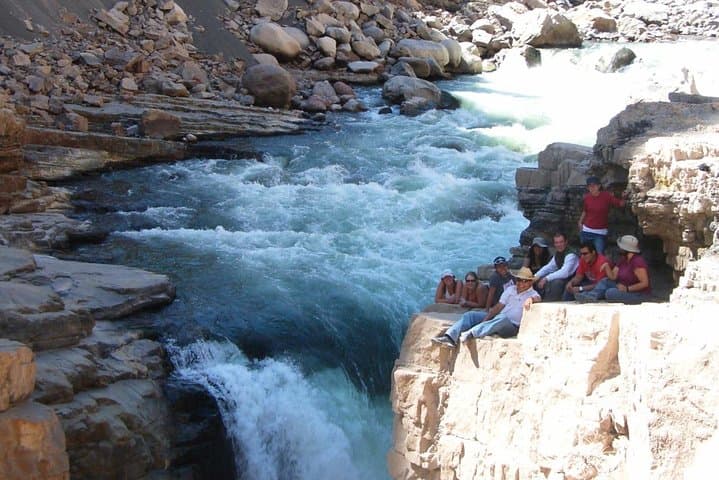
On this private 4-day itinerary travelers visit Sipia Waterfall (150 meters, three tiers), bathe in Luicho thermal springs, cross the Quiñochaca bridge and explore Judío Pampa’s cacti groves. High-altitude highlights include Chaquicocha and Pallarcocha lagoons (Pallarcocha sits around 4,850 m) with views of Nevado Coropuna (6,425 m) on clear days. Birdlife is prolific: Andean ibis and torrent duck patrol fast water; hummingbirds and endemics frequent queñual groves.
Practical guidance is part of the appeal. The program begins with an overnight bus from Arequipa (roughly 10–12 hours); expect early starts, gravel track sections and basic accommodation in Cotahuasi. Altitude matters — nights and some days reach 4,500–4,850 m — so plan 24–48 hours of acclimatization in Arequipa if possible. Terrain alternates between short, steep walks (the route to Sipia is a brief 15-minute descent) and easy road-based sightseeing, so good ankle-supporting boots and layered clothing are necessary. Cash is useful in small towns; services are limited outside the main village.
Best travel window is the dry season (May–September) when trails are firm and skies are clear. Guides on the route are bilingual and experienced at adjusting pacing for groups; they arrange hotel stays, meals and entry to local thermal baths. For photographers, early mornings and late afternoons bring low-angle light on cliffs and the best chance for crisp views of Coropuna. For anyone intrigued by raw vertical landscapes, Cotahuasi is less polished than Colca but far wilder — it doesn’t just show you a canyon, it asks you to move through one.
moderate.
4 days (approx. 10–12 hrs transfer + several short walks).
Moderate fitness — able to manage short steep walks and handle high altitude; some long bus travel.
Plan roughly 10–12 hours by tourist bus with breaks; departures are typically late afternoon or evening with overnight arrival.
Yes — parts of the itinerary reach around 4,850 m (Pallarcocha); acclimatization and hydration are recommended and those with heart or serious pulmonary conditions should consult a doctor.
Thermal bath visits are included in the itinerary for sites like Luicho and May, but check whether towel rental or private pool access has an extra fee.
Most walking is short: Sipia waterfall access is about a 15-minute descent; otherwise expect short viewpoint walks and light walking around villages.
Yes — on clear days Nevado Coropuna (6,425 m) is visible from Pallarcocha lagoon and several viewpoints along the route.
Hotels are basic to mid-range and vary by booking; bedrooms are simple but clean — the focus is landscape and cultural access rather than luxury.
The Cotahuasi valley preserves pre-Inca and Inca trail networks and ritual sites; colonial-era settlements later adapted those routes for mule and trade traffic.
Visitor pressure is light compared with more famous canyons, but stick to marked paths, pack out waste and respect thermal-bath facilities to support small local communities.
VIAJES POR PERU operates guided outdoor trips and adventures with an emphasis on safety, stewardship, and memorable experiences.
The road leaves Arequipa at dusk and the city lights shrink behind a bus full of travelers, but it’s the slow reveal of the highlands that defines this trip. By first light the Andes have taken over: terraces and adobe hamlets slip by as the valley walls deepen and, eventually, the gorge drops away so suddenly it feels like the world has been cut in two. Cotahuasi Canyon — one of Peru’s deepest — frames the next three days with plunging cliffs, high puna lagoons and stands of towering cactus that look older than the republic itself.
The road leaves Arequipa at dusk and the city lights shrink behind a bus full of travelers, but it’s the slow reveal of the highlands that defines this trip. By first light the Andes have taken over: terraces and adobe hamlets slip by as the valley walls deepen and, eventually, the gorge drops away so suddenly it feels like the world has been cut in two. Cotahuasi Canyon — one of Peru’s deepest — frames the next three days with plunging cliffs, high puna lagoons and stands of towering cactus that look older than the republic itself.
Cotahuasi’s human history is quiet but dense. Pre-Inca and Inca trails still trace the ridgelines; scattered ruins and sacrificial sites around Humanhuarco speak to a ceremonial landscape shaped for millennia. Geologically, the canyon’s folds and basalt terraces tell a story of uplift and erosion: rivers have carved vertical relief exceeding 3,500 meters from rim to river in places, producing narrow gorges where the walls compress to under 10 meters across — a dramatic contrast to the wide plateaus above.
On this private 4-day itinerary travelers visit Sipia Waterfall (150 meters, three tiers), bathe in Luicho thermal springs, cross the Quiñochaca bridge and explore Judío Pampa’s cacti groves. High-altitude highlights include Chaquicocha and Pallarcocha lagoons (Pallarcocha sits around 4,850 m) with views of Nevado Coropuna (6,425 m) on clear days. Birdlife is prolific: Andean ibis and torrent duck patrol fast water; hummingbirds and endemics frequent queñual groves.
Practical guidance is part of the appeal. The program begins with an overnight bus from Arequipa (roughly 10–12 hours); expect early starts, gravel track sections and basic accommodation in Cotahuasi. Altitude matters — nights and some days reach 4,500–4,850 m — so plan 24–48 hours of acclimatization in Arequipa if possible. Terrain alternates between short, steep walks (the route to Sipia is a brief 15-minute descent) and easy road-based sightseeing, so good ankle-supporting boots and layered clothing are necessary. Cash is useful in small towns; services are limited outside the main village.
Best travel window is the dry season (May–September) when trails are firm and skies are clear. Guides on the route are bilingual and experienced at adjusting pacing for groups; they arrange hotel stays, meals and entry to local thermal baths. For photographers, early mornings and late afternoons bring low-angle light on cliffs and the best chance for crisp views of Coropuna. For anyone intrigued by raw vertical landscapes, Cotahuasi is less polished than Colca but far wilder — it doesn’t just show you a canyon, it asks you to move through one.