THE ADVENTURE COLLECTIVE® · Independent discovery and booking for outdoor travel

Spend two hours under Joshua Tree’s internationally certified dark skies with professional astronomers, high-powered telescopes, and laser-guided constellation tours. Learn the science and stories behind galaxies, nebulae and planets while lounging with a hot beverage at a remote desert site.
Spend two hours under Joshua Tree’s internationally certified dark skies with professional astronomers, high-powered telescopes, and laser-guided constellation tours. Learn the science and stories behind galaxies, nebulae and planets while lounging with a hot beverage at a remote desert site.
The desert exhales as the sun dies; a wide, cold bowl of sky claims the horizon and the first stars prick through. On this guided evening in Joshua Tree, laser pointers trace mythic patterns while motorized telescopes slide from one deep-sky target to the next. Guests recline in Yogibo loungers with hot chocolate in hand as astronomers cue galaxies, nebulae and planets through pre-programmed optics.
Verified experiences and guided adventures in the surrounding area.
Operated by Stargazing Joshua Tree · Joshua Tree, California
The desert exhales as the sun dies; a wide, cold bowl of sky claims the horizon and the first stars prick through. On this guided evening in Joshua Tree, laser pointers trace mythic patterns while motorized telescopes slide from one deep-sky target to the next. Guests recline in Yogibo loungers with hot chocolate in hand as astronomers cue galaxies, nebulae and planets through pre-programmed optics.
The landscape around you is Mojave — twisted Joshua trees, gnarly granite outcrops and wind-sculpted sand that tell a story of tectonics and time. Indigenous peoples, early homesteaders and miners all left marks here; the night sky was used for navigation and seasonal signals long before modern astronomy made the area an internationally certified dark-sky destination.
Guides frame both myth and science: Greek constellations, the lifecycle of nebulae, and how the Milky Way’s core alters with the seasons. Depending on timing you may watch the ISS or a Starlink train drift through the dome of stars, or study globular clusters through powerful eyepieces.
Practical notes: the experience is a 2-hour program held at a remote site with no cell reception or restrooms. Telescopes, astro-binoculars, blankets and a hot beverage station are provided; transportation is not included. Expect cold temperatures after sunset — desert nights can drop sharply — and download the detailed directions before leaving cell coverage. Plan to stand or sit on a lounger for portions of the program, and use a red light only so the sky remains dark for everyone. With sensible layers, water and respect for the fragile desert environment, this is one of the clearest, most accessible ways to meet the cosmos.
easy.
2 hours.
Light physical requirement—guests should be able to stand for 30 minutes and walk a short, flat path from the parking area to the viewing site.
Yes — the tour supplies powerful, pre-programmed telescopes, astro-binoculars, blankets and Yogibo loungers; you only need to bring personal gear.
No. The observation site has no cell reception and no bathroom facilities — plan accordingly and download directions before you go.
Photography is usually allowed but must be coordinated with guides to avoid disrupting others; avoid flash and bright screens and follow staff instructions for equipment placement.
The activity is weather dependent; if conditions prevent viewing the provider will attempt to reschedule or issue a full refund per their cancellation policy.
This desert is part of the Mojave, long inhabited by Cahuilla and Serrano people; later homesteaders, miners and artists shaped the cultural footprint visible around Joshua Tree today.
Dark-sky preservation is a priority—minimize light use, follow Leave No Trace principles, and respect fragile desert plants and wildlife when driving or walking off established routes.
Stargazing Joshua Tree operates guided outdoor trips and adventures with an emphasis on safety, stewardship, and memorable experiences.
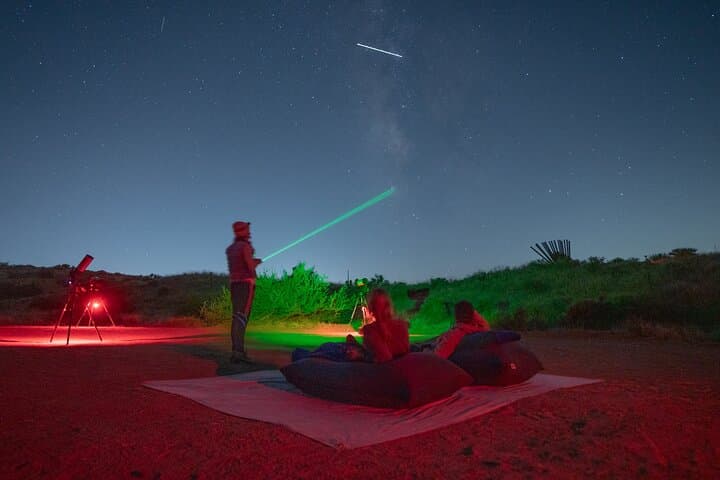
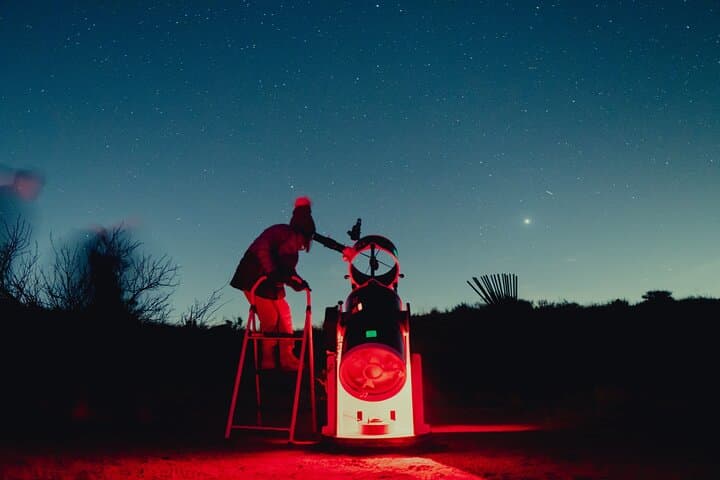
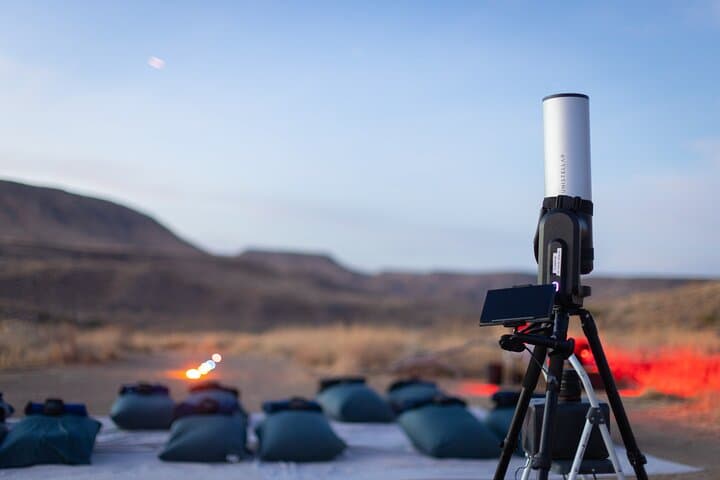
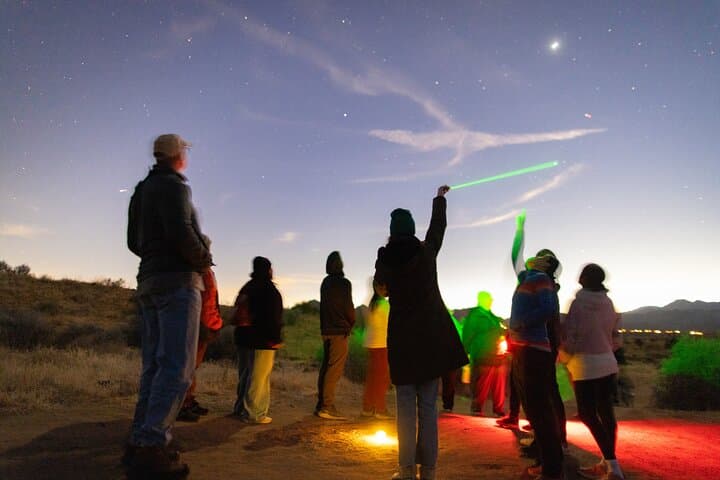
The desert exhales as the sun dies; a wide, cold bowl of sky claims the horizon and the first stars prick through. On this guided evening in Joshua Tree, laser pointers trace mythic patterns while motorized telescopes slide from one deep-sky target to the next. Guests recline in Yogibo loungers with hot chocolate in hand as astronomers cue galaxies, nebulae and planets through pre-programmed optics.
The desert exhales as the sun dies; a wide, cold bowl of sky claims the horizon and the first stars prick through. On this guided evening in Joshua Tree, laser pointers trace mythic patterns while motorized telescopes slide from one deep-sky target to the next. Guests recline in Yogibo loungers with hot chocolate in hand as astronomers cue galaxies, nebulae and planets through pre-programmed optics.
The landscape around you is Mojave — twisted Joshua trees, gnarly granite outcrops and wind-sculpted sand that tell a story of tectonics and time. Indigenous peoples, early homesteaders and miners all left marks here; the night sky was used for navigation and seasonal signals long before modern astronomy made the area an internationally certified dark-sky destination.
Guides frame both myth and science: Greek constellations, the lifecycle of nebulae, and how the Milky Way’s core alters with the seasons. Depending on timing you may watch the ISS or a Starlink train drift through the dome of stars, or study globular clusters through powerful eyepieces.
Practical notes: the experience is a 2-hour program held at a remote site with no cell reception or restrooms. Telescopes, astro-binoculars, blankets and a hot beverage station are provided; transportation is not included. Expect cold temperatures after sunset — desert nights can drop sharply — and download the detailed directions before leaving cell coverage. Plan to stand or sit on a lounger for portions of the program, and use a red light only so the sky remains dark for everyone. With sensible layers, water and respect for the fragile desert environment, this is one of the clearest, most accessible ways to meet the cosmos.