THE ADVENTURE COLLECTIVE® · Independent discovery and booking for outdoor travel

A six-day private loop through Jordan’s headline sites—Amman, Jerash, Madaba, Petra and Wadi Rum—this itinerary balances driving comfort with time on foot to explore ancient cities, desert canyons and mountain viewpoints. Perfect for travelers who want iconic sights with a local pace.
A six-day private loop through Jordan’s headline sites—Amman, Jerash, Madaba, Petra and Wadi Rum—this itinerary balances driving comfort with time on foot to explore ancient cities, desert canyons and mountain viewpoints. Perfect for travelers who want iconic sights with a local pace.
The driver waits at the gate, a placard with your name trembling slightly in the warm Amman wind. You step into an air-conditioned van and watch the city unspool—white stepped houses give way to olive groves, then the low green hills that guard ruined citadels. Over six days this private itinerary moves like a careful reader through Jordan’s most persistent chapters: Roman colonnades that still hum underfoot, Byzantine mosaics that map a vanished world, Nabatean façades cut from living rock, and desert plates where stars push against the dark.
Verified experiences and guided adventures in the surrounding area.
Operated by Amani Tours - Day Tours · Amman, Amman Governorate
The driver waits at the gate, a placard with your name trembling slightly in the warm Amman wind. You step into an air-conditioned van and watch the city unspool—white stepped houses give way to olive groves, then the low green hills that guard ruined citadels. Over six days this private itinerary moves like a careful reader through Jordan’s most persistent chapters: Roman colonnades that still hum underfoot, Byzantine mosaics that map a vanished world, Nabatean façades cut from living rock, and desert plates where stars push against the dark.
Begin where people did for millennia: Amman’s Old City, where the Citadel and Roman Theater rise from the stone like human memory. Jerash follows, a ruin of pillared avenues and triumphal arches whose columns were quarried and erected with imperial audacity. Up in Ajlun, a 12th-century fortress once held watch over iron mines and caravan routes—its towers were Saladin’s reply to a pressing frontier. In Madaba, a Byzantine mosaic map pins Jerusalem and the Nile in tesserae; nearby Mount Nebo offers a wind-scoured vantage where the silhouette of the Jordan Valley cuts into the horizon.
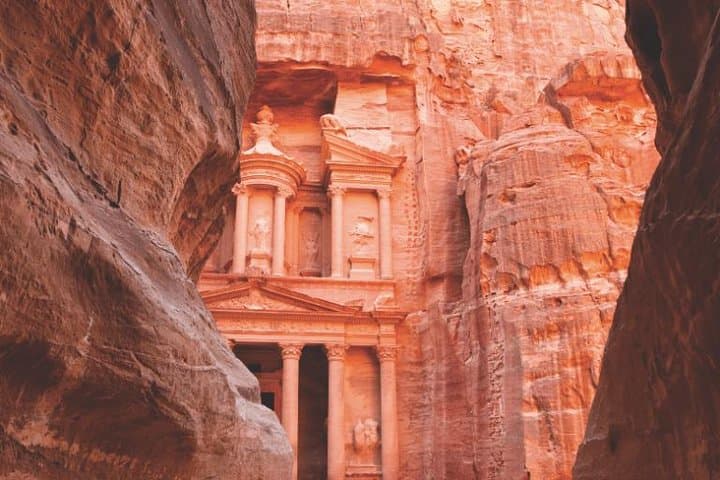
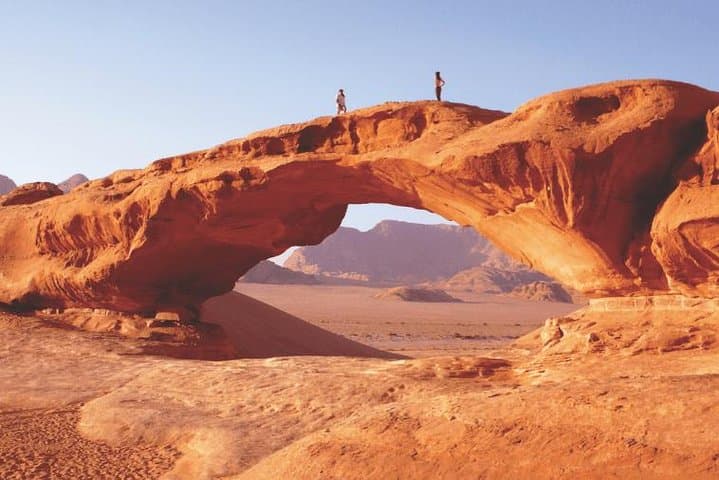
Then the landscape changes: Kerak’s Crusader walls sit at 900 meters, a compact medieval town where Ottoman buildings rub shoulders with modern shops. Petra requires legs and patience—walk the Siq, let the Treasury appear like a reveal in a long play, and save energy for the 800-step climb to the Monastery if you want the reward of near-solitude and sweeping views. Wadi Rum closes the loop: sandstone and basalt plates shaped by wind into forms that seem to move when sunlight shifts. The desert keeps its own time, and the Bedouin camps are direct invitations to sit with it.
Practical matters are simple but decisive. Book the Jordan Pass to skip Petra’s entrance line and save on admissions. Carry at least 2–3 liters of water per day in summer, wear sturdy shoes for uneven ancient stones and desert sand, and plan early starts—Jerash and Petra are best before midday heat. This tour provides private transport, an English-speaking driver (not a licensed guide), on-board Wi‑Fi, and a small daily water bottle; consider hiring local guides on-site at major attractions for deeper historical context.
Terrain varies from paved city sidewalks to loose desert sand and rocky uphill steps; expect moderate exertion with occasional strenuous sections (Petra stairs). Respect fragile archaeological sites—stay on marked paths, avoid touching ancient masonry, and support local Bedouin-run services in Wadi Rum to help keep tourism sustainable. With a careful pace and basic planning, this loop through Jordan feels less like a checklist and more like learning to read the land each new day.
moderate.
6 days.
Moderate fitness: able to walk several hours across uneven surfaces, climb stairs and tolerate long vehicle transfers.
The Jordan Pass is recommended if you plan to enter Petra and other paid sites; it includes multiple admissions and waives the visa fee for many nationalities if purchased before arrival.
Yes; the itinerary includes private, air‑conditioned transportation and airport pickup options per your booking preferences.
The driver is English‑speaking but not a licensed guide; you can hire local licensed guides at major sites like Petra and Jerash for deeper historical tours.
Contact your supplier for exact meal inclusions.
Parts of the itinerary (city drives, viewpoints) are wheelchair accessible, but many archaeological sites like Petra and Wadi Rum have uneven terrain and limited accessibility—check specific locations in advance.
Jordanian dinar is standard; tipping drivers, guides, and camp staff is customary—carry small notes for on‑site tips.
This route threads Roman, Byzantine, Crusader and Nabatean layers—from Jerash’s Greco‑Roman colonnades to Petra’s 1st‑century Nabatean façades and Ajlun’s 12th‑century fortress built under Saladin’s command.
Sites are vulnerable to erosion and visitor wear—stick to marked paths, use refillable water bottles, and choose locally run camps to support the desert economy.
Amani Tours - Day Tours operates guided outdoor trips and adventures with an emphasis on safety, stewardship, and memorable experiences.
The driver waits at the gate, a placard with your name trembling slightly in the warm Amman wind. You step into an air-conditioned van and watch the city unspool—white stepped houses give way to olive groves, then the low green hills that guard ruined citadels. Over six days this private itinerary moves like a careful reader through Jordan’s most persistent chapters: Roman colonnades that still hum underfoot, Byzantine mosaics that map a vanished world, Nabatean façades cut from living rock, and desert plates where stars push against the dark.
The driver waits at the gate, a placard with your name trembling slightly in the warm Amman wind. You step into an air-conditioned van and watch the city unspool—white stepped houses give way to olive groves, then the low green hills that guard ruined citadels. Over six days this private itinerary moves like a careful reader through Jordan’s most persistent chapters: Roman colonnades that still hum underfoot, Byzantine mosaics that map a vanished world, Nabatean façades cut from living rock, and desert plates where stars push against the dark.
Begin where people did for millennia: Amman’s Old City, where the Citadel and Roman Theater rise from the stone like human memory. Jerash follows, a ruin of pillared avenues and triumphal arches whose columns were quarried and erected with imperial audacity. Up in Ajlun, a 12th-century fortress once held watch over iron mines and caravan routes—its towers were Saladin’s reply to a pressing frontier. In Madaba, a Byzantine mosaic map pins Jerusalem and the Nile in tesserae; nearby Mount Nebo offers a wind-scoured vantage where the silhouette of the Jordan Valley cuts into the horizon.
Then the landscape changes: Kerak’s Crusader walls sit at 900 meters, a compact medieval town where Ottoman buildings rub shoulders with modern shops. Petra requires legs and patience—walk the Siq, let the Treasury appear like a reveal in a long play, and save energy for the 800-step climb to the Monastery if you want the reward of near-solitude and sweeping views. Wadi Rum closes the loop: sandstone and basalt plates shaped by wind into forms that seem to move when sunlight shifts. The desert keeps its own time, and the Bedouin camps are direct invitations to sit with it.
Practical matters are simple but decisive. Book the Jordan Pass to skip Petra’s entrance line and save on admissions. Carry at least 2–3 liters of water per day in summer, wear sturdy shoes for uneven ancient stones and desert sand, and plan early starts—Jerash and Petra are best before midday heat. This tour provides private transport, an English-speaking driver (not a licensed guide), on-board Wi‑Fi, and a small daily water bottle; consider hiring local guides on-site at major attractions for deeper historical context.
Terrain varies from paved city sidewalks to loose desert sand and rocky uphill steps; expect moderate exertion with occasional strenuous sections (Petra stairs). Respect fragile archaeological sites—stay on marked paths, avoid touching ancient masonry, and support local Bedouin-run services in Wadi Rum to help keep tourism sustainable. With a careful pace and basic planning, this loop through Jordan feels less like a checklist and more like learning to read the land each new day.