THE ADVENTURE COLLECTIVE® · Independent discovery and booking for outdoor travel

Walk the quieter lanes of the Jordaan with a local guide who opens iron gates to 17th‑century courtyards and tells the social history behind Amsterdam’s canal expansion. Expect cobbles, canalside views, and small‑group storytelling over about 2.5 hours.
Walk the quieter lanes of the Jordaan with a local guide who opens iron gates to 17th‑century courtyards and tells the social history behind Amsterdam’s canal expansion. Expect cobbles, canalside views, and small‑group storytelling over about 2.5 hours.
A soft morning light slips across the canal and the group gathers outside Bistro Berlage, the city's stone face giving way to narrow alleys and the smell of fresh coffee. The tour moves at a steady pace—over cobbles, beside low canal walls, through iron gates that open onto quiet courtyards—each turn revealing a pragmatic, lived-in Amsterdam rather than the postcard façades.
Verified experiences and guided adventures in the surrounding area.
Operated by The Amsterdam Feeling · Amsterdam, Noord-Holland
A soft morning light slips across the canal and the group gathers outside Bistro Berlage, the city's stone face giving way to narrow alleys and the smell of fresh coffee. The tour moves at a steady pace—over cobbles, beside low canal walls, through iron gates that open onto quiet courtyards—each turn revealing a pragmatic, lived-in Amsterdam rather than the postcard façades.
The canal belt and Jordaan grew during the 17th‑century Golden Age when merchants expanded the city on reclaimed land; canals served commerce and drainage, and narrow hofjes (courtyards) were built as early social housing. Guides draw lines between Rembrandt’s era, the first stock exchange, and the 20th‑century community fights that preserved the neighbourhood’s human scale. Geology here is flattened peat and clay reclaimed by dykes and piling—expect a flat walk but uneven paving.
Practical guidance: this is a 2.5‑hour, ~4 km walking experience on flat but cobbled streets; light rain is common year‑round so dress in layers and bring sun/rain protection. The pace is gentle and suitable for most fitness levels; the group size is small (max ~10) so stops at a 1650 hofje, Westerkerk viewpoints, and local markets give time to listen and photograph. Time your walk early or late to avoid tour-boat crowds; keep valuables close, yield to bicycles, and respect private courtyards. With local stories and tangible traces of social history at every corner, the walk rewards curiosity and steady feet.
easy.
2–3 hours.
Suitable for most people who can walk about 4 km/2.5 hours on flat city streets; brief standing periods at stops.
Meet outside Bistro Berlage—look for the Sherlocked sign to the left of the entrance near Beurs van Berlage by Dam Square.
Yes—route notes indicate stroller accessibility, but cobbles can be bumpy so a robust stroller is recommended.
Guides include access to select hofjes with residents’ tolerance; follow instructions and avoid entering private spaces not indicated by the guide.
Guides typically speak English and tours are small—about 10 people maximum for this experience.
The Jordaan developed in the 17th century as a working-class neighborhood on reclaimed peat and clay, with hofjes built in the 1600s as early forms of social housing.
The area is protected by strict preservation rules that limit redevelopment; visitors should stay on public paths and avoid disturbing private gardens and residents.
The Amsterdam Feeling operates guided outdoor trips and adventures with an emphasis on safety, stewardship, and memorable experiences.
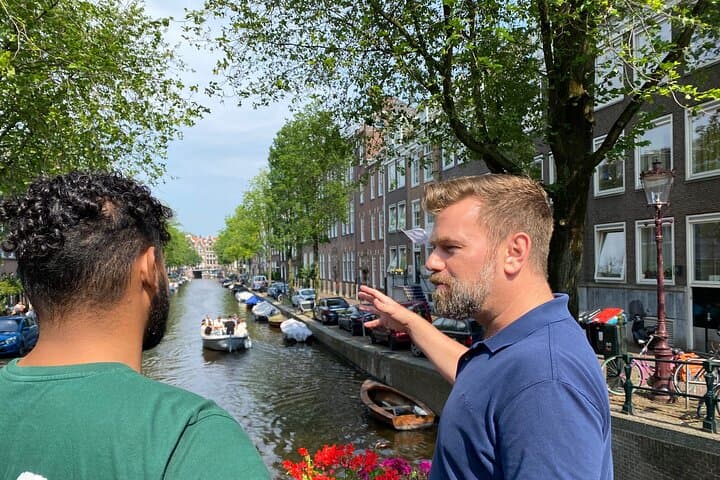
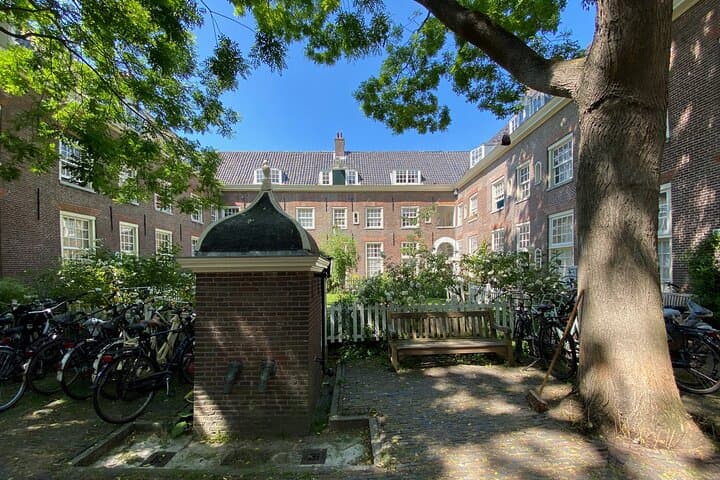
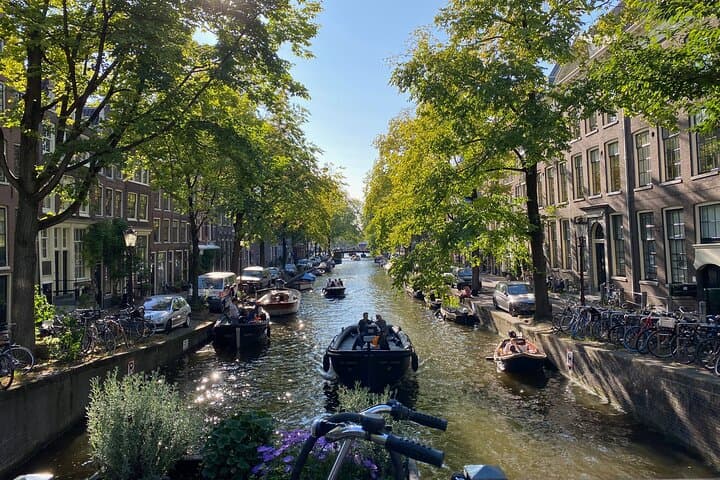
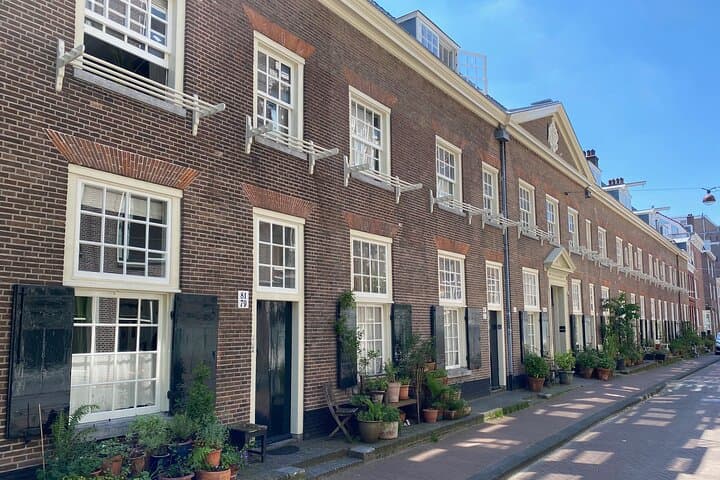
A soft morning light slips across the canal and the group gathers outside Bistro Berlage, the city's stone face giving way to narrow alleys and the smell of fresh coffee. The tour moves at a steady pace—over cobbles, beside low canal walls, through iron gates that open onto quiet courtyards—each turn revealing a pragmatic, lived-in Amsterdam rather than the postcard façades.
A soft morning light slips across the canal and the group gathers outside Bistro Berlage, the city's stone face giving way to narrow alleys and the smell of fresh coffee. The tour moves at a steady pace—over cobbles, beside low canal walls, through iron gates that open onto quiet courtyards—each turn revealing a pragmatic, lived-in Amsterdam rather than the postcard façades.
The canal belt and Jordaan grew during the 17th‑century Golden Age when merchants expanded the city on reclaimed land; canals served commerce and drainage, and narrow hofjes (courtyards) were built as early social housing. Guides draw lines between Rembrandt’s era, the first stock exchange, and the 20th‑century community fights that preserved the neighbourhood’s human scale. Geology here is flattened peat and clay reclaimed by dykes and piling—expect a flat walk but uneven paving.
Practical guidance: this is a 2.5‑hour, ~4 km walking experience on flat but cobbled streets; light rain is common year‑round so dress in layers and bring sun/rain protection. The pace is gentle and suitable for most fitness levels; the group size is small (max ~10) so stops at a 1650 hofje, Westerkerk viewpoints, and local markets give time to listen and photograph. Time your walk early or late to avoid tour-boat crowds; keep valuables close, yield to bicycles, and respect private courtyards. With local stories and tangible traces of social history at every corner, the walk rewards curiosity and steady feet.