THE ADVENTURE COLLECTIVE® · Independent discovery and booking for outdoor travel

Ride a super jeep from Jökulsárlón to the edge of Vatnajökull, then step into a naturally formed ice cave of deep blue halls and living ice. This compact, 2–3 hour winter experience pairs off‑road excitement with close-up glacier exploration.
Ride a super jeep from Jökulsárlón to the edge of Vatnajökull, then step into a naturally formed ice cave of deep blue halls and living ice. This compact, 2–3 hour winter experience pairs off‑road excitement with close-up glacier exploration.
You arrive at Jökulsárlón when the lagoon is doing what it does best: rearranging its furniture. Blue and white bergs drift lazily toward the ocean, their undersides scoured and glassy, a few cracking with a distant, hollow thud. Super jeeps squat at the east parking lot like mechanical pack animals. When the guide calls your name, the convoy rumbles off across glacial moraine, the road dissolving into wrinkled black sand and pumice as the glacier pushes itself across the land.
Verified experiences and guided adventures in the surrounding area.
Operated by Arctic Adventures · Höfn, Austurland
You arrive at Jökulsárlón when the lagoon is doing what it does best: rearranging its furniture. Blue and white bergs drift lazily toward the ocean, their undersides scoured and glassy, a few cracking with a distant, hollow thud. Super jeeps squat at the east parking lot like mechanical pack animals. When the guide calls your name, the convoy rumbles off across glacial moraine, the road dissolving into wrinkled black sand and pumice as the glacier pushes itself across the land.
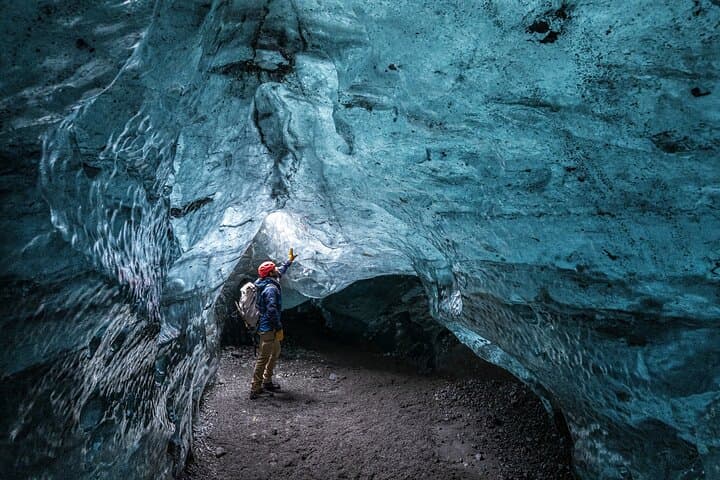
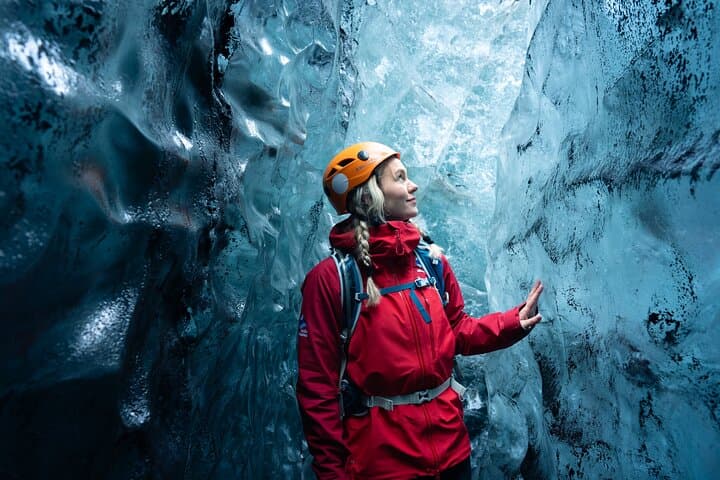
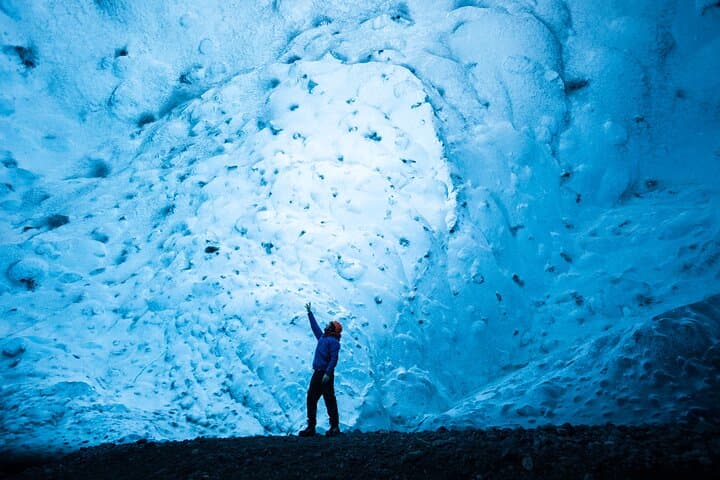
A short, bracing ride later you hop out at the glacier’s edge. The walk to the cave is less than a kilometer, but the terrain is uncompromising—packed snow, icy gravel and occasional meltwater runnels. Inside the cave, light becomes the medium: headlamps cut into walls of compressed ice that glow from electric cobalt to near-translucent white. The guide points out striations formed by centuries of flow and the ribboned bands where volcanic ash was frozen into the glacier during past eruptions. You can run a gloved hand over the ice and feel the slow history of Iceland under your palm.
Vatnajökull is not just a slab of ice; it’s a living archive. Meltwater channels carve new rooms each season, and winter’s cold stages the most dramatic blue chambers as air bubbles are squeezed out under pressure. The lagoon itself—some 64°N and a few hours’ drive from Reykjavík—was born from retreating ice and the river of icebergs it produces; fishermen and locals have long treated the area as both workplace and weatherboard, reading storms and tides like a second language.
Practical notes: the full operation runs about 2–3 hours. Expect a maximum group of 14, mandatory crampons and a short guided walk across uneven, sometimes steep ice. Guides supply crampons and helmets; wear waterproof layers and stiff-soled boots. The route and the cave visited change with conditions—guides pick the safest, most photogenic cavity available that day. Tours can be canceled at short notice if the National Park or operators deem conditions unsafe.
For photographers, bring a spare battery (cold kills capacity) and a wide-angle lens for interior shots; shoot with a low ISO and steady hands or a pocket tripod. Respect the cave: no chipping, no loud groups in fragile sections, follow the guide’s instructions. When the jeep drops you back at the lagoon, take a final look across the black beach at the small, bright fragments of ice polishing themselves into new shapes—nature impatiently at work, daring you to return next winter.
moderate.
2–3 hours.
Suitable for most fitness levels—requires short (5–20 minute) walks on uneven icy terrain and ability to stand for guided briefings.
No. Caves are seasonal and weather-dependent; guides choose caves deemed safe that day and tours may be canceled or rescheduled for safety reasons.
Minimum age is 6 years old; children must be supervised and able to walk on icy terrain with a guide's help.
No prior experience is required—guides provide safety gear, instruction and lead all movement on ice.
It’s about a 5-hour drive (≈379 km) along Route 1 in good conditions; many visitors overnight in Höfn or Skaftafell to split the journey.
Personal gear is usually allowed if it meets safety standards—check with the operator in advance; guides supply certified crampons and helmets.
Not necessarily. Groups are kept small (max 14) but multiple operators visit the same areas; guides manage spacing to minimize disruption.
Vatnajökull has shaped local settlement and folklore for centuries; the glacier’s ebb and flow created the lagoon only as recently as the late 20th century.
The ice caves are fleeting features—stay with guides, avoid touching or removing ice, and follow park rules to limit erosion and disturbance.
Arctic Adventures operates guided outdoor trips and adventures with an emphasis on safety, stewardship, and memorable experiences.
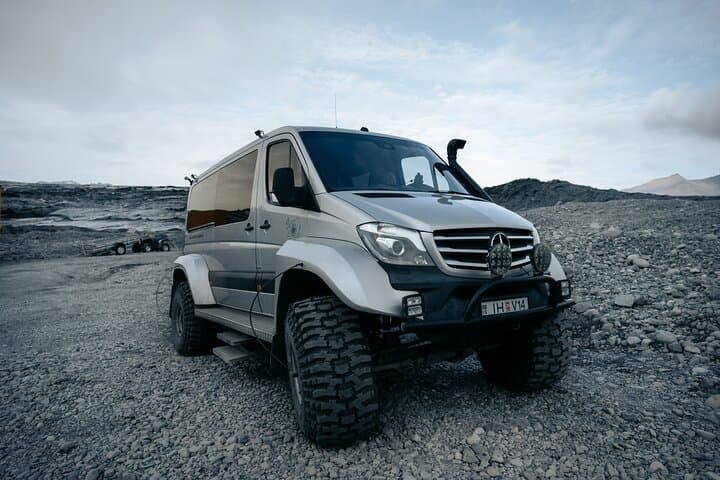
You arrive at Jökulsárlón when the lagoon is doing what it does best: rearranging its furniture. Blue and white bergs drift lazily toward the ocean, their undersides scoured and glassy, a few cracking with a distant, hollow thud. Super jeeps squat at the east parking lot like mechanical pack animals. When the guide calls your name, the convoy rumbles off across glacial moraine, the road dissolving into wrinkled black sand and pumice as the glacier pushes itself across the land.
You arrive at Jökulsárlón when the lagoon is doing what it does best: rearranging its furniture. Blue and white bergs drift lazily toward the ocean, their undersides scoured and glassy, a few cracking with a distant, hollow thud. Super jeeps squat at the east parking lot like mechanical pack animals. When the guide calls your name, the convoy rumbles off across glacial moraine, the road dissolving into wrinkled black sand and pumice as the glacier pushes itself across the land.
A short, bracing ride later you hop out at the glacier’s edge. The walk to the cave is less than a kilometer, but the terrain is uncompromising—packed snow, icy gravel and occasional meltwater runnels. Inside the cave, light becomes the medium: headlamps cut into walls of compressed ice that glow from electric cobalt to near-translucent white. The guide points out striations formed by centuries of flow and the ribboned bands where volcanic ash was frozen into the glacier during past eruptions. You can run a gloved hand over the ice and feel the slow history of Iceland under your palm.
Vatnajökull is not just a slab of ice; it’s a living archive. Meltwater channels carve new rooms each season, and winter’s cold stages the most dramatic blue chambers as air bubbles are squeezed out under pressure. The lagoon itself—some 64°N and a few hours’ drive from Reykjavík—was born from retreating ice and the river of icebergs it produces; fishermen and locals have long treated the area as both workplace and weatherboard, reading storms and tides like a second language.
Practical notes: the full operation runs about 2–3 hours. Expect a maximum group of 14, mandatory crampons and a short guided walk across uneven, sometimes steep ice. Guides supply crampons and helmets; wear waterproof layers and stiff-soled boots. The route and the cave visited change with conditions—guides pick the safest, most photogenic cavity available that day. Tours can be canceled at short notice if the National Park or operators deem conditions unsafe.
For photographers, bring a spare battery (cold kills capacity) and a wide-angle lens for interior shots; shoot with a low ISO and steady hands or a pocket tripod. Respect the cave: no chipping, no loud groups in fragile sections, follow the guide’s instructions. When the jeep drops you back at the lagoon, take a final look across the black beach at the small, bright fragments of ice polishing themselves into new shapes—nature impatiently at work, daring you to return next winter.