THE ADVENTURE COLLECTIVE® · Independent discovery and booking for outdoor travel

See floating icebergs at Jökulsárlón and glittering ice on the black sands of Diamond Beach on a 7-hour shore excursion from Djúpivogur. Ideal for cruise visitors, this easy-paced tour pairs striking glacial geology with accessible viewpoints at Eystrahorn.
See floating icebergs at Jökulsárlón and glittering ice on the black sands of Diamond Beach on a 7-hour shore excursion from Djúpivogur. Ideal for cruise visitors, this easy-paced tour pairs striking glacial geology with accessible viewpoints at Eystrahorn.
A wind-sketched shoreline opens as your bus eases away from Djúpivogur and the Atlantic widens to meet ice. In the low light the floating bergs of Jökulsárlón sit like slow ships, their weathered faces stamped by centuries of freeze and melt. Diamond Beach gleams in contrast: shards of clear ice scattered across black volcanic sand, each piece catching sunlight like a small, accidental lantern.
Verified experiences and guided adventures in the surrounding area.
Operated by BusTravel Iceland · Djúpivogur, Austurland
A wind-sketched shoreline opens as your bus eases away from Djúpivogur and the Atlantic widens to meet ice. In the low light the floating bergs of Jökulsárlón sit like slow ships, their weathered faces stamped by centuries of freeze and melt. Diamond Beach gleams in contrast: shards of clear ice scattered across black volcanic sand, each piece catching sunlight like a small, accidental lantern.
Geology here is dramatic and recent — Vatnajökull, Europe’s largest ice cap, feeds the lagoon; calving events push icebergs into a glacial river that slowly finds the sea. The black sand is volcanic ash ground fine by repeated eruptions and glacial abrasion. Culturally the route links remote East Iceland fishing communities that have long depended on the sea; photography and small-scale tourism now supplement local livelihoods.
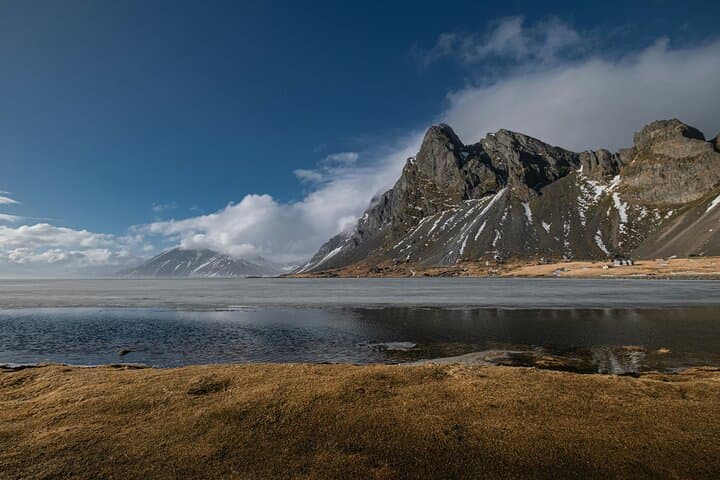
Expect calm viewing points rather than strenuous hiking: short walks on firm paths and beach sand, plus roadside stops at Eystrahorn for clear mountain-and-sea compositions. Weather changes quickly — wind, rain, and sun can come through in an hour — so layers matter. Timing with tides affects how much ice rests on the beach; mornings often offer glassy lagoon surfaces but any daylight can be spectacular.
Practical tips: carry waterproof outerwear and sturdy boots for black sand, bring a telephoto and wide-angle lens, and keep distance from unstable ice and waves. Operators typically return to the ship on schedule, but allow time for photography and short explorations. This excursion delivers high-impact scenery with low physical demand, making it ideal for cruise visitors aiming for unforgettable Arctic coastal landscapes.
easy.
Approximately 7 hours.
Suitable for most fitness levels; involves short, mostly flat walks and standing at viewpoints
Total round-trip driving time is included in the 7-hour tour; expect roughly 2–2.5 hours each way depending on stops and conditions.
Yes — the tour notes it’s suitable for ages 2 and up, but parents should monitor children near the surf and unstable ice.
Yes — the itinerary includes short guided stops with time to walk on defined shorelines and photo viewpoints at the lagoon, Diamond Beach, and Eystrahorn.
Yes — operators may cancel for severe weather; refund policies typically allow full refunds if canceled within the stated window.
The lagoon was formed as Vatnajökull’s outlet glaciers retreated during the 20th century; small coastal villages here have long histories tied to fishing and seasonal fjord travel.
This landscape is sensitive to climate change and visitor impact; stay on paths, carry out waste, and avoid disturbing wildlife or levering ice from the water.
BusTravel Iceland operates guided outdoor trips and adventures with an emphasis on safety, stewardship, and memorable experiences.
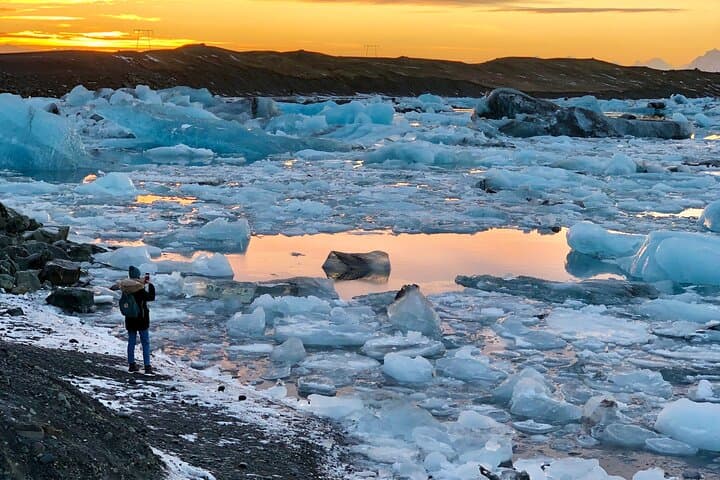
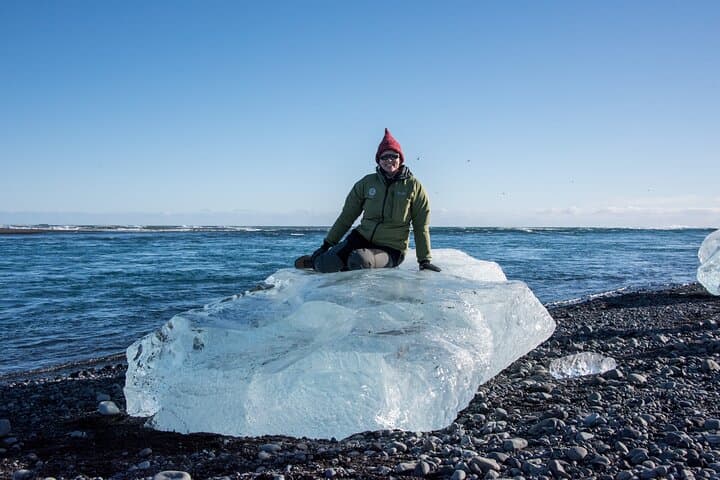
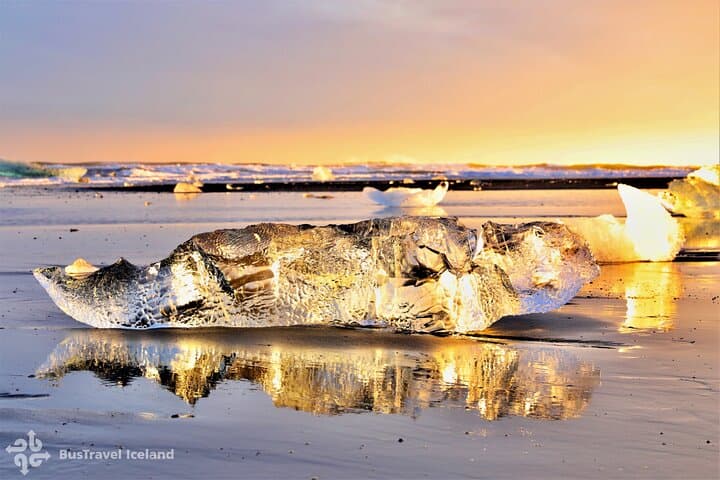
A wind-sketched shoreline opens as your bus eases away from Djúpivogur and the Atlantic widens to meet ice. In the low light the floating bergs of Jökulsárlón sit like slow ships, their weathered faces stamped by centuries of freeze and melt. Diamond Beach gleams in contrast: shards of clear ice scattered across black volcanic sand, each piece catching sunlight like a small, accidental lantern.
A wind-sketched shoreline opens as your bus eases away from Djúpivogur and the Atlantic widens to meet ice. In the low light the floating bergs of Jökulsárlón sit like slow ships, their weathered faces stamped by centuries of freeze and melt. Diamond Beach gleams in contrast: shards of clear ice scattered across black volcanic sand, each piece catching sunlight like a small, accidental lantern.
Geology here is dramatic and recent — Vatnajökull, Europe’s largest ice cap, feeds the lagoon; calving events push icebergs into a glacial river that slowly finds the sea. The black sand is volcanic ash ground fine by repeated eruptions and glacial abrasion. Culturally the route links remote East Iceland fishing communities that have long depended on the sea; photography and small-scale tourism now supplement local livelihoods.
Expect calm viewing points rather than strenuous hiking: short walks on firm paths and beach sand, plus roadside stops at Eystrahorn for clear mountain-and-sea compositions. Weather changes quickly — wind, rain, and sun can come through in an hour — so layers matter. Timing with tides affects how much ice rests on the beach; mornings often offer glassy lagoon surfaces but any daylight can be spectacular.
Practical tips: carry waterproof outerwear and sturdy boots for black sand, bring a telephoto and wide-angle lens, and keep distance from unstable ice and waves. Operators typically return to the ship on schedule, but allow time for photography and short explorations. This excursion delivers high-impact scenery with low physical demand, making it ideal for cruise visitors aiming for unforgettable Arctic coastal landscapes.