THE ADVENTURE COLLECTIVE® · Independent discovery and booking for outdoor travel

Trade the daytime crowds for a small-group, headlamp-led trek through Johnston Canyon at night. This guided icewalk brings you to glittering frozen falls, hot chocolate at the turnaround, and the rare hush of a canyon under the stars.
Trade the daytime crowds for a small-group, headlamp-led trek through Johnston Canyon at night. This guided icewalk brings you to glittering frozen falls, hot chocolate at the turnaround, and the rare hush of a canyon under the stars.
The trail begins as a ribbon of light threading through spruce and lodgepole pine. Under your new headlamp the limestone walls gleam, and the usual daytime crowd is replaced by a hush: only the canyon’s breath and the soft grind of ice under cleats. Guides stop periodically to kill the lights, and darkness opens a different set of senses—water becomes sound, cold becomes texture, the air smells of cold resin and river spray.
Verified experiences and guided adventures in the surrounding area.
Operated by Discover Banff Tours · Banff, Alberta
The trail begins as a ribbon of light threading through spruce and lodgepole pine. Under your new headlamp the limestone walls gleam, and the usual daytime crowd is replaced by a hush: only the canyon’s breath and the soft grind of ice under cleats. Guides stop periodically to kill the lights, and darkness opens a different set of senses—water becomes sound, cold becomes texture, the air smells of cold resin and river spray.
Johnston Canyon cuts through Paleozoic limestone laid down when this region was a shallow sea. Over millennia, meltwater and seasonal floods carved the narrow gorge and sculpted the ledges that now carry suspended catwalks above the canyon floor. The Lower Falls, the turnaround of this evening route, is a study in winter geology: rushing water trapped under layers of expanding ice that the guide will illuminate, making the canyon glow from within.
Culturally, the Bow Valley has long been a travel corridor. Indigenous peoples moved through these valleys for generations; later, railway and highway development opened the area to recreation. Tonight’s walk is modest in distance—about 1.4 miles (2.2 km) round trip with 213 feet (65 m) of elevation gain—but the setting feels remote. Small-group guiding (max 12) ensures you get context about local flora, avalanche awareness, and how the canyon changes from season to season.
Practically, this is a winter-focused experience where preparation matters. The advertised tour runs roughly 2–2.5 hours including transport; the walking segment is 60–90 minutes. Guides provide ice cleats, a hiking pole, hot chocolate, a maple cookie, and a headlamp you keep—simple kit that turns a standard hike into a nocturnal adventure. Temperatures in Banff winter span a wide window: be ready for severe cold and strong wind chill. The operator enforces warm clothing and appropriate boots; if attire is unsafe they will refuse participation for safety.
Timing and logistics are straightforward: pick-up is offered at several Banff hotels or meet at the public bus parking behind the Mount Royal Hotel. The walk is family-friendly from age 8 with a guardian present for minors. Because weather can shift quickly, the tour may be canceled for safety—your booking has a 24-hour full-refund policy.
For photographers, the headlamp light reveals textures in the ice and creates contrast against shadowed rock; longer exposures on a tripod at the Lower Falls can capture flowing water halos if your camera handles cold. After the walk, let your eyes readjust and consider a quiet walk back under moonlight—the forest will feel like it’s closing ranks around you, guiding you out.
This is an elemental, short winter outing: a chance to trade the sunlit crowds of Banff for a night that foregrounds sound, light, and the slow, deliberate work of ice and water.
easy.
2–2.5 hours.
Suitable for anyone who can walk 1–1.5 hours on uneven ground; minimal cardio required, but comfortable mobility and cold tolerance are necessary.
Expect 1–1.5 hours of walking covering about 1.4 miles (2.2 km) round trip with roughly 213 feet (65 m) of elevation gain.
Yes—ice cleats are provided and fitted by guides, and headlamps are included for you to keep.
The minimum age is 8; all guests 15 and under must be accompanied by someone 18 or older.
The operator may cancel for safety under its Cold Weather Policy; you’ll be offered a refund or reschedule—full refund if canceled at least 24 hours before departure.
Yes—photography is allowed; bring a tripod or stabilizer for best results in low light and protect batteries from extreme cold.
No—the suspended catwalks and icy conditions make this experience unsuitable for wheelchairs or those needing significant mobility assistance.
Johnston Canyon was carved from ancient marine limestone; early 20th-century road and rail development opened the area to recreation, and trail infrastructure evolved to protect fragile canyon walls.
Stay on the catwalk and follow guide instructions to prevent erosion and protect winter-sensitive plants; the operator limits group sizes to reduce impact.
Discover Banff Tours operates guided outdoor trips and adventures with an emphasis on safety, stewardship, and memorable experiences.
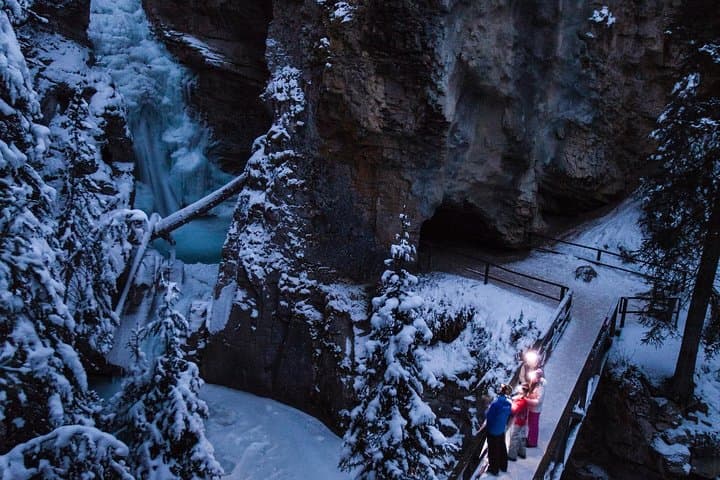
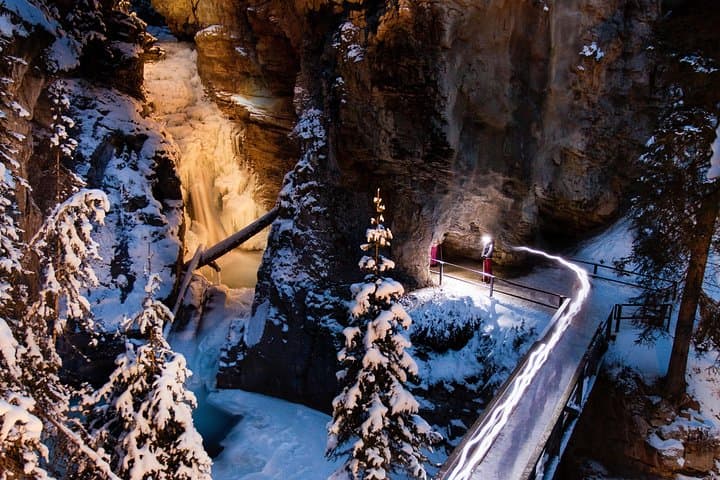
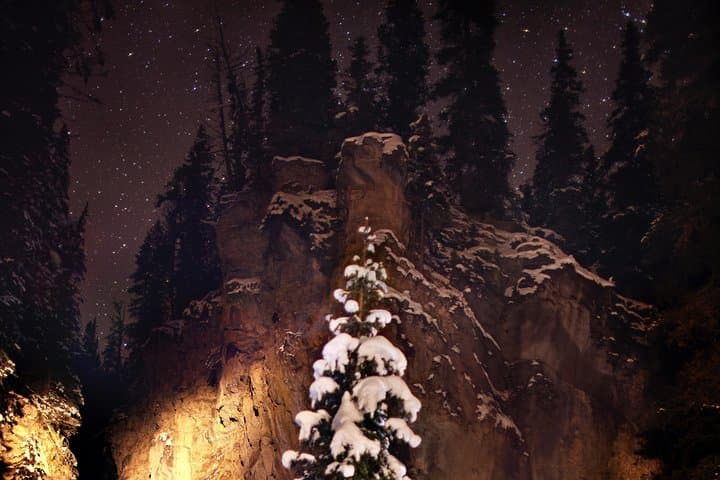
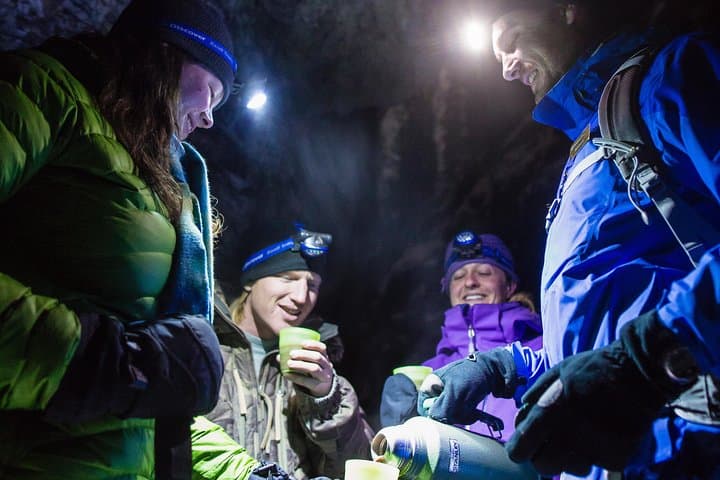
The trail begins as a ribbon of light threading through spruce and lodgepole pine. Under your new headlamp the limestone walls gleam, and the usual daytime crowd is replaced by a hush: only the canyon’s breath and the soft grind of ice under cleats. Guides stop periodically to kill the lights, and darkness opens a different set of senses—water becomes sound, cold becomes texture, the air smells of cold resin and river spray.
The trail begins as a ribbon of light threading through spruce and lodgepole pine. Under your new headlamp the limestone walls gleam, and the usual daytime crowd is replaced by a hush: only the canyon’s breath and the soft grind of ice under cleats. Guides stop periodically to kill the lights, and darkness opens a different set of senses—water becomes sound, cold becomes texture, the air smells of cold resin and river spray.
Johnston Canyon cuts through Paleozoic limestone laid down when this region was a shallow sea. Over millennia, meltwater and seasonal floods carved the narrow gorge and sculpted the ledges that now carry suspended catwalks above the canyon floor. The Lower Falls, the turnaround of this evening route, is a study in winter geology: rushing water trapped under layers of expanding ice that the guide will illuminate, making the canyon glow from within.
Culturally, the Bow Valley has long been a travel corridor. Indigenous peoples moved through these valleys for generations; later, railway and highway development opened the area to recreation. Tonight’s walk is modest in distance—about 1.4 miles (2.2 km) round trip with 213 feet (65 m) of elevation gain—but the setting feels remote. Small-group guiding (max 12) ensures you get context about local flora, avalanche awareness, and how the canyon changes from season to season.
Practically, this is a winter-focused experience where preparation matters. The advertised tour runs roughly 2–2.5 hours including transport; the walking segment is 60–90 minutes. Guides provide ice cleats, a hiking pole, hot chocolate, a maple cookie, and a headlamp you keep—simple kit that turns a standard hike into a nocturnal adventure. Temperatures in Banff winter span a wide window: be ready for severe cold and strong wind chill. The operator enforces warm clothing and appropriate boots; if attire is unsafe they will refuse participation for safety.
Timing and logistics are straightforward: pick-up is offered at several Banff hotels or meet at the public bus parking behind the Mount Royal Hotel. The walk is family-friendly from age 8 with a guardian present for minors. Because weather can shift quickly, the tour may be canceled for safety—your booking has a 24-hour full-refund policy.
For photographers, the headlamp light reveals textures in the ice and creates contrast against shadowed rock; longer exposures on a tripod at the Lower Falls can capture flowing water halos if your camera handles cold. After the walk, let your eyes readjust and consider a quiet walk back under moonlight—the forest will feel like it’s closing ranks around you, guiding you out.
This is an elemental, short winter outing: a chance to trade the sunlit crowds of Banff for a night that foregrounds sound, light, and the slow, deliberate work of ice and water.