THE ADVENTURE COLLECTIVE® · Independent discovery and booking for outdoor travel

Paddle through Phang Nga Bay’s limestone hongs with experienced guides, a support boat, and a twilight kratong ceremony. This full-day cave-canoeing trip balances easy sightseeing with moderate paddling—timed for tides and dramatic light.
Paddle through Phang Nga Bay’s limestone hongs with experienced guides, a support boat, and a twilight kratong ceremony. This full-day cave-canoeing trip balances easy sightseeing with moderate paddling—timed for tides and dramatic light.
The water is a bright, shallow green as the pier recedes and limestone towers begin to stitch the horizon. You push off from Ao Po and the support boat slips alongside—your guide loads paddles and life jackets, and the kayaks hum with the quiet of a day spent reading tides. In Phang Nga Bay the karst islands act like doors; at the right tide they open to reveal "hongs"—room-sized sea caves and cliff-ringed lagoons that seem to breathe.
Verified experiences and guided adventures in the surrounding area.
Operated by I Asia Thailand · Phuket, Phuket Province
The water is a bright, shallow green as the pier recedes and limestone towers begin to stitch the horizon. You push off from Ao Po and the support boat slips alongside—your guide loads paddles and life jackets, and the kayaks hum with the quiet of a day spent reading tides. In Phang Nga Bay the karst islands act like doors; at the right tide they open to reveal "hongs"—room-sized sea caves and cliff-ringed lagoons that seem to breathe.
Geology here is active language: porous limestone carved by millennia of waves and rain into arches, chimneys and narrow tidal neaps. The area drew local fishers and early Malay settlers; today it’s protected under Thailand’s park system and threaded with boat lanes and low-profile ecosystems. Guides point out mudskippers, kingfishers and the odd macaque lounging on a cliff lip while Brahminy kites wheel overhead.
Practically, this is a guided, full-day trip (about 10 hours) that mixes guided paddling through tidal caves with a support boat, Thai buffet meals, and a late-evening kratong (floating flower) ritual. Timing and tides dictate whether hongs are paddle-throughable, so operators launch mid-day to dodge crowds and optimize conditions. Expect moderate physical effort—sustained sitting and paddling with short carries—plus wet shoes and a sun hat. Bring reef-safe sunscreen, a dry bag for electronics, and layers for the cool boat ride home. Be prepared for changing plans: weather, sea state and tides decide the route. When the light falls, the bay closes around you and the lantern-lit krathong floats like a small, human-made constellation—quiet, local and elemental.
moderate.
10 hours.
Moderate cardiovascular fitness and core endurance recommended; you’ll sit and paddle for sustained periods and sometimes carry equipment short distances.
The full experience is about 10 hours from Phuket hotel pickup to return; launches are usually mid-day to late afternoon to align with tides and avoid crowds.
No advanced skills are required—guides lead and assist; basic paddling ability and the ability to sit and paddle for extended periods are recommended.
Yes—access to certain caves depends on tide and sea conditions; the operator may alter the route or cancel for safety, with refund or rebooking policies in place.
Yes—light Thai lunch, seafood/vegan buffet on the return, and national park fees are included as described by the operator.
Phang Nga’s karst islands formed over millions of years; the bay has long been used by local fishing communities and now falls under national park protections.
Tour operators limit numbers and routes to reduce reef and wildlife disturbance—use reef-safe products, avoid touching wildlife, and follow guide instructions to minimize impact.
I Asia Thailand operates guided outdoor trips and adventures with an emphasis on safety, stewardship, and memorable experiences.
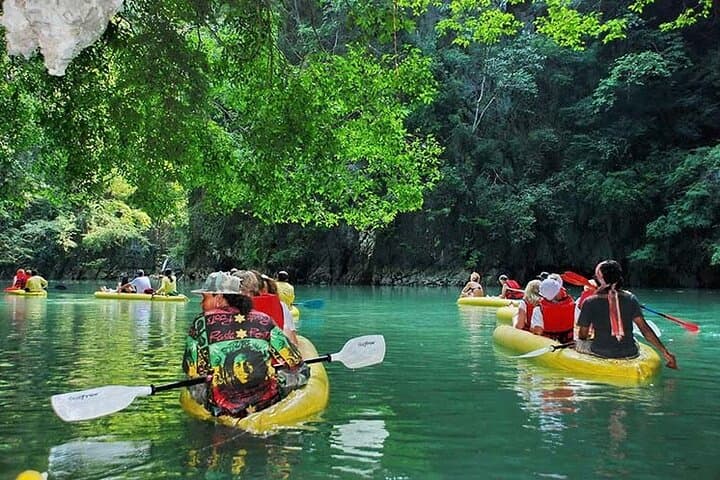
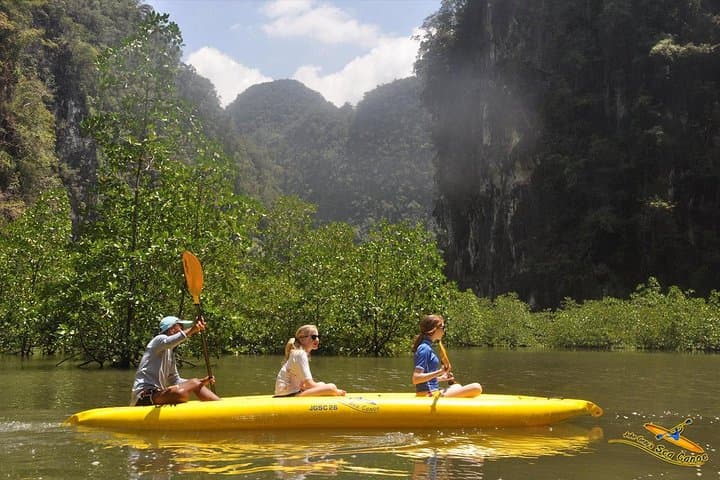
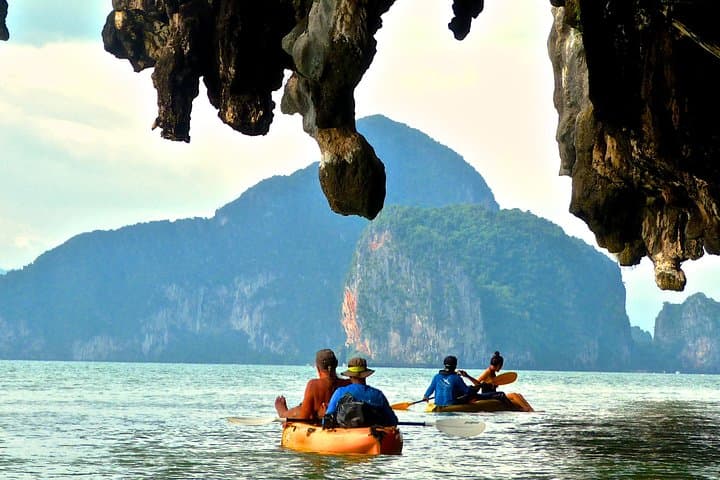
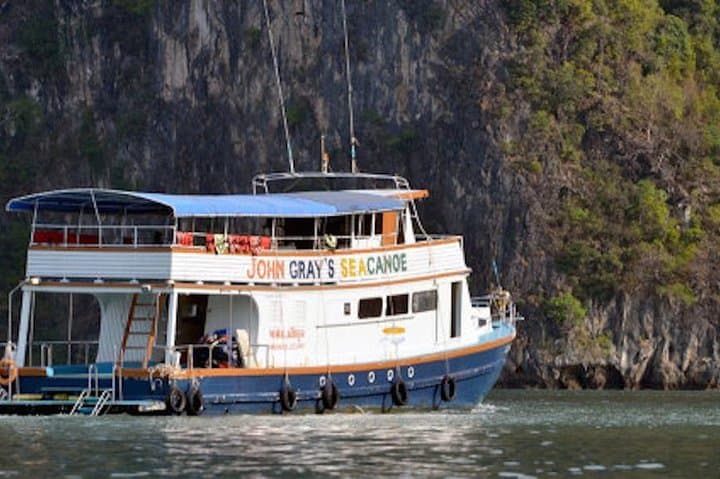
The water is a bright, shallow green as the pier recedes and limestone towers begin to stitch the horizon. You push off from Ao Po and the support boat slips alongside—your guide loads paddles and life jackets, and the kayaks hum with the quiet of a day spent reading tides. In Phang Nga Bay the karst islands act like doors; at the right tide they open to reveal "hongs"—room-sized sea caves and cliff-ringed lagoons that seem to breathe.
The water is a bright, shallow green as the pier recedes and limestone towers begin to stitch the horizon. You push off from Ao Po and the support boat slips alongside—your guide loads paddles and life jackets, and the kayaks hum with the quiet of a day spent reading tides. In Phang Nga Bay the karst islands act like doors; at the right tide they open to reveal "hongs"—room-sized sea caves and cliff-ringed lagoons that seem to breathe.
Geology here is active language: porous limestone carved by millennia of waves and rain into arches, chimneys and narrow tidal neaps. The area drew local fishers and early Malay settlers; today it’s protected under Thailand’s park system and threaded with boat lanes and low-profile ecosystems. Guides point out mudskippers, kingfishers and the odd macaque lounging on a cliff lip while Brahminy kites wheel overhead.
Practically, this is a guided, full-day trip (about 10 hours) that mixes guided paddling through tidal caves with a support boat, Thai buffet meals, and a late-evening kratong (floating flower) ritual. Timing and tides dictate whether hongs are paddle-throughable, so operators launch mid-day to dodge crowds and optimize conditions. Expect moderate physical effort—sustained sitting and paddling with short carries—plus wet shoes and a sun hat. Bring reef-safe sunscreen, a dry bag for electronics, and layers for the cool boat ride home. Be prepared for changing plans: weather, sea state and tides decide the route. When the light falls, the bay closes around you and the lantern-lit krathong floats like a small, human-made constellation—quiet, local and elemental.