THE ADVENTURE COLLECTIVE® · Independent discovery and booking for outdoor travel

Spend a day tracing Johannesburg’s gold-rush architecture and Soweto’s powerful role in South Africa’s history. This full-day, 6–7 hour tour combines Constitution Hill, Vilakazi Street and the Apartheid Museum with practical local insight.
Spend a day tracing Johannesburg’s gold-rush architecture and Soweto’s powerful role in South Africa’s history. This full-day, 6–7 hour tour combines Constitution Hill, Vilakazi Street and the Apartheid Museum with practical local insight.
The morning light over Johannesburg hits corrugated roofs and glass towers in the same breath; on this full-day tour the city opens like a layered book—industrial precincts, courtroom steps and the proud streets of Soweto.
Verified experiences and guided adventures in the surrounding area.
Operated by Tsalanang Tours · Johannesburg, Gauteng
The morning light over Johannesburg hits corrugated roofs and glass towers in the same breath; on this full-day tour the city opens like a layered book—industrial precincts, courtroom steps and the proud streets of Soweto.
Starting at Constitution Hill, visitors stand where South Africa’s fraught legal history and the post-apartheid judiciary meet. The route crosses Newtown and Braamfontein, areas defined by turn-of-the-century mining wealth and modern cultural regeneration, and pauses at Vilakazi Street on Soweto’s historic main drag where Nelson Mandela and Desmond Tutu once lived.
Geology here is subtle: Johannesburg sits atop the mineral-rich Witwatersrand ridge, the gold-bearing seams that birthed the 'City of Gold' and shaped urban growth. Culture and memory are the tour’s axis—Hector Pieterson Memorial and the Apartheid Museum sketch national struggle and social change, while Soweto’s township life shows resilience and contemporary creativity.
Practical guidance follows the history: plan a 6–7 hour day with sensible walking shoes—pavement and short stair sections are typical. Museums include timed entries, and Mandela House often requires an extra ticket. Wear layers; Johannesburg’s weather swings from cool mornings to hot afternoons. Bring a refillable water bottle and a local SIM or offline map for pickup/drop-off coordination.
This is a day framed by stories and streets rather than altitude or wilderness—expect steady, accessible walking, vivid civic history, and moments where the city’s industrial past and living culture converge.
easy.
6–7 hours.
Suitable for most fitness levels; involves several hours of urban walking with short pauses.
Most scheduled tours include hotel or central pickup—confirm your pickup point when booking and provide flight or arrival details if required.
The Apartheid Museum admission is included on this itinerary when available; smaller sites like Mandela House may require separate entrance fees paid on-site.
The tour is described as stroller accessible, but expect walking segments and museum staircases—check with the operator for infant seats or special assistance.
Operators typically offer some customization to focus on particular sites or extend time at museums; request changes when booking but note group-size limits may apply.
Johannesburg grew from the 1886 Witwatersrand gold rush; Soweto became a focal point of anti-apartheid resistance, notably during the 1976 student uprising.
Cultural heritage sites balance access with preservation—follow site rules, avoid touching displays and support local guides and museums to sustain community-driven tourism.
Tsalanang Tours operates guided outdoor trips and adventures with an emphasis on safety, stewardship, and memorable experiences.
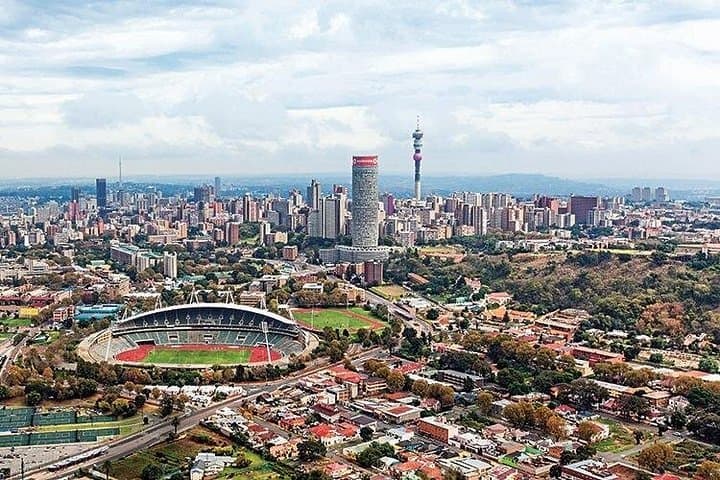


The morning light over Johannesburg hits corrugated roofs and glass towers in the same breath; on this full-day tour the city opens like a layered book—industrial precincts, courtroom steps and the proud streets of Soweto.
The morning light over Johannesburg hits corrugated roofs and glass towers in the same breath; on this full-day tour the city opens like a layered book—industrial precincts, courtroom steps and the proud streets of Soweto.
Starting at Constitution Hill, visitors stand where South Africa’s fraught legal history and the post-apartheid judiciary meet. The route crosses Newtown and Braamfontein, areas defined by turn-of-the-century mining wealth and modern cultural regeneration, and pauses at Vilakazi Street on Soweto’s historic main drag where Nelson Mandela and Desmond Tutu once lived.
Geology here is subtle: Johannesburg sits atop the mineral-rich Witwatersrand ridge, the gold-bearing seams that birthed the 'City of Gold' and shaped urban growth. Culture and memory are the tour’s axis—Hector Pieterson Memorial and the Apartheid Museum sketch national struggle and social change, while Soweto’s township life shows resilience and contemporary creativity.
Practical guidance follows the history: plan a 6–7 hour day with sensible walking shoes—pavement and short stair sections are typical. Museums include timed entries, and Mandela House often requires an extra ticket. Wear layers; Johannesburg’s weather swings from cool mornings to hot afternoons. Bring a refillable water bottle and a local SIM or offline map for pickup/drop-off coordination.
This is a day framed by stories and streets rather than altitude or wilderness—expect steady, accessible walking, vivid civic history, and moments where the city’s industrial past and living culture converge.