THE ADVENTURE COLLECTIVE® · Independent discovery and booking for outdoor travel

Trace South Africa’s modern history on a full-day Johannesburg tour that combines Constitutional Hill, the Apartheid Museum and Soweto. Expect guided context, walking between exhibits, and visits to Mandela House and key resistance sites.
Trace South Africa’s modern history on a full-day Johannesburg tour that combines Constitutional Hill, the Apartheid Museum and Soweto. Expect guided context, walking between exhibits, and visits to Mandela House and key resistance sites.
You step into a low winter sun on a Johannesburg morning as the minivan eases away from the curb and the city opens: corrugated rooftops, the Nelson Mandela Bridge slicing the skyline, and a history that presses close.
Verified experiences and guided adventures in the surrounding area.
Operated by Africa Moja Tours & Safaris · Johannesburg, Gauteng
You step into a low winter sun on a Johannesburg morning as the minivan eases away from the curb and the city opens: corrugated rooftops, the Nelson Mandela Bridge slicing the skyline, and a history that presses close.
The tour threads through Constitutional Hill, once a complex of prisons and a court now guarding memory. Rooms and cells speak in measured silence; the constitutional court above feels like a conversation continuing after decades of struggle. Driving across the Witwatersrand—ground broken by the 1886 gold rush—the landscape still shows the city’s geology and how mining shaped its neighborhoods.
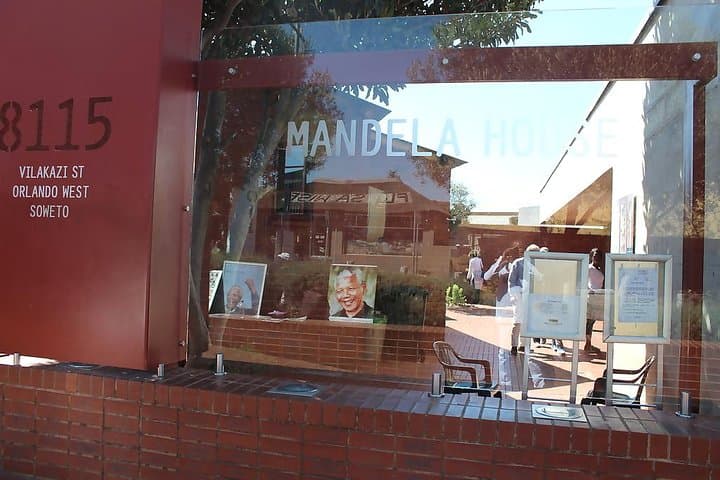
At the Apartheid Museum, exhibits map laws, resistance and life before 1994 with artifacts and testimonies that are frank, sobering and essential for context. The route ends in Soweto, where Vilakazi Street, Mandela House and the Hector Pieterson memorial locate the human stories behind headlines. Kliptown, where the Freedom Charter was adopted, and Regina Mundi Church underscore how communities made law and sanctuary.
Practical side: expect five to nine hours of walking and short drives, guided commentary and included lunch and bottled water. Wear sturdy shoes for uneven museum courtyards, carry ID for entry, and leave large bags at your hotel when possible. Budget time for traffic between sites—Johannesburg’s streets can be slow at peak hours. Respect memorials and local customs; tipping drivers and guides is customary. This is a day for listening to place as much as seeing it—history here is spatial, public and immediate.
easy.
9 hours.
Suitable for most fitness levels; involves several short walks and standing during exhibits
The tour runs about nine hours and includes Constitutional Hill, the Apartheid Museum, and a guided visit to Soweto with stops at Vilakazi Street, Mandela House and the Hector Pieterson memorial.
Yes—admission to listed museums and lunch, snacks and bottled water are included in the booking price.
Some sites have accessible paths and ramps, but older buildings and certain memorials may have stairs; contact the operator ahead to confirm accessibility needs.
Pickup is offered from Johannesburg hotels and OR Tambo Airport when requested during booking; confirm exact pickup time and location in advance.
Johannesburg grew from the 1886 Witwatersrand gold rush; the city’s layout and many township histories are direct outcomes of rapid industrial and mining expansion and the segregationist policies that followed.
Sites are managed to preserve fragile archives and memorials—stay on marked paths, avoid touching exhibits and support local guides and museums through entrance fees and respectful behavior.
Africa Moja Tours & Safaris operates guided outdoor trips and adventures with an emphasis on safety, stewardship, and memorable experiences.
You step into a low winter sun on a Johannesburg morning as the minivan eases away from the curb and the city opens: corrugated rooftops, the Nelson Mandela Bridge slicing the skyline, and a history that presses close.
You step into a low winter sun on a Johannesburg morning as the minivan eases away from the curb and the city opens: corrugated rooftops, the Nelson Mandela Bridge slicing the skyline, and a history that presses close.
The tour threads through Constitutional Hill, once a complex of prisons and a court now guarding memory. Rooms and cells speak in measured silence; the constitutional court above feels like a conversation continuing after decades of struggle. Driving across the Witwatersrand—ground broken by the 1886 gold rush—the landscape still shows the city’s geology and how mining shaped its neighborhoods.
At the Apartheid Museum, exhibits map laws, resistance and life before 1994 with artifacts and testimonies that are frank, sobering and essential for context. The route ends in Soweto, where Vilakazi Street, Mandela House and the Hector Pieterson memorial locate the human stories behind headlines. Kliptown, where the Freedom Charter was adopted, and Regina Mundi Church underscore how communities made law and sanctuary.
Practical side: expect five to nine hours of walking and short drives, guided commentary and included lunch and bottled water. Wear sturdy shoes for uneven museum courtyards, carry ID for entry, and leave large bags at your hotel when possible. Budget time for traffic between sites—Johannesburg’s streets can be slow at peak hours. Respect memorials and local customs; tipping drivers and guides is customary. This is a day for listening to place as much as seeing it—history here is spatial, public and immediate.