THE ADVENTURE COLLECTIVE® · Independent discovery and booking for outdoor travel

Walk downtown Johannesburg with a local guide: skyline views from the Carlton Centre, Gandhi Square’s history, a bustling traditional healers’ market, and hidden cultural stops. This half-day route blends architecture, stories of the anti-apartheid movement, and market life into a single urban loop.
Walk downtown Johannesburg with a local guide: skyline views from the Carlton Centre, Gandhi Square’s history, a bustling traditional healers’ market, and hidden cultural stops. This half-day route blends architecture, stories of the anti-apartheid movement, and market life into a single urban loop.
The square opens up under your feet: concrete, old stone facades and a wind that carries hawkers' calls and the smell of frying pap. You meet your guide near Old City Hall and the tour moves with purpose—down Main Street past carved stone, into Gandhi Square, and toward the Carlton Centre elevator that lifts you to a 50th-floor view across the highveld.
Verified experiences and guided adventures in the surrounding area.
Operated by Mount Zion Tours and Travels (PTY) Ltd · Johannesburg, Gauteng
The square opens up under your feet: concrete, old stone facades and a wind that carries hawkers' calls and the smell of frying pap. You meet your guide near Old City Hall and the tour moves with purpose—down Main Street past carved stone, into Gandhi Square, and toward the Carlton Centre elevator that lifts you to a 50th-floor view across the highveld.
Johannesburg grew fast from a gold rush outpost into South Africa's largest city; its grid and grand civic buildings reflect the ambitions and contradictions of the 20th century. The Carlton Centre, Chancellor House (where Mandela and Tambo ran their law firm), and the Rissik Street Post Office show architectural layers from Edwardian offices to art-deco detail. The Mai Mai Traditional Healers Market and the Collectors Treasury bookstore give the walk its urban texture: places where living culture and commerce continue decades-old practices.
Expect roughly 4–6 km of walking on paved streets, minimal elevation gain but many staircases and an elevator ride to the observation deck. Wear sturdy walking shoes; bring water and a light jacket—Johannesburg sits at about 1,750 m, so weather shifts quickly.
Practical matters: the tour runs about five hours, often includes short taxi hops, and is wheelchair-accessible on selected routes. Keep small bills for market purchases, ask before photographing people, and follow your guide's directions in busy intersections. This half-day walk pairs well with an afternoon at a cultural village or a visit to Pretoria the next day—it's a concentrated, walkable primer on Johannesburg's layered history and contemporary street life.
easy.
5 hours.
Suitable for most fitness levels; involves several hours of walking on flat urban terrain
The tour lasts about five hours and typically covers 4–6 km of mostly flat urban walking, with short taxi transfers to some points.
Yes—this tour is rated easy and suitable for most ages; children should be supervised and some segments may require stair use.
The tour lists wheelchair-accessible options, but accessibility can vary by stop; inform the operator when booking to confirm route adjustments.
Yes—guides routinely cover South Africa’s political history, including Chancellor House and the roles of Mandela and Tambo, and welcome thoughtful questions.
Johannesburg’s CBD grew rapidly during the late 19th-century gold rush; many civic buildings date from the early 20th century and reflect colonial-era ambitions and later struggles.
Support small vendors and avoid single-use plastics; urban tours should minimize noise and respect cultural vendors to reduce negative impacts.
Mount Zion Tours and Travels (PTY) Ltd operates guided outdoor trips and adventures with an emphasis on safety, stewardship, and memorable experiences.
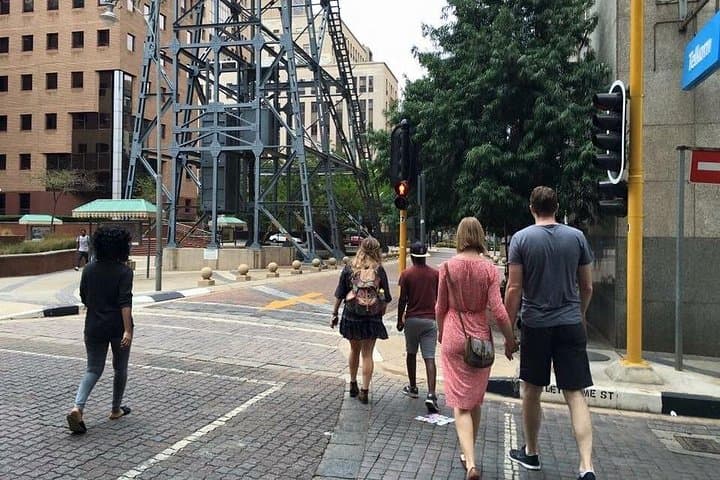
The square opens up under your feet: concrete, old stone facades and a wind that carries hawkers' calls and the smell of frying pap. You meet your guide near Old City Hall and the tour moves with purpose—down Main Street past carved stone, into Gandhi Square, and toward the Carlton Centre elevator that lifts you to a 50th-floor view across the highveld.
The square opens up under your feet: concrete, old stone facades and a wind that carries hawkers' calls and the smell of frying pap. You meet your guide near Old City Hall and the tour moves with purpose—down Main Street past carved stone, into Gandhi Square, and toward the Carlton Centre elevator that lifts you to a 50th-floor view across the highveld.
Johannesburg grew fast from a gold rush outpost into South Africa's largest city; its grid and grand civic buildings reflect the ambitions and contradictions of the 20th century. The Carlton Centre, Chancellor House (where Mandela and Tambo ran their law firm), and the Rissik Street Post Office show architectural layers from Edwardian offices to art-deco detail. The Mai Mai Traditional Healers Market and the Collectors Treasury bookstore give the walk its urban texture: places where living culture and commerce continue decades-old practices.
Expect roughly 4–6 km of walking on paved streets, minimal elevation gain but many staircases and an elevator ride to the observation deck. Wear sturdy walking shoes; bring water and a light jacket—Johannesburg sits at about 1,750 m, so weather shifts quickly.
Practical matters: the tour runs about five hours, often includes short taxi hops, and is wheelchair-accessible on selected routes. Keep small bills for market purchases, ask before photographing people, and follow your guide's directions in busy intersections. This half-day walk pairs well with an afternoon at a cultural village or a visit to Pretoria the next day—it's a concentrated, walkable primer on Johannesburg's layered history and contemporary street life.