THE ADVENTURE COLLECTIVE® · Independent discovery and booking for outdoor travel

Explore Johannesburg’s core in a focused half-day that combines Constitutional Court visits with a narrated drive through the city’s gold-rush history and contemporary neighborhoods. A practical introduction to the places that shaped modern South Africa.
Explore Johannesburg’s core in a focused half-day that combines Constitutional Court visits with a narrated drive through the city’s gold-rush history and contemporary neighborhoods. A practical introduction to the places that shaped modern South Africa.
A morning in Johannesburg unfolds on a broad boulevard where traffic hums and jacarandas spill violet onto sidewalks. You step from an air-conditioned vehicle onto the courthouse plaza at Constitution Hill — a site that holds both the old Number Four prison and South Africa’s Constitutional Court — and the city’s layered history begins to speak in concrete and iron.
Verified experiences and guided adventures in the surrounding area.
Operated by Nhlalala Travel · Johannesburg, Gauteng
A morning in Johannesburg unfolds on a broad boulevard where traffic hums and jacarandas spill violet onto sidewalks. You step from an air-conditioned vehicle onto the courthouse plaza at Constitution Hill — a site that holds both the old Number Four prison and South Africa’s Constitutional Court — and the city’s layered history begins to speak in concrete and iron.
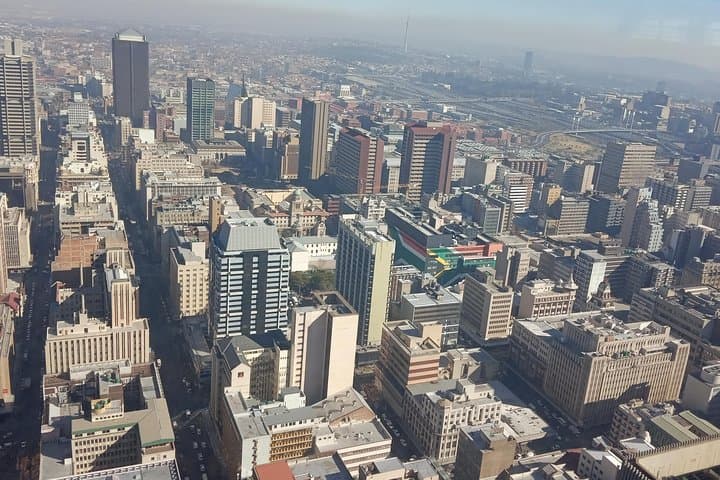
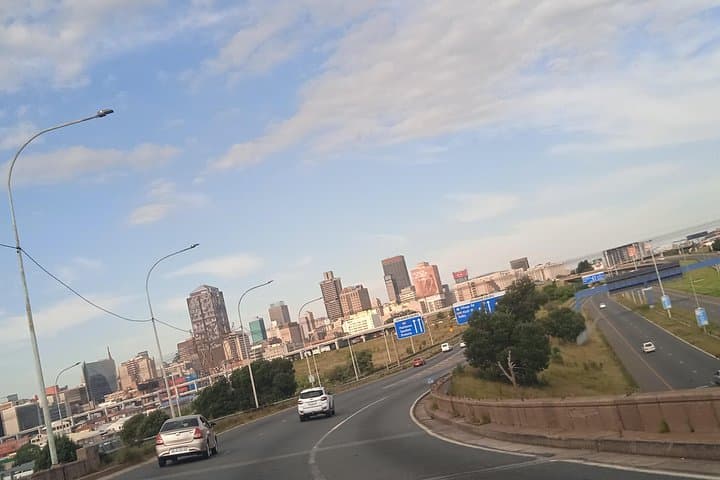
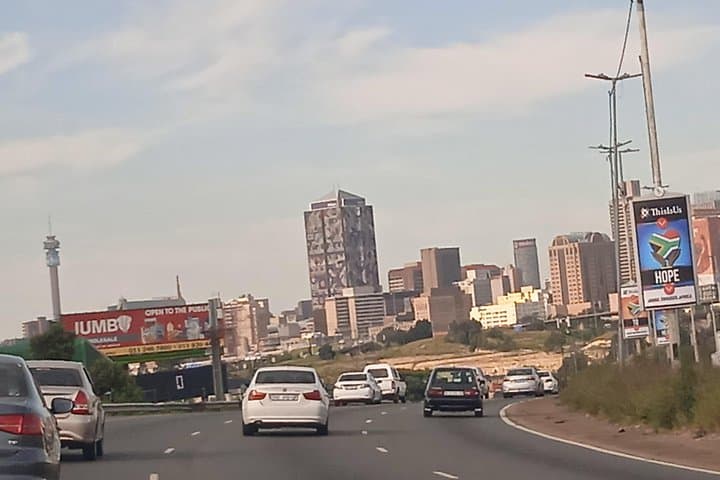
This half-day tour threads colonial-era gold rush origins (the 1886 discovery that built the city) with contemporary civic life. The geology beneath Johannesburg is primarily ancient Witwatersrand rocks — ridges of sedimentary conglomerate that once trapped the gold that created the metropolis. Culturally the city is a working mosaic: townships, high-rise business districts, and leafy suburbs each tell different parts of the urban story.
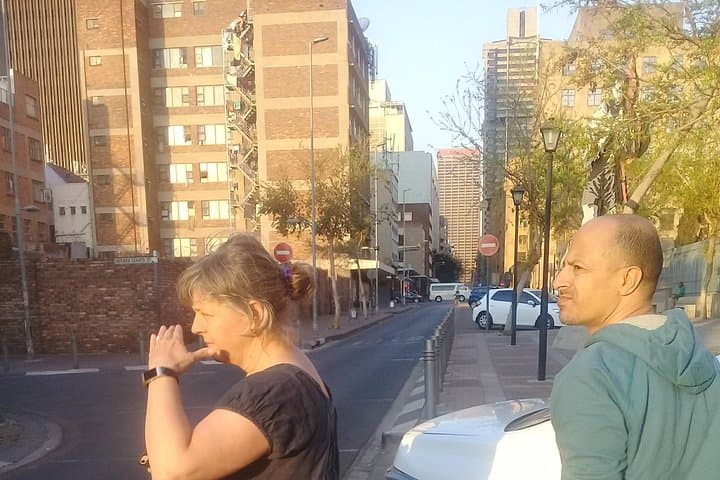
Expect a pragmatic, paced experience: guided drives between viewpoints, a stop with time to walk through the Constitutional Court complex, and commentary that frames both apartheid-era history and modern regeneration projects. Photo stops emphasize architectural contrasts — old fort masonry against new municipal plazas — and guides often point out key civic landmarks across the three spheres of government.
Practical guidance: plan for moderate walking on paved surfaces and security checkpoints at museum entries. Mornings are cooler and clearer for photography; summer brings sudden storms so pack a lightweight rain layer. The tour is wheelchair-friendly and typically uses private, climate-controlled transport. Bring ID for entry to government sites, comfortable shoes for short walks, and a reusable water bottle — the city is best explored with steady hydration and purposeful timing to avoid peak traffic.
easy.
3–4 hours.
Suitable for most fitness levels; involves short walks on paved surfaces and standing during site visits.
Yes — the tour uses an air-conditioned vehicle and includes private transport between stops.
Areas and transport are described as wheelchair accessible, with surfaces and vehicle access suitable for many mobility needs.
Yes — the tour notes stroller accessibility and availability of specialized infant seats on request.
You can get a full refund if you cancel at least 24 hours before the scheduled departure time.
Johannesburg’s rapid growth followed the 1886 Witwatersrand gold discovery; sites like Constitution Hill trace the city’s transition from colonial mining hub to modern civic center.
Urban initiatives focus on heritage preservation and inclusive redevelopment; visitors can support local projects and respect protected site rules to minimize impact.
Nhlalala Travel operates guided outdoor trips and adventures with an emphasis on safety, stewardship, and memorable experiences.
A morning in Johannesburg unfolds on a broad boulevard where traffic hums and jacarandas spill violet onto sidewalks. You step from an air-conditioned vehicle onto the courthouse plaza at Constitution Hill — a site that holds both the old Number Four prison and South Africa’s Constitutional Court — and the city’s layered history begins to speak in concrete and iron.
A morning in Johannesburg unfolds on a broad boulevard where traffic hums and jacarandas spill violet onto sidewalks. You step from an air-conditioned vehicle onto the courthouse plaza at Constitution Hill — a site that holds both the old Number Four prison and South Africa’s Constitutional Court — and the city’s layered history begins to speak in concrete and iron.
This half-day tour threads colonial-era gold rush origins (the 1886 discovery that built the city) with contemporary civic life. The geology beneath Johannesburg is primarily ancient Witwatersrand rocks — ridges of sedimentary conglomerate that once trapped the gold that created the metropolis. Culturally the city is a working mosaic: townships, high-rise business districts, and leafy suburbs each tell different parts of the urban story.
Expect a pragmatic, paced experience: guided drives between viewpoints, a stop with time to walk through the Constitutional Court complex, and commentary that frames both apartheid-era history and modern regeneration projects. Photo stops emphasize architectural contrasts — old fort masonry against new municipal plazas — and guides often point out key civic landmarks across the three spheres of government.
Practical guidance: plan for moderate walking on paved surfaces and security checkpoints at museum entries. Mornings are cooler and clearer for photography; summer brings sudden storms so pack a lightweight rain layer. The tour is wheelchair-friendly and typically uses private, climate-controlled transport. Bring ID for entry to government sites, comfortable shoes for short walks, and a reusable water bottle — the city is best explored with steady hydration and purposeful timing to avoid peak traffic.