THE ADVENTURE COLLECTIVE® · Independent discovery and booking for outdoor travel

A compact multi-day route through Jodhpur, Khuri and Jaisalmer that pairs imperial forts with dune camping. Expect long drives, dramatic sunsets on sand, and accessible cultural experiences.
A compact multi-day route through Jodhpur, Khuri and Jaisalmer that pairs imperial forts with dune camping. Expect long drives, dramatic sunsets on sand, and accessible cultural experiences.
You arrive as the city heat flattens into late afternoon and Mehrangarh Fort sits above Jodhpur like a slow-moving shadow, its red walls throwing geometric relief across the bluewashed houses below. The road out to Khuri unfurls into a ribbon of ochre; the dunes begin as small ripples that grow to waves, and the desert starts to breathe around you — wind shaping sand, camels pacing like clocks.
Verified experiences and guided adventures in the surrounding area.
Operated by Freedom Journey India · Jodhpur, Rajasthan
You arrive as the city heat flattens into late afternoon and Mehrangarh Fort sits above Jodhpur like a slow-moving shadow, its red walls throwing geometric relief across the bluewashed houses below. The road out to Khuri unfurls into a ribbon of ochre; the dunes begin as small ripples that grow to waves, and the desert starts to breathe around you — wind shaping sand, camels pacing like clocks.
The region is layered history: Mehrangarh (15th century) overlooks a walled city of painted homes; Jaisalmer, the "Golden City," grew wealthy on medieval caravan trade across the Thar. Geologically the Thar is an aeolian landscape — wind-deposited sand and ancient alluvial plains — and its sparse vegetation and seasonal water sources shape local life and architecture.
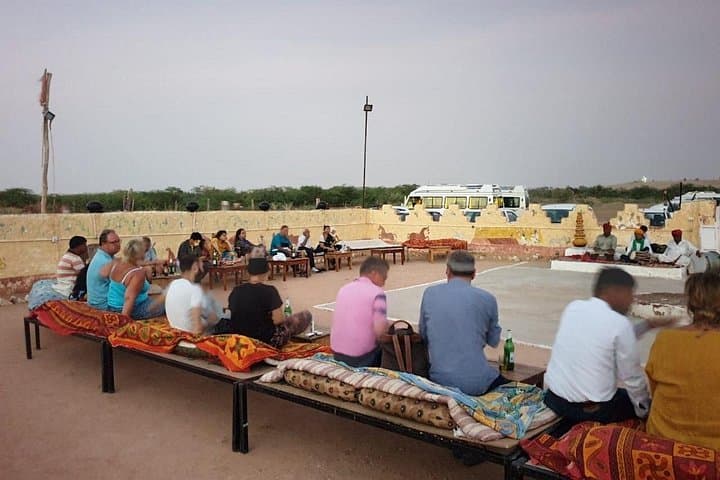
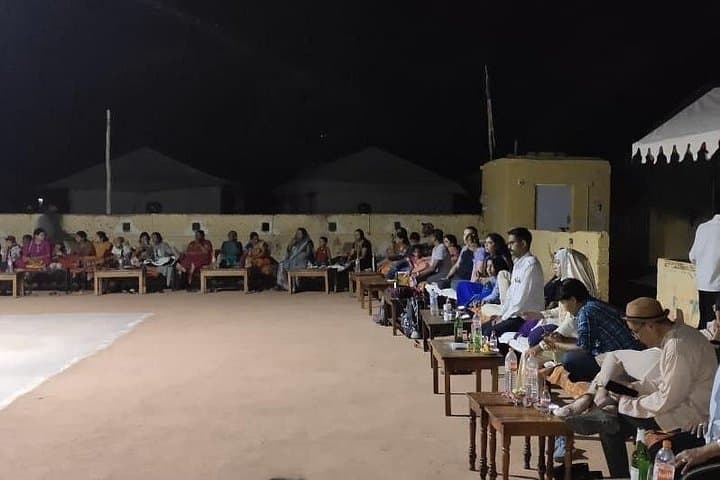
Culturally you’ll meet Rajasthani music at a dune-side bonfire, sample simple regional cuisine, and see living forts and havelis that double as neighborhoods and museums. Local guides often share stories about Maharajas, desert routes, and camel caravans that once connected India to Central Asia.
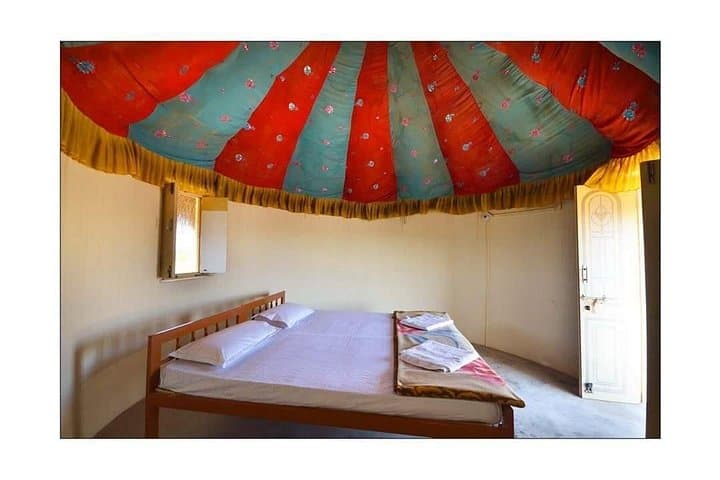
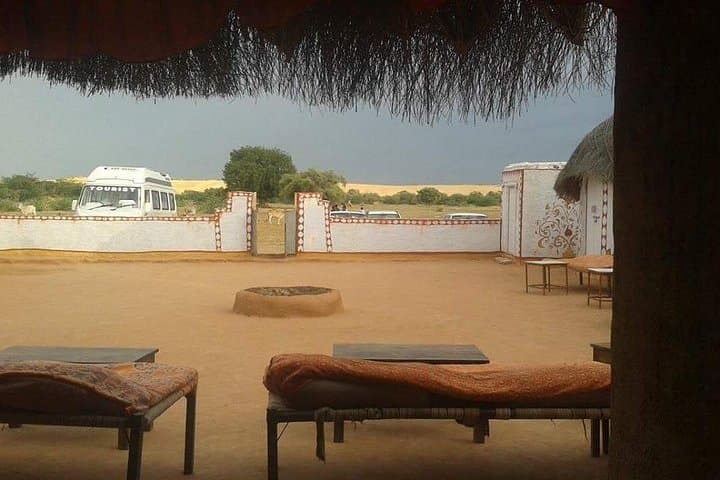
Practical notes: this is a short multi-day circuit with long road transfers (Jodhpur to Jaisalmer ~5–6 hours). Expect sandy walking at dune sites, paved streets in cities, and basic but comfortable tented lodging for overnight desert stays. Sun protection, layered clothing for temperature swings, and plenty of water are the immediate necessities. Plan sunrise or sunset at the dunes for the best light, and allow time for modest stops at Gadsisar Lake, Patwon Ki Haveli and Mehrangarh for a balanced mix of landscape and local culture.
easy.
4 days.
Suitable for most travelers who can handle several hours of walking and road transfers; no heavy fitness required.
Expect about 5–6 hours of driving each way, depending on stops and road conditions.
Tents (often Swiss-style) are generally basic but comfortable, offering mattresses and shared facilities; check grade if you need private bathrooms or luxury options.
October to March offers pleasant days and cool nights; summers can be extremely hot and are less comfortable for hiking or long daytime activity.
Yes — the itinerary notes suitability for all fitness levels, though long drives and sand walking may be tiring for very young children or those with limited mobility.
Mehrangarh Fort (c. 15th century) dominates Jodhpur; Jaisalmer rose as a caravan trade hub using yellow sandstone that gives the city its common name, the "Golden City."
The Thar is an arid ecosystem sensitive to water use and off-road vehicle damage; choose low-impact operators, avoid littering, and support local conservation-minded businesses.
Freedom Journey India operates guided outdoor trips and adventures with an emphasis on safety, stewardship, and memorable experiences.
You arrive as the city heat flattens into late afternoon and Mehrangarh Fort sits above Jodhpur like a slow-moving shadow, its red walls throwing geometric relief across the bluewashed houses below. The road out to Khuri unfurls into a ribbon of ochre; the dunes begin as small ripples that grow to waves, and the desert starts to breathe around you — wind shaping sand, camels pacing like clocks.
You arrive as the city heat flattens into late afternoon and Mehrangarh Fort sits above Jodhpur like a slow-moving shadow, its red walls throwing geometric relief across the bluewashed houses below. The road out to Khuri unfurls into a ribbon of ochre; the dunes begin as small ripples that grow to waves, and the desert starts to breathe around you — wind shaping sand, camels pacing like clocks.
The region is layered history: Mehrangarh (15th century) overlooks a walled city of painted homes; Jaisalmer, the "Golden City," grew wealthy on medieval caravan trade across the Thar. Geologically the Thar is an aeolian landscape — wind-deposited sand and ancient alluvial plains — and its sparse vegetation and seasonal water sources shape local life and architecture.
Culturally you’ll meet Rajasthani music at a dune-side bonfire, sample simple regional cuisine, and see living forts and havelis that double as neighborhoods and museums. Local guides often share stories about Maharajas, desert routes, and camel caravans that once connected India to Central Asia.
Practical notes: this is a short multi-day circuit with long road transfers (Jodhpur to Jaisalmer ~5–6 hours). Expect sandy walking at dune sites, paved streets in cities, and basic but comfortable tented lodging for overnight desert stays. Sun protection, layered clothing for temperature swings, and plenty of water are the immediate necessities. Plan sunrise or sunset at the dunes for the best light, and allow time for modest stops at Gadsisar Lake, Patwon Ki Haveli and Mehrangarh for a balanced mix of landscape and local culture.