THE ADVENTURE COLLECTIVE® · Independent discovery and booking for outdoor travel

A private 3-day route from Chongqing that links two UNESCO landscapes—Jiuzhaigou’s turquoise lakes and Huanglong’s travertine terraces—while basing in historic Songpan to minimize travel strain. Expect high-altitude walking, shuttle buses, and cultural touches in Tibetan and Qiang villages.
A private 3-day route from Chongqing that links two UNESCO landscapes—Jiuzhaigou’s turquoise lakes and Huanglong’s travertine terraces—while basing in historic Songpan to minimize travel strain. Expect high-altitude walking, shuttle buses, and cultural touches in Tibetan and Qiang villages.
You step off the high-speed train into thin-air light that sharpens color: lakes like glass, terraces like frozen foam, and a town whose walls still mark an old trade route. The first evening in Songpan lets the region settle in—a compact town with Ming-era walls and a blend of Han, Tibetan and Qiang presence that frames the journey.
Verified experiences and guided adventures in the surrounding area.
Operated by Samtour of Chengdu OTC Travel · Songpan, Sichuan
You step off the high-speed train into thin-air light that sharpens color: lakes like glass, terraces like frozen foam, and a town whose walls still mark an old trade route. The first evening in Songpan lets the region settle in—a compact town with Ming-era walls and a blend of Han, Tibetan and Qiang presence that frames the journey.
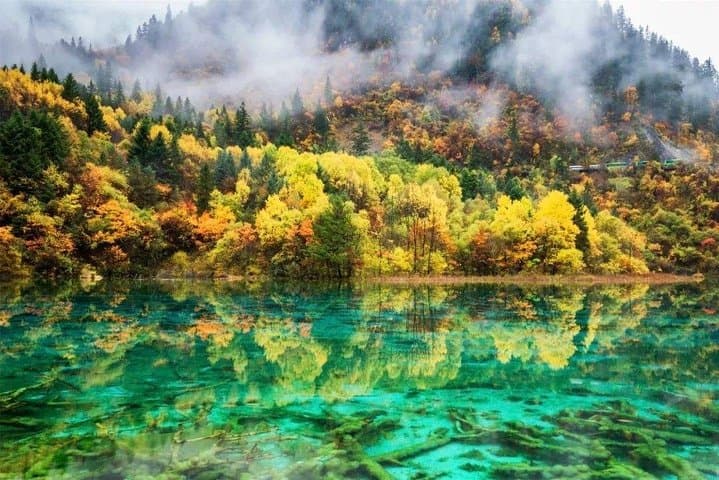
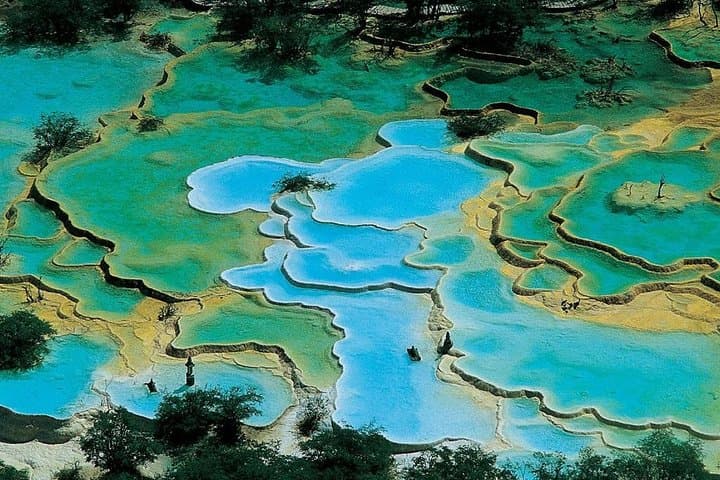
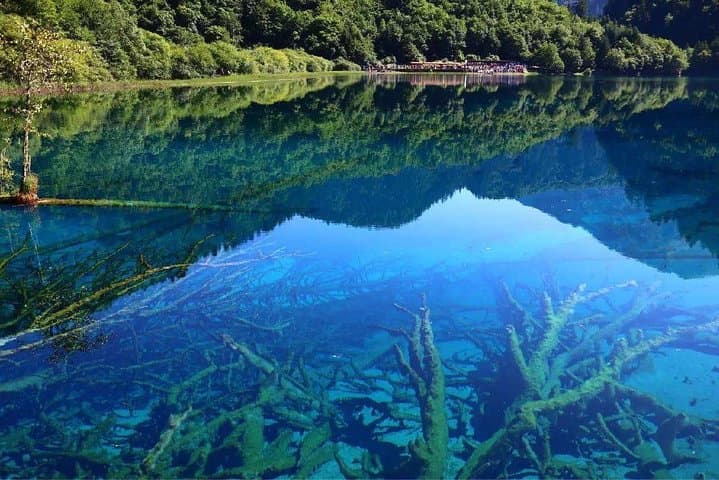
Jiuzhaigou National Park occupies the upper slopes of the Tibetan Plateau; glaciers and limestone have sculpted a stair-stepped valley of travertine dams, turquoise pools and broad waterfalls. Huanglong’s travertine terraces and Golden Sand formations are the same mineral language writ across a steeper, higher valley that reaches roughly 3,500 m—the altitude shapes both scenery and pace. Songpan itself was once a Tea Horse Road trading post; local villages still practice Tibetan Buddhist and Qiang cultural traditions you’ll glimpse around markets and temple steps.
Practically: this private itinerary uses bullet trains and local vehicles to compress long distances, with two nights in Songpan to avoid crowded park lodges. Expect extensive walking on maintained boardwalks and park shuttle systems in Jiuzhaigou, and a descending 3–4 hour trail in Huanglong after a short cable car ascent. Altitude is the main factor—move slowly, hydrate, and allow time for rests; oxygen supplies are available in the parks.
Timing your visits for early morning or late afternoon reduces bus crowding and improves light for the pools. Bring layered insulation, rain protection, and good footwear; the trail surfaces are mostly stable but can be wet and slippery. With planning, this condensed route gives a clear, practical window into two of Sichuan’s most vivid alpine landscapes.
moderate.
3 days.
Moderately fit: able to walk several hours a day on uneven terrain and manage short uphill sections at altitude
Yes—park admissions and some shuttle or cable services are timed and typically included in packaged tours, but verify with your operator about booking windows.
Huanglong reaches about 3,500 m; many travelers do fine but fatigue, headache or breathlessness can occur—rest, hydrate, and seek oxygen if symptoms worsen.
This itinerary uses two nights in Songpan to avoid crowded parks and provide easier access to both Jiuzhaigou and Huanglong.
Breakfasts for two mornings are included; other meals like boxed lunch in the park are generally provided on sightseeing days, but evening meals are usually at your own expense or arranged locally.
Songpan was a strategic trading post on the Tea Horse Road; the region’s architecture and ethnic mix reflect centuries of trade between Han, Tibetan and Qiang communities.
Both parks face pressure from large visitor numbers and sensitive travertine systems; stick to boardwalks, avoid touching pools, and follow park signage to protect deposits and aquatic habitats.
Samtour of Chengdu OTC Travel operates guided outdoor trips and adventures with an emphasis on safety, stewardship, and memorable experiences.
You step off the high-speed train into thin-air light that sharpens color: lakes like glass, terraces like frozen foam, and a town whose walls still mark an old trade route. The first evening in Songpan lets the region settle in—a compact town with Ming-era walls and a blend of Han, Tibetan and Qiang presence that frames the journey.
You step off the high-speed train into thin-air light that sharpens color: lakes like glass, terraces like frozen foam, and a town whose walls still mark an old trade route. The first evening in Songpan lets the region settle in—a compact town with Ming-era walls and a blend of Han, Tibetan and Qiang presence that frames the journey.
Jiuzhaigou National Park occupies the upper slopes of the Tibetan Plateau; glaciers and limestone have sculpted a stair-stepped valley of travertine dams, turquoise pools and broad waterfalls. Huanglong’s travertine terraces and Golden Sand formations are the same mineral language writ across a steeper, higher valley that reaches roughly 3,500 m—the altitude shapes both scenery and pace. Songpan itself was once a Tea Horse Road trading post; local villages still practice Tibetan Buddhist and Qiang cultural traditions you’ll glimpse around markets and temple steps.
Practically: this private itinerary uses bullet trains and local vehicles to compress long distances, with two nights in Songpan to avoid crowded park lodges. Expect extensive walking on maintained boardwalks and park shuttle systems in Jiuzhaigou, and a descending 3–4 hour trail in Huanglong after a short cable car ascent. Altitude is the main factor—move slowly, hydrate, and allow time for rests; oxygen supplies are available in the parks.
Timing your visits for early morning or late afternoon reduces bus crowding and improves light for the pools. Bring layered insulation, rain protection, and good footwear; the trail surfaces are mostly stable but can be wet and slippery. With planning, this condensed route gives a clear, practical window into two of Sichuan’s most vivid alpine landscapes.