THE ADVENTURE COLLECTIVE® · Independent discovery and booking for outdoor travel

Swap a long road trip for a fast-train gateway to two of Sichuan’s most striking parks. This private 3‑day itinerary centers on Songpan and pairs Jiuzhaigou’s lake-strewn valleys with Huanglong’s travertine terraces and high-altitude temple.
Swap a long road trip for a fast-train gateway to two of Sichuan’s most striking parks. This private 3‑day itinerary centers on Songpan and pairs Jiuzhaigou’s lake-strewn valleys with Huanglong’s travertine terraces and high-altitude temple.
You step off the bullet train into thin, clear air and the world feels quieter — slate roofs of Songpan, a breeze scented with pine and yak dung, and mountains rising like a folded map. On day two the valley opens: turquoise lakes stacked like coins, boardwalks that thread through cedar forest, and waterfalls that throw spray across the path.
Verified experiences and guided adventures in the surrounding area.
Operated by Samtour of Chengdu OTC Travel · Songpan, Sichuan
You step off the bullet train into thin, clear air and the world feels quieter — slate roofs of Songpan, a breeze scented with pine and yak dung, and mountains rising like a folded map. On day two the valley opens: turquoise lakes stacked like coins, boardwalks that thread through cedar forest, and waterfalls that throw spray across the path.
Jiuzhaigou’s landscape is a product of glacial carving and travertine chemistry: calcium-rich springs deposit terraces and pools whose colors shift from jade to cobalt depending on algae and depth. Huanglong is the terrace laboratory writ large — milky-blue travertine basins and Golden Sand travertines beside a Ming-era temple sitting high at about 3,500 m (11,483 ft). The region sits within Aba Prefecture, shaped over centuries by Tibetan and Qiang cultures and by trade along the historic Tea Horse Road; Songpan’s stone walls date back to Ming reconstructions.
Expect a pragmatic rhythm: early hotel pickup in Chengdu, a fast train to the Songpan area, two nights in Songpan, a hop-on/hop-off bus and boardwalk circuits in Jiuzhaigou, and a cable-car ascent and downhill hike in Huanglong (3–4 hours). Altitude matters — move slowly, hydrate, and allow time for rest. Footwear should be grippy for wet boardwalks and uneven trails. Cash and passport copies are necessary for train-ticket registration and park entry. Plan for variable weather: sun, drizzle, and cold at higher elevations can arrive within an hour. With modest fitness and sensible planning, the trip delivers polished views and cultural slices of Tibetan highland life without the long road grind.
moderate.
3 days.
Moderate fitness: able to walk several hours with altitude variation and some stair sections; rest breaks available.
Huanglong reaches about 3,500 m; Jiuzhaigou’s main valleys are lower but still elevated. Many travelers feel mild symptoms; rest, hydrate, and ascend slowly — oxygen and rest areas are available in park sections.
No technical skills are required. The trip involves moderate walking on boardwalks and trails; comfortable shoes, layers and basic hiking stamina are sufficient.
The itinerary includes 2nd-class fast-train tickets; upgrades to 1st class may be possible on request depending on availability.
Yes — Songpan Old Town and local villages in Jiuzhaigou offer Tibetan and Qiang cultural elements, and optional local dance performances are available at extra cost.
Songpan sat on the historic Tea Horse Road; its stone walls and gates were reinforced in the Ming era to protect this trading post between Chinese lowlands and Tibetan plateaus.
Both parks are UNESCO-listed with strict boardwalk routes to protect travertine and water chemistry; follow signs, avoid trampling vegetation, and minimize plastic waste.
Samtour of Chengdu OTC Travel operates guided outdoor trips and adventures with an emphasis on safety, stewardship, and memorable experiences.


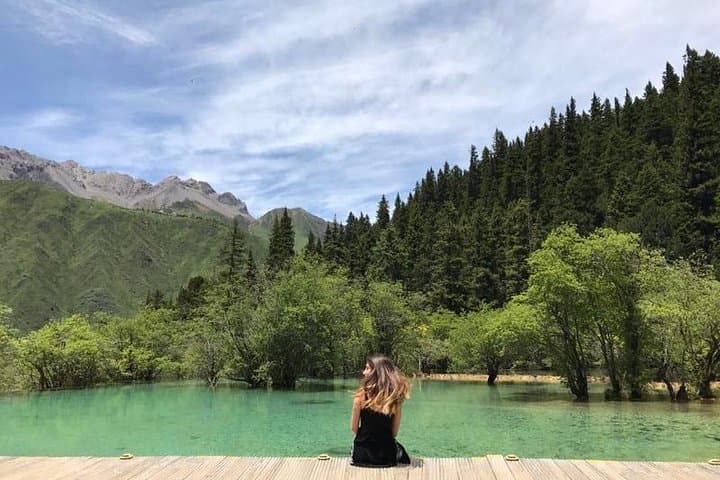
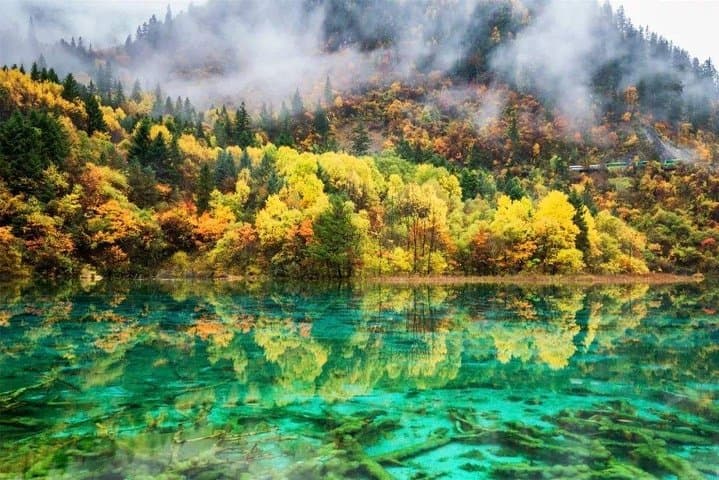
You step off the bullet train into thin, clear air and the world feels quieter — slate roofs of Songpan, a breeze scented with pine and yak dung, and mountains rising like a folded map. On day two the valley opens: turquoise lakes stacked like coins, boardwalks that thread through cedar forest, and waterfalls that throw spray across the path.
You step off the bullet train into thin, clear air and the world feels quieter — slate roofs of Songpan, a breeze scented with pine and yak dung, and mountains rising like a folded map. On day two the valley opens: turquoise lakes stacked like coins, boardwalks that thread through cedar forest, and waterfalls that throw spray across the path.
Jiuzhaigou’s landscape is a product of glacial carving and travertine chemistry: calcium-rich springs deposit terraces and pools whose colors shift from jade to cobalt depending on algae and depth. Huanglong is the terrace laboratory writ large — milky-blue travertine basins and Golden Sand travertines beside a Ming-era temple sitting high at about 3,500 m (11,483 ft). The region sits within Aba Prefecture, shaped over centuries by Tibetan and Qiang cultures and by trade along the historic Tea Horse Road; Songpan’s stone walls date back to Ming reconstructions.
Expect a pragmatic rhythm: early hotel pickup in Chengdu, a fast train to the Songpan area, two nights in Songpan, a hop-on/hop-off bus and boardwalk circuits in Jiuzhaigou, and a cable-car ascent and downhill hike in Huanglong (3–4 hours). Altitude matters — move slowly, hydrate, and allow time for rest. Footwear should be grippy for wet boardwalks and uneven trails. Cash and passport copies are necessary for train-ticket registration and park entry. Plan for variable weather: sun, drizzle, and cold at higher elevations can arrive within an hour. With modest fitness and sensible planning, the trip delivers polished views and cultural slices of Tibetan highland life without the long road grind.