THE ADVENTURE COLLECTIVE® · Independent discovery and booking for outdoor travel

Spend a day tracing Taiwan’s mining past in Jiufen and launching wishes over Shifen’s railway valley. This practical guide covers what to expect on the 7‑hour loop—terrain, logistics, and local tips to make the most of tea houses, lanterns, and the waterfall.
Spend a day tracing Taiwan’s mining past in Jiufen and launching wishes over Shifen’s railway valley. This practical guide covers what to expect on the 7‑hour loop—terrain, logistics, and local tips to make the most of tea houses, lanterns, and the waterfall.
Stepping off the bus, the air in Jiufen tastes faintly of roasted tea and sea salt. Narrow cobbled lanes climb between wooden shopfronts; the town leans toward the ocean and the view keeps revealing another terrace of tea houses and lanterns. Later, in Shifen, the old rail line threads through a low valley where locals and travelers write wishes on paper lanterns and send them skyward while the nearby waterfall thunders.
Verified experiences and guided adventures in the surrounding area.
Operated by MyProGuide Inc. · Jiufen, New Taipei City
Stepping off the bus, the air in Jiufen tastes faintly of roasted tea and sea salt. Narrow cobbled lanes climb between wooden shopfronts; the town leans toward the ocean and the view keeps revealing another terrace of tea houses and lanterns. Later, in Shifen, the old rail line threads through a low valley where locals and travelers write wishes on paper lanterns and send them skyward while the nearby waterfall thunders.
Jiufen grew rich during Taiwan’s gold- and coal-mining boom under Japanese rule; many of its buildings and alleys preserve that early 20th-century character. The geology is coastal and steep—granite ridges carved by streams into narrow valleys—so the terrain feels compact and vertical rather than wide-open. Culturally, tea ceremonies, street snacks (taro balls, fish crackers) and the Pingxi Line railway culture define the route; releasing a sky lantern is a contemporary ritual layered over an older mining town identity.
Practical guidance matters here. Expect a lot of stairs and uneven cobbles in Jiufen and active train tracks in Shifen—observe crossing rules and stay clear when trains approach. On weekends the Jiufen shuttle manages traffic; bring an EasyCard with at least NT$30 or cash for the shuttle. The full loop runs about 6–7 hours with moderate walking and several short uphill sections. Plan for changing weather—sun can be strong, and coastal showers drift in quickly. Comfortable shoes, a light rain layer, water and cash for snacks and lanterns will keep the day focused on exploration rather than logistics.
moderate.
6–7 hours.
Moderate fitness: comfortable walking for several hours, able to manage stairs and short uphill stretches.
The tour runs about seven hours with several stops; expect a moderate walking pace with time for photos, snacks, and a lantern activity in Shifen.
Yes—the sky lantern is typically paid for on-site and is not included; prices vary by size and vendor.
Jiufen’s steep, narrow streets and steps make it challenging for those with mobility issues; consider nearby viewpoints accessible by shuttle if mobility is limited.
The operator may cancel for heavy rain or insufficient travelers; minor weather may adjust the route (e.g., bridge maintenance near Shifen Waterfall).
Jiufen prospered as a gold and coal mining center during the Japanese colonial period; several buildings and the gold museum evoke that industrial past.
High visitor numbers strain narrow streets—use shuttle services, avoid single-use plastics, and stick to marked paths to reduce erosion and disturbance.
MyProGuide Inc. operates guided outdoor trips and adventures with an emphasis on safety, stewardship, and memorable experiences.
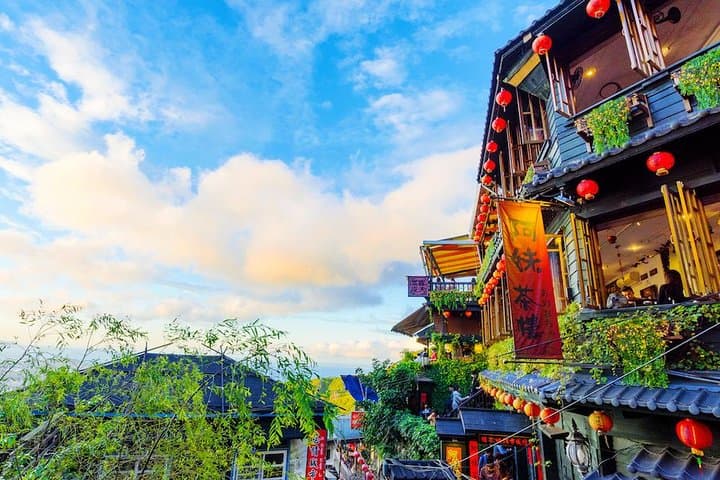
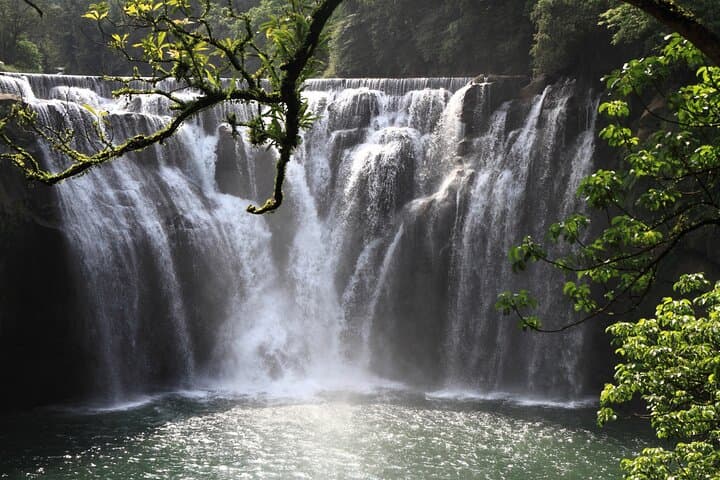
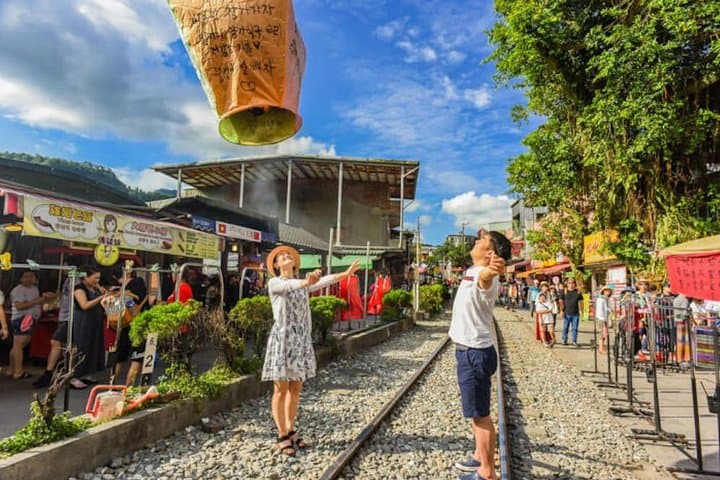
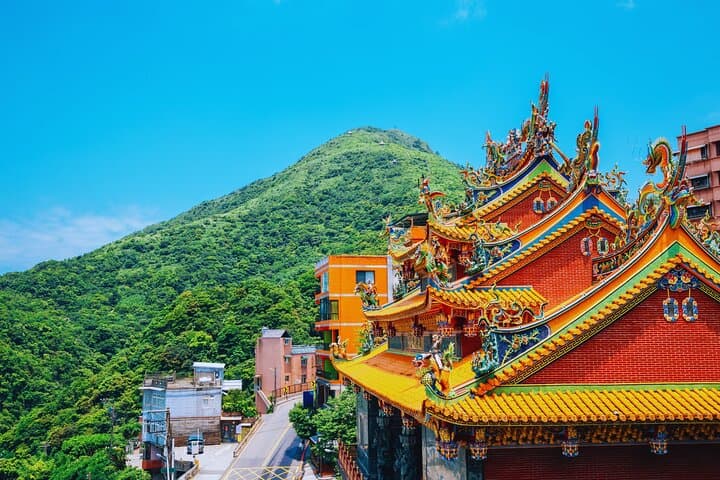
Stepping off the bus, the air in Jiufen tastes faintly of roasted tea and sea salt. Narrow cobbled lanes climb between wooden shopfronts; the town leans toward the ocean and the view keeps revealing another terrace of tea houses and lanterns. Later, in Shifen, the old rail line threads through a low valley where locals and travelers write wishes on paper lanterns and send them skyward while the nearby waterfall thunders.
Stepping off the bus, the air in Jiufen tastes faintly of roasted tea and sea salt. Narrow cobbled lanes climb between wooden shopfronts; the town leans toward the ocean and the view keeps revealing another terrace of tea houses and lanterns. Later, in Shifen, the old rail line threads through a low valley where locals and travelers write wishes on paper lanterns and send them skyward while the nearby waterfall thunders.
Jiufen grew rich during Taiwan’s gold- and coal-mining boom under Japanese rule; many of its buildings and alleys preserve that early 20th-century character. The geology is coastal and steep—granite ridges carved by streams into narrow valleys—so the terrain feels compact and vertical rather than wide-open. Culturally, tea ceremonies, street snacks (taro balls, fish crackers) and the Pingxi Line railway culture define the route; releasing a sky lantern is a contemporary ritual layered over an older mining town identity.
Practical guidance matters here. Expect a lot of stairs and uneven cobbles in Jiufen and active train tracks in Shifen—observe crossing rules and stay clear when trains approach. On weekends the Jiufen shuttle manages traffic; bring an EasyCard with at least NT$30 or cash for the shuttle. The full loop runs about 6–7 hours with moderate walking and several short uphill sections. Plan for changing weather—sun can be strong, and coastal showers drift in quickly. Comfortable shoes, a light rain layer, water and cash for snacks and lanterns will keep the day focused on exploration rather than logistics.