THE ADVENTURE COLLECTIVE® · Independent discovery and booking for outdoor travel

Walk a dramatic, semi-restored stretch of the Ming Great Wall between Jinshanling and Simatai West on a private, full-day tour from Beijing. Expect rough stone steps, watchtowers, and a 4‑hour on‑Wall hike paired with private transport and a local lunch.
Walk a dramatic, semi-restored stretch of the Ming Great Wall between Jinshanling and Simatai West on a private, full-day tour from Beijing. Expect rough stone steps, watchtowers, and a 4‑hour on‑Wall hike paired with private transport and a local lunch.
Dawn breaks over serrated ridgelines as a private van slides away from Beijing and the Wall rises ahead—an ancient rampart clinging to the spine of the mountains. The Jinshanling to Simatai West section opens with restored stone steps, watchtowers stepping down the slope like punctuation; the route alternates broad, walkable parapets with rougher, original masonry that demands attention.
Verified experiences and guided adventures in the surrounding area.
Operated by Untouched Great Wall Hike · Beijing, Beijing
Dawn breaks over serrated ridgelines as a private van slides away from Beijing and the Wall rises ahead—an ancient rampart clinging to the spine of the mountains. The Jinshanling to Simatai West section opens with restored stone steps, watchtowers stepping down the slope like punctuation; the route alternates broad, walkable parapets with rougher, original masonry that demands attention.
The Great Wall here stitches together Ming-era military engineering and local geology: granite and schist cut into steep switchbacks to control lines of sight. Jinshanling’s towers date to the 16th–17th centuries, built to watch for incursions along the northeastern approaches to the capital. Culturally, this stretch shows both restored and wild segments—villagers nearby maintain small farms and you may pass simple roadside stalls serving tea and pancakes.
Expect roughly 4 hours on the Wall itself (about 8–10 km depending on exact entry/exit), with uneven stone steps, short steep pitches, and occasional exposed ridgewalks. Altitude is noticeably higher than downtown Beijing—roughly 400–600 m more—so the air feels cooler, especially in summer and brisk in winter. Guides typically drop you at the trailhead, lead interpretive stops at key watchtowers, and finish with a local lunch.
Practical tips: wear sturdy hiking shoes, bring layered clothing, plan for sun and wind, and carry water (bottled water is usually provided). Start early on weekends to beat traffic, and expect a full-day private tour of about 9–10 hours including transfers.
moderate.
4–5 hours (on‑Wall); full tour 9–10 hours.
Suitable for hikers in regular cardio condition who can handle uneven stairs and short steep sections
The on‑Wall section typically takes about 4 hours and covers roughly 8–10 km depending on the exact start and end points chosen by the guide.
Yes—it's rated suitable for most fitness levels, but participants should be comfortable on uneven stone steps and short steep pitches.
Yes—private round‑trip transfer from your hotel and a local lunch (with bottled water) are included in the tour price.
Wear insulated layers, a windproof shell, warm gloves, and sturdy boots; the Wall is significantly colder than central Beijing in winter and may be icy in places.
This stretch was fortified in the Ming dynasty (14th–17th centuries) with watchtowers and crenellated walls to protect approaches to Beijing.
Visitor pressure and erosion affect exposed masonry; stick to established paths, avoid climbing fragile sections, and carry out trash to minimize impact.
Untouched Great Wall Hike operates guided outdoor trips and adventures with an emphasis on safety, stewardship, and memorable experiences.
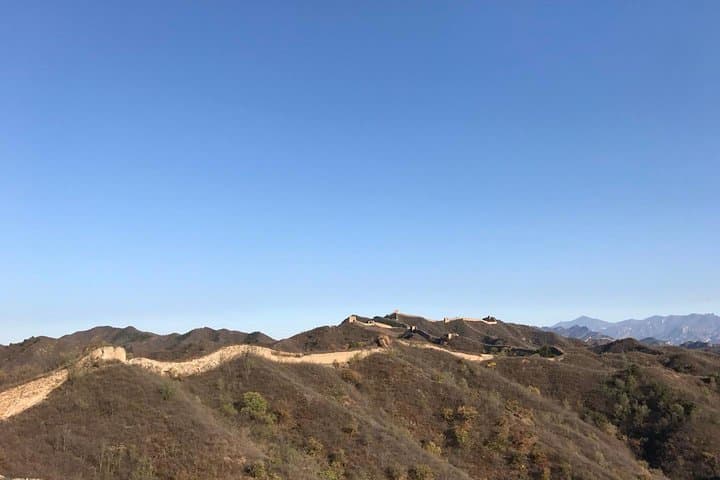
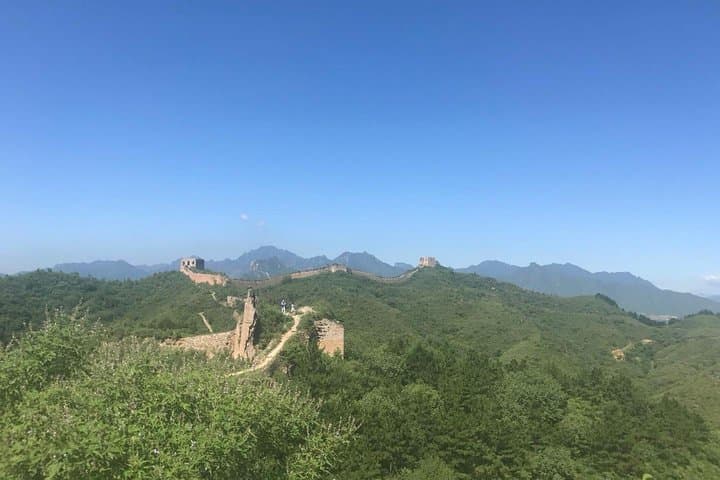
Dawn breaks over serrated ridgelines as a private van slides away from Beijing and the Wall rises ahead—an ancient rampart clinging to the spine of the mountains. The Jinshanling to Simatai West section opens with restored stone steps, watchtowers stepping down the slope like punctuation; the route alternates broad, walkable parapets with rougher, original masonry that demands attention.
Dawn breaks over serrated ridgelines as a private van slides away from Beijing and the Wall rises ahead—an ancient rampart clinging to the spine of the mountains. The Jinshanling to Simatai West section opens with restored stone steps, watchtowers stepping down the slope like punctuation; the route alternates broad, walkable parapets with rougher, original masonry that demands attention.
The Great Wall here stitches together Ming-era military engineering and local geology: granite and schist cut into steep switchbacks to control lines of sight. Jinshanling’s towers date to the 16th–17th centuries, built to watch for incursions along the northeastern approaches to the capital. Culturally, this stretch shows both restored and wild segments—villagers nearby maintain small farms and you may pass simple roadside stalls serving tea and pancakes.
Expect roughly 4 hours on the Wall itself (about 8–10 km depending on exact entry/exit), with uneven stone steps, short steep pitches, and occasional exposed ridgewalks. Altitude is noticeably higher than downtown Beijing—roughly 400–600 m more—so the air feels cooler, especially in summer and brisk in winter. Guides typically drop you at the trailhead, lead interpretive stops at key watchtowers, and finish with a local lunch.
Practical tips: wear sturdy hiking shoes, bring layered clothing, plan for sun and wind, and carry water (bottled water is usually provided). Start early on weekends to beat traffic, and expect a full-day private tour of about 9–10 hours including transfers.