THE ADVENTURE COLLECTIVE® · Independent discovery and booking for outdoor travel

Walk where restored battlements meet crumbling towers on a one-day Jinshanling hike. This guided loop from Beijing mixes steep ridge-line walking, panoramic viewpoints, and close-up Great Wall history.
Walk where restored battlements meet crumbling towers on a one-day Jinshanling hike. This guided loop from Beijing mixes steep ridge-line walking, panoramic viewpoints, and close-up Great Wall history.
Morning light spills across stone and scrub as you step onto the Jinshanling ridge, the wall folding away in a series of crenelated silhouettes. Wind tugs at your jacket; watchtowers squat like guardians along a skyline that alternates between carefully rebuilt battlements and raw, crumbling stretches where footsteps echo older histories.
Verified experiences and guided adventures in the surrounding area.
Operated by Beijing Impression Tours · Luanping, Hebei
Morning light spills across stone and scrub as you step onto the Jinshanling ridge, the wall folding away in a series of crenelated silhouettes. Wind tugs at your jacket; watchtowers squat like guardians along a skyline that alternates between carefully rebuilt battlements and raw, crumbling stretches where footsteps echo older histories.
This section of the Ming-dynasty Great Wall runs along a steep mountain spine and was built to control the approaches to Beijing; the density of watchtowers here—dozens within a few kilometers—reflects that military logic. Geologically, the ridge is a mix of weathered granite and shale that leaves many steps uneven and the route exposed; local hamlets reflect centuries of agricultural life below, with simple restaurants serving noodle soups and tea.
Expect roughly 6 km of walking on uneven stone, steep pitches, and short scrambles between towers when following the common one-day loop toward Simatai or Gubeikou and back. Photographers prize the ridgeline perspectives around sunrise and late afternoon; mid-day brings harsh light but clearer views.
Practical edge: wear grippy hiking shoes, carry 1–2 liters of water, and layer for rapidly changing mountain sun and wind. The tour typically includes a private car transfer (about 2–2.5 hours each way from Beijing), entrance fee, and a light lunch. Restrooms are basic at the visitor center; once on the wall, options are limited. Move deliberately on steep stone steps and give way to guided groups at narrow points. With moderate fitness and sensible gear, Jinshanling rewards with an immersive slice of Great Wall history that feels both wild and accessible.
moderate.
8–10 hours.
Suitable for travelers with moderate fitness who can handle several steep climbs and uneven stone steps for 2–3 hours of on-wall hiking.
The on-wall walking covers roughly 6 km with steep sections and uneven steps; it’s rated moderate and requires reasonable balance and endurance.
Yes — typical tours include private car transfer and hotel pick-up and drop-off; expect about 2–2.5 hours each way depending on traffic.
Basic restrooms are at the visitor center and nearby restaurants; facilities on the wall are minimal, so use facilities before starting.
Photography is allowed; drone rules are strict near cultural heritage sites — check local regulations and tour operator policies before flying.
Jinshanling is a Ming-era section noted for its dense sequence of watchtowers and mix of restored and original masonry that illustrate evolving military architecture.
Visitor impact and natural erosion are ongoing concerns; stay on established paths, avoid writing on stones, and follow guide instructions to protect fragile masonry.
Beijing Impression Tours operates guided outdoor trips and adventures with an emphasis on safety, stewardship, and memorable experiences.
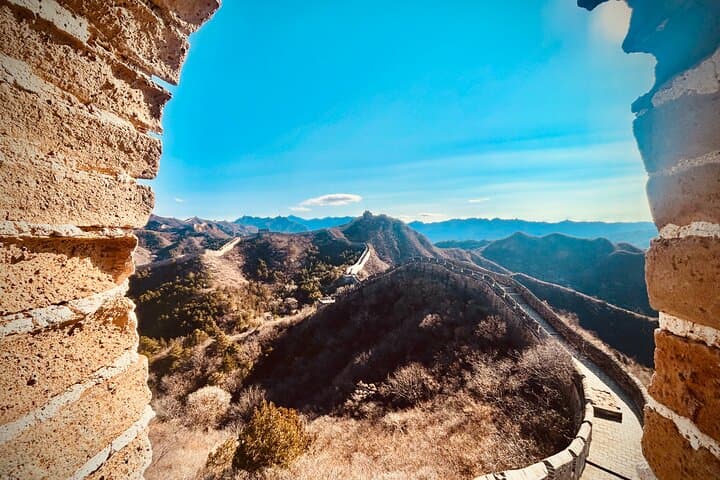
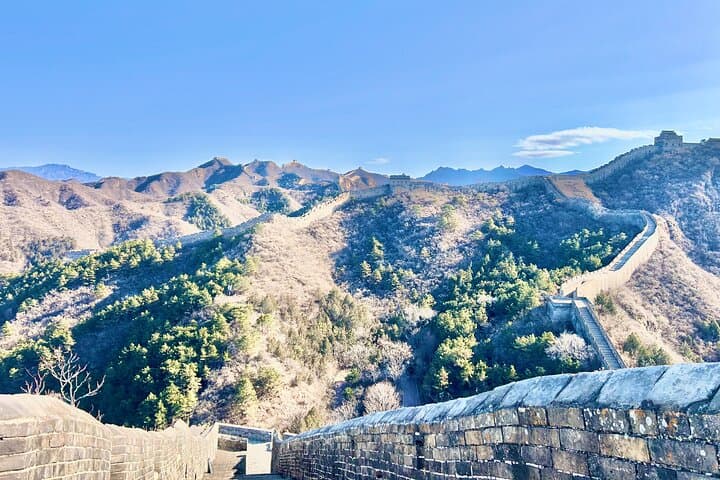
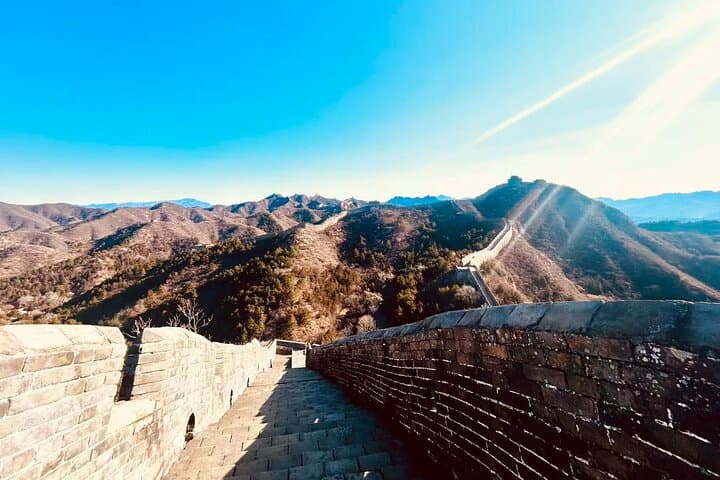
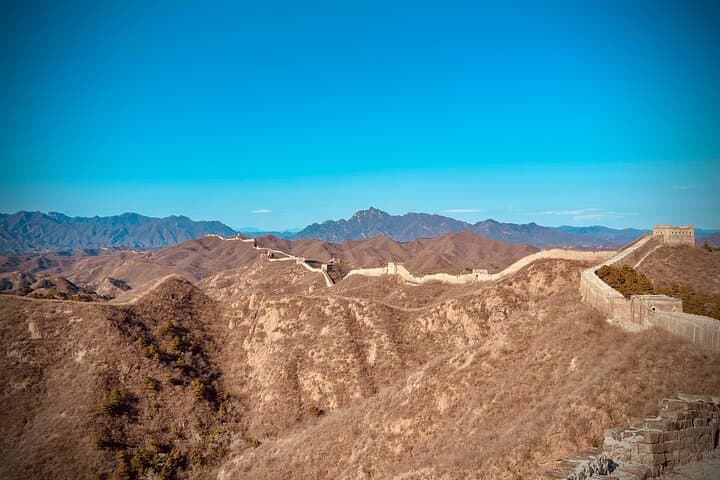
Morning light spills across stone and scrub as you step onto the Jinshanling ridge, the wall folding away in a series of crenelated silhouettes. Wind tugs at your jacket; watchtowers squat like guardians along a skyline that alternates between carefully rebuilt battlements and raw, crumbling stretches where footsteps echo older histories.
Morning light spills across stone and scrub as you step onto the Jinshanling ridge, the wall folding away in a series of crenelated silhouettes. Wind tugs at your jacket; watchtowers squat like guardians along a skyline that alternates between carefully rebuilt battlements and raw, crumbling stretches where footsteps echo older histories.
This section of the Ming-dynasty Great Wall runs along a steep mountain spine and was built to control the approaches to Beijing; the density of watchtowers here—dozens within a few kilometers—reflects that military logic. Geologically, the ridge is a mix of weathered granite and shale that leaves many steps uneven and the route exposed; local hamlets reflect centuries of agricultural life below, with simple restaurants serving noodle soups and tea.
Expect roughly 6 km of walking on uneven stone, steep pitches, and short scrambles between towers when following the common one-day loop toward Simatai or Gubeikou and back. Photographers prize the ridgeline perspectives around sunrise and late afternoon; mid-day brings harsh light but clearer views.
Practical edge: wear grippy hiking shoes, carry 1–2 liters of water, and layer for rapidly changing mountain sun and wind. The tour typically includes a private car transfer (about 2–2.5 hours each way from Beijing), entrance fee, and a light lunch. Restrooms are basic at the visitor center; once on the wall, options are limited. Move deliberately on steep stone steps and give way to guided groups at narrow points. With moderate fitness and sensible gear, Jinshanling rewards with an immersive slice of Great Wall history that feels both wild and accessible.