THE ADVENTURE COLLECTIVE® · Independent discovery and booking for outdoor travel

A full-day loop from Seoul to Jinhae that places you beneath rivers of cherry blossom petals along Yeojwacheon and in front of the photo-ready Gyeonghwa Station. Long travel, big payoff—perfect for spring bloom chasers.
A full-day loop from Seoul to Jinhae that places you beneath rivers of cherry blossom petals along Yeojwacheon and in front of the photo-ready Gyeonghwa Station. Long travel, big payoff—perfect for spring bloom chasers.
You step off the minivan into a lane of pale pink petals, the air dusted with flower fragments that drift like slow snow over the Yeojwacheon stream. Romance Bridge arches ahead, its reflection broken by the current—people pause, cameras ready, while the old wooden platform of Gyeonghwa Station waits a short walk away, a vintage frame for a wall of blossoms.
Verified experiences and guided adventures in the surrounding area.
Operated by Korea Time Tour · Jinhae (Changwon), Gyeongsangnam-do
You step off the minivan into a lane of pale pink petals, the air dusted with flower fragments that drift like slow snow over the Yeojwacheon stream. Romance Bridge arches ahead, its reflection broken by the current—people pause, cameras ready, while the old wooden platform of Gyeonghwa Station waits a short walk away, a vintage frame for a wall of blossoms.
Jinhae sits on the southern coast of the Korean peninsula and has grown around a naval port; its spring festival grew from local celebrations of the town’s maritime and community history. Geologically, low hills funnel streams through the town, creating narrow riparian corridors where cherry trees were planted along banks and railway lines a century ago. The result is a compact walkable landscape: paved riverside promenades, an intact station platform, and streets lined with cafés and seasonal vendors.
Expect gentle walking on mostly flat, paved paths—Yeojwacheon is roughly a 1–2 km stroll; time at Gyeonghwa for photos is leisurely. The full excursion includes long road transfers (about 4–5 hours each way from Seoul), so plan for a very long day. Bring layers for coastal breezes, a daypack with water and snacks, and a portable power bank for heavy photo use. Peak bloom is short—travel early in April if possible—and traffic or weather can shift arrival times. For photographers and casual walkers alike, this is a visit that trades altitude for intimacy: the town leans in close, and the cherry trees reach out to meet you.
easy.
16–17 hours.
Suitable for most fitness levels; requires stamina for a long travel day and short periods of standing and walking.
Expect about 4–5 hours each way depending on traffic and weather; the full tour runs roughly 16–17 hours including stops.
Meals are not included; there will be opportunities to buy food during stops—bring snacks for the road if you prefer.
Infants are allowed but must sit on laps. Compact strollers can work on paved paths, but crowds and festival steps may be challenging.
Peak cherry blossom bloom typically occurs in early April but varies year to year with weather; check forecasts and local reports before booking.
Jinhae developed around a naval port and is known for its naval festival; many cherry plantings date to early 20th-century civic landscaping tied to the town’s maritime role.
High visitor numbers during bloom strain paths and tree roots—stay on designated walkways, avoid climbing or leaning on trunks, and carry out waste to protect the riparian corridor.
Korea Time Tour operates guided outdoor trips and adventures with an emphasis on safety, stewardship, and memorable experiences.
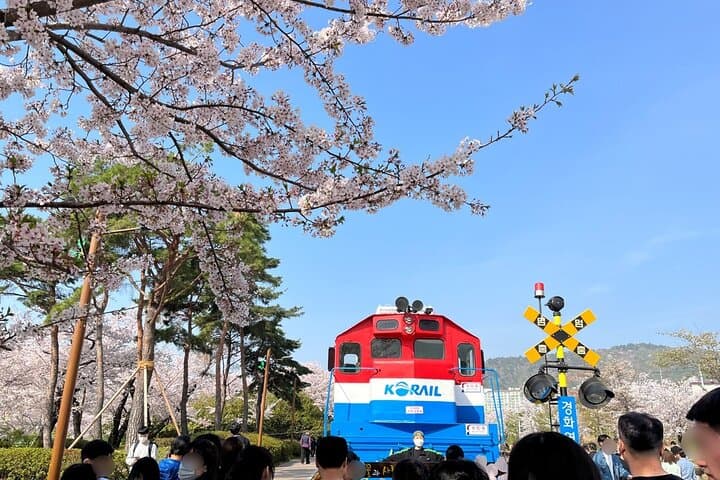
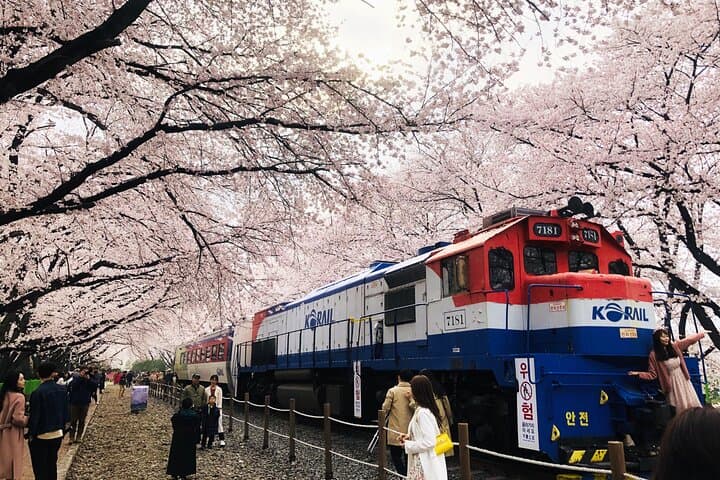
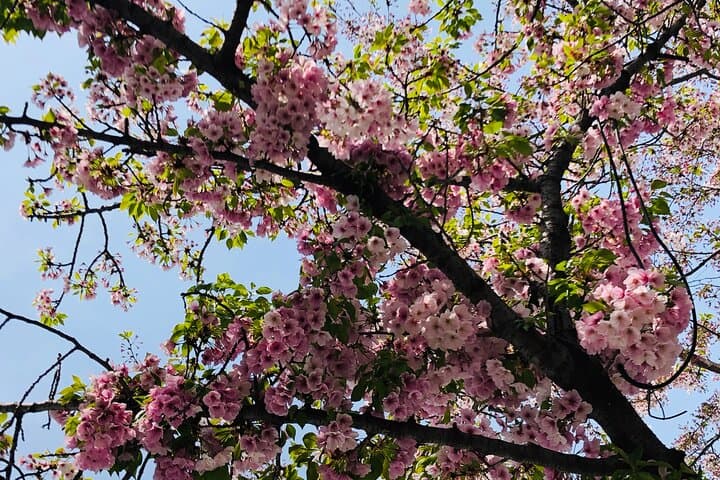
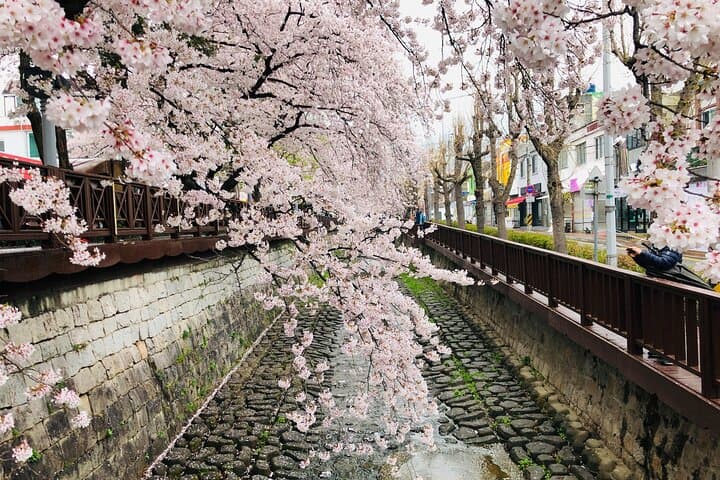
You step off the minivan into a lane of pale pink petals, the air dusted with flower fragments that drift like slow snow over the Yeojwacheon stream. Romance Bridge arches ahead, its reflection broken by the current—people pause, cameras ready, while the old wooden platform of Gyeonghwa Station waits a short walk away, a vintage frame for a wall of blossoms.
You step off the minivan into a lane of pale pink petals, the air dusted with flower fragments that drift like slow snow over the Yeojwacheon stream. Romance Bridge arches ahead, its reflection broken by the current—people pause, cameras ready, while the old wooden platform of Gyeonghwa Station waits a short walk away, a vintage frame for a wall of blossoms.
Jinhae sits on the southern coast of the Korean peninsula and has grown around a naval port; its spring festival grew from local celebrations of the town’s maritime and community history. Geologically, low hills funnel streams through the town, creating narrow riparian corridors where cherry trees were planted along banks and railway lines a century ago. The result is a compact walkable landscape: paved riverside promenades, an intact station platform, and streets lined with cafés and seasonal vendors.
Expect gentle walking on mostly flat, paved paths—Yeojwacheon is roughly a 1–2 km stroll; time at Gyeonghwa for photos is leisurely. The full excursion includes long road transfers (about 4–5 hours each way from Seoul), so plan for a very long day. Bring layers for coastal breezes, a daypack with water and snacks, and a portable power bank for heavy photo use. Peak bloom is short—travel early in April if possible—and traffic or weather can shift arrival times. For photographers and casual walkers alike, this is a visit that trades altitude for intimacy: the town leans in close, and the cherry trees reach out to meet you.