THE ADVENTURE COLLECTIVE® · Independent discovery and booking for outdoor travel

Climb the central hill at Jingshan Park with a multilingual QR audio guide and map. This self‑guided ticket directs you to the best viewpoints over the Forbidden City while offering historical context and practical navigation for a focused urban outing.
Climb the central hill at Jingshan Park with a multilingual QR audio guide and map. This self‑guided ticket directs you to the best viewpoints over the Forbidden City while offering historical context and practical navigation for a focused urban outing.
A cool breeze pushes up the central hill at Jingshan Park as you climb the stone steps, the city opening outward beneath you. Around the pavilion, the skyline and the rectangle of the Forbidden City lie like a map come alive; the pavilions’ eaves creak softly in the wind as visitors pause for photos and quiet. The QR audio guide—available in Chinese, English, Japanese, and Korean—routes you along the most direct paths and points out viewpoints, making a short urban ascent feel deliberate and informed.
Verified experiences and guided adventures in the surrounding area.
Operated by Beijing Xuran Holiday Tourism Co., Ltd · Beijing, Beijing
A cool breeze pushes up the central hill at Jingshan Park as you climb the stone steps, the city opening outward beneath you. Around the pavilion, the skyline and the rectangle of the Forbidden City lie like a map come alive; the pavilions’ eaves creak softly in the wind as visitors pause for photos and quiet. The QR audio guide—available in Chinese, English, Japanese, and Korean—routes you along the most direct paths and points out viewpoints, making a short urban ascent feel deliberate and informed.
Jingshan’s hill is man-made: earth moved during the Ming dynasty when the moat and canals around the Forbidden City were excavated. The park that crowns the rise has been a public garden since the early 20th century and retains layered terraces, seasonal flower beds, and classical pavilions that reflect Beijing’s imperial landscape design.
Expect broad stone steps, shaded lanes lined with mature trees, and terraces that shift with the seasons—peony flushes in spring, dense green shade in summer, crisp gold in autumn, and a spare quiet after winter frosts. Cultural notes embedded in the audio explain the hill’s role in imperial ritual and local folklore, including the panoramic viewing tradition that draws photographers at dawn.
Practical guidance: allow 1–3 hours depending on stops, bring water and comfortable shoes for uneven stone steps, and use public transit to avoid limited parking. The QR ticket simplifies entry and navigation so you can focus on the views and the subtle historical details that anchor this compact but revealing urban climb.
easy.
1–3 hours.
Suitable for most fitness levels; requires short uphill walking and several flights of stone steps.
Plan 1–3 hours depending on how many viewpoints and garden areas you stop at; photographers may stay longer for sunrise or sunset light.
Yes—the QR audio guide offers Chinese, English, Japanese, and Korean language tracks.
The central hill involves stone steps and slopes and is not recommended for travelers with serious spinal or cardiovascular conditions; flat areas around the park are accessible but limited.
No—mobile tickets are accepted, but you may also present a paper ticket if preferred.
Jingshan Hill was built from earth excavated during the construction of the Forbidden City moat in the Ming dynasty and later served as an imperial viewing platform before becoming a public park in the 20th century.
As a municipal historic park, Jingshan enforces pathway preservation and landscaping rules—stay on marked paths and avoid damaging plants to protect both archaeology and living collections.
Beijing Xuran Holiday Tourism Co., Ltd operates guided outdoor trips and adventures with an emphasis on safety, stewardship, and memorable experiences.
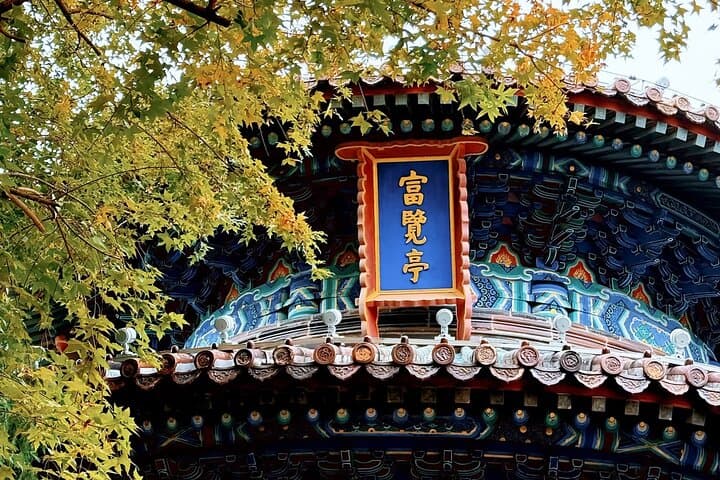
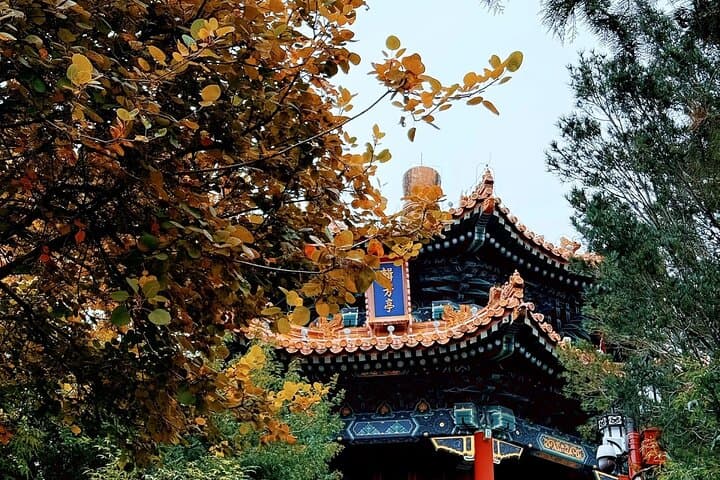
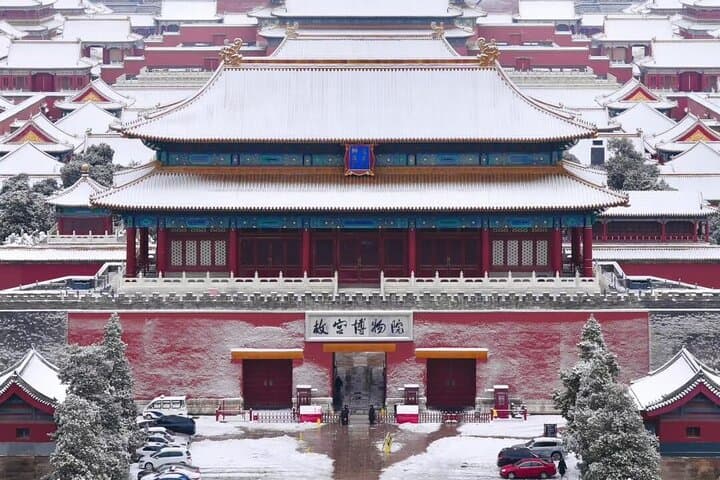
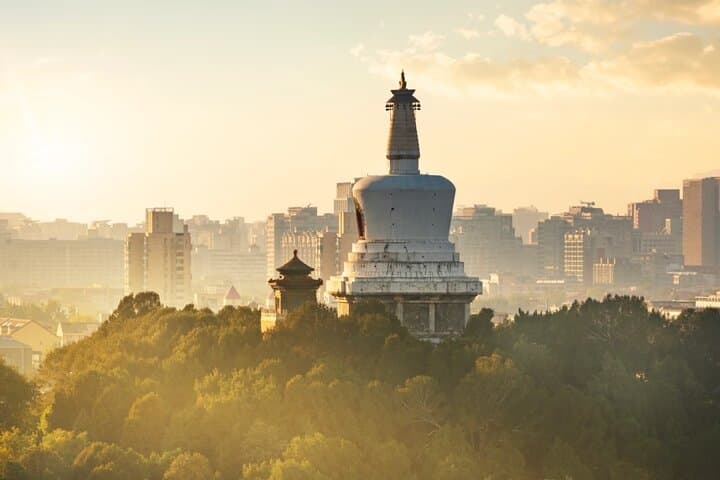
A cool breeze pushes up the central hill at Jingshan Park as you climb the stone steps, the city opening outward beneath you. Around the pavilion, the skyline and the rectangle of the Forbidden City lie like a map come alive; the pavilions’ eaves creak softly in the wind as visitors pause for photos and quiet. The QR audio guide—available in Chinese, English, Japanese, and Korean—routes you along the most direct paths and points out viewpoints, making a short urban ascent feel deliberate and informed.
A cool breeze pushes up the central hill at Jingshan Park as you climb the stone steps, the city opening outward beneath you. Around the pavilion, the skyline and the rectangle of the Forbidden City lie like a map come alive; the pavilions’ eaves creak softly in the wind as visitors pause for photos and quiet. The QR audio guide—available in Chinese, English, Japanese, and Korean—routes you along the most direct paths and points out viewpoints, making a short urban ascent feel deliberate and informed.
Jingshan’s hill is man-made: earth moved during the Ming dynasty when the moat and canals around the Forbidden City were excavated. The park that crowns the rise has been a public garden since the early 20th century and retains layered terraces, seasonal flower beds, and classical pavilions that reflect Beijing’s imperial landscape design.
Expect broad stone steps, shaded lanes lined with mature trees, and terraces that shift with the seasons—peony flushes in spring, dense green shade in summer, crisp gold in autumn, and a spare quiet after winter frosts. Cultural notes embedded in the audio explain the hill’s role in imperial ritual and local folklore, including the panoramic viewing tradition that draws photographers at dawn.
Practical guidance: allow 1–3 hours depending on stops, bring water and comfortable shoes for uneven stone steps, and use public transit to avoid limited parking. The QR ticket simplifies entry and navigation so you can focus on the views and the subtle historical details that anchor this compact but revealing urban climb.