THE ADVENTURE COLLECTIVE® · Independent discovery and booking for outdoor travel

A guided 4-hour jeep safari through Jim Corbett National Park puts you onto riverbanks and grasslands where tigers, elephants and deer move in view. Book zones early, bring optics, and respect strict park rules for the best chance of spotting big-game action.
A guided 4-hour jeep safari through Jim Corbett National Park puts you onto riverbanks and grasslands where tigers, elephants and deer move in view. Book zones early, bring optics, and respect strict park rules for the best chance of spotting big-game action.
The jeep rocks over a dust track, the sal trees leaning in like onlookers as the driver scans the grass. Sunlight slants across a river bend and a distant rumble of hooves changes the pace—this is Jim Corbett, where the forest pushes and yields, and the landscape keeps its own counsel.
Verified experiences and guided adventures in the surrounding area.
Operated by Jim Corbett Budget Safari · Ramnagar, Uttarakhand
The jeep rocks over a dust track, the sal trees leaning in like onlookers as the driver scans the grass. Sunlight slants across a river bend and a distant rumble of hooves changes the pace—this is Jim Corbett, where the forest pushes and yields, and the landscape keeps its own counsel.
Carved into the foothills of the Himalaya, Jim Corbett National Park is one of India’s oldest protected areas, established to protect the Royal Bengal tiger. Geology here is gentle ridges and alluvial plains fed by the Kosi and Ramganga rivers; monsoon-carved gullies open into grasslands that draw deer and their hunters. Local Kumaoni communities have long histories of working with the forest, and park culture balances tourism with strict seasonal rules and permit systems.
A guided jeep safari concentrates the experience: four hours of scanning riverbanks, grassland edges and shady sal forest for tigers, leopards, elephants, sambar and an array of birds. Expect slow stretches of observation punctuated by sudden sightings; vehicles stop for a few minutes when animals appear and for short restroom breaks.
Practicalities matter: book zones and vehicles in advance, bring binoculars, layered clothing and insect protection, and follow your guide’s instructions on noise and flash photography. Park rules are enforced to minimize disturbance—stay inside the vehicle, keep windows partly closed in close encounters, and leave no trace.
The payoff is uncompromised: close-range wildlife viewing in terrain where rivers dare you to move closer and the forest sometimes rewards the patient observer.
easy.
4 hours.
Suitable for most fitness levels; requires ability to climb into and sit in an open jeep for several hours
Standard jeep safaris last about four hours, matching park time blocks and permit allocations.
Common sightings include spotted deer, sambar, wild boar, elephants and many bird species; tigers and leopards are possible but sightings are not guaranteed.
Yes; infants must sit on laps and infant seats are available—check with the operator about age policies for specific zones.
Your operator usually arranges the jeep permit; carry ID and any booking confirmation requested at pickup.
Established in 1936 and later named for hunter-turned-conservationist Jim Corbett, the park is a cornerstone of India’s protected-area history.
Strict permit systems and vehicle limits help reduce disturbance; follow guides’ rules to minimize impact and support anti-poaching efforts.
Jim Corbett Budget Safari operates guided outdoor trips and adventures with an emphasis on safety, stewardship, and memorable experiences.
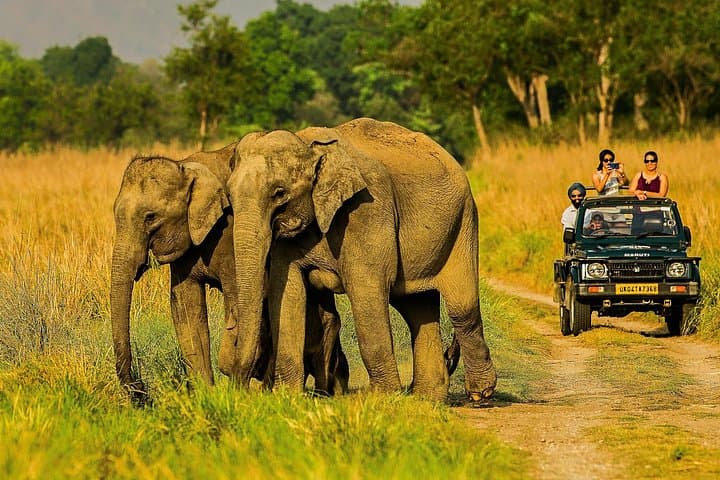
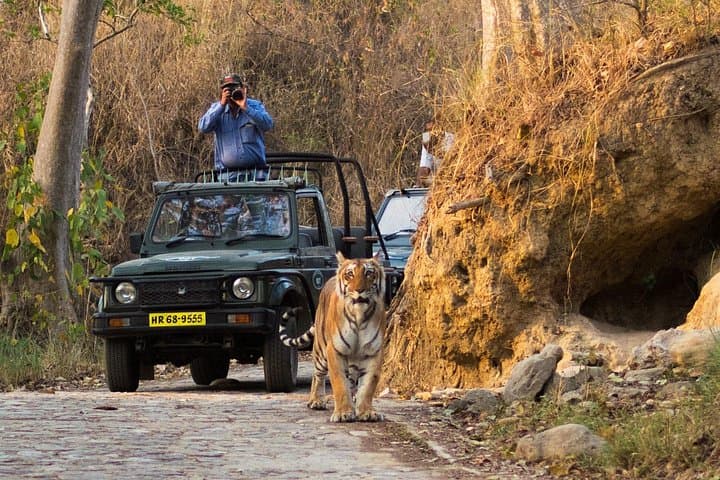
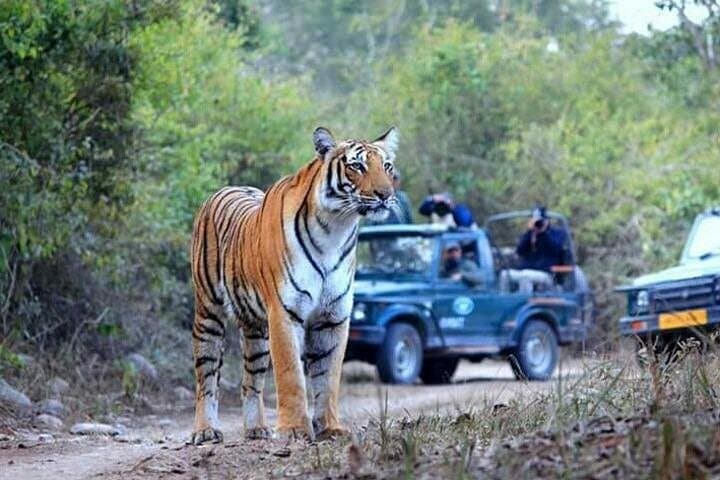
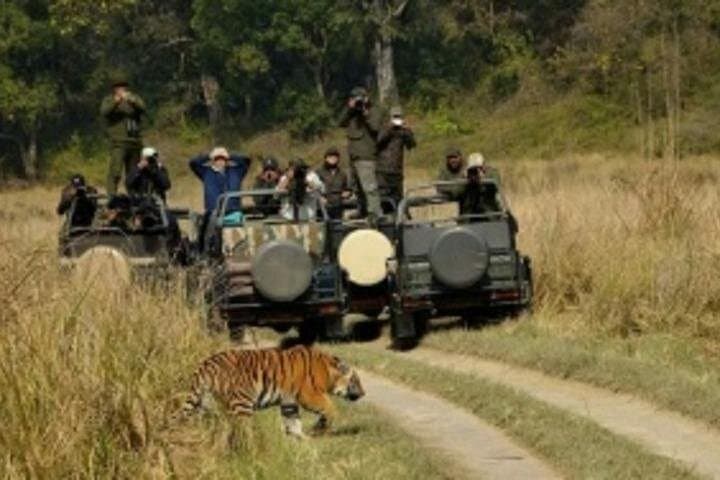
The jeep rocks over a dust track, the sal trees leaning in like onlookers as the driver scans the grass. Sunlight slants across a river bend and a distant rumble of hooves changes the pace—this is Jim Corbett, where the forest pushes and yields, and the landscape keeps its own counsel.
The jeep rocks over a dust track, the sal trees leaning in like onlookers as the driver scans the grass. Sunlight slants across a river bend and a distant rumble of hooves changes the pace—this is Jim Corbett, where the forest pushes and yields, and the landscape keeps its own counsel.
Carved into the foothills of the Himalaya, Jim Corbett National Park is one of India’s oldest protected areas, established to protect the Royal Bengal tiger. Geology here is gentle ridges and alluvial plains fed by the Kosi and Ramganga rivers; monsoon-carved gullies open into grasslands that draw deer and their hunters. Local Kumaoni communities have long histories of working with the forest, and park culture balances tourism with strict seasonal rules and permit systems.
A guided jeep safari concentrates the experience: four hours of scanning riverbanks, grassland edges and shady sal forest for tigers, leopards, elephants, sambar and an array of birds. Expect slow stretches of observation punctuated by sudden sightings; vehicles stop for a few minutes when animals appear and for short restroom breaks.
Practicalities matter: book zones and vehicles in advance, bring binoculars, layered clothing and insect protection, and follow your guide’s instructions on noise and flash photography. Park rules are enforced to minimize disturbance—stay inside the vehicle, keep windows partly closed in close encounters, and leave no trace.
The payoff is uncompromised: close-range wildlife viewing in terrain where rivers dare you to move closer and the forest sometimes rewards the patient observer.