THE ADVENTURE COLLECTIVE® · Independent discovery and booking for outdoor travel

A two-day overnight trek to Jiaozi Snow Mountain’s 4,200 m summit timed for sunrise. Expect glacial scenery, frozen waterfalls in winter, and high-altitude hiking that rewards those who prepare for cold, wind and rapid weather shifts.
A two-day overnight trek to Jiaozi Snow Mountain’s 4,200 m summit timed for sunrise. Expect glacial scenery, frozen waterfalls in winter, and high-altitude hiking that rewards those who prepare for cold, wind and rapid weather shifts.
Before dawn the ridge is a dark blade against the sky. You push upward through thin air and the last stars fade as the summit opens to a broad, cold horizon — a sunrise that spills light across glaciers, frozen waterfalls and a mirror of alpine lakes below. On Jiaozi Snow Mountain, the climb is less about conquest and more about keeping pace with the landscape as it jockeys between snowfields, moraine and open alpine grass.
Verified experiences and guided adventures in the surrounding area.
Before dawn the ridge is a dark blade against the sky. You push upward through thin air and the last stars fade as the summit opens to a broad, cold horizon — a sunrise that spills light across glaciers, frozen waterfalls and a mirror of alpine lakes below. On Jiaozi Snow Mountain, the climb is less about conquest and more about keeping pace with the landscape as it jockeys between snowfields, moraine and open alpine grass.
Geologically part of the Hengduan uplift, Jiaozi rises above 4,200 m, carved by glacial action into sharp ridges and cirques. Local Yi and Naxi communities have long used the lower slopes for summer pastures; shepherd trails and terraced fields give way to rock and ice as elevation increases. In winter the waterfalls lock into blue-white ice, and melt-season runoff feeds clear lakes that reflect the peaks.
Expect high-altitude hiking with sections of snow and loose scree. Weather swings quickly: wind can sting, sun can bake exposed ridgelines, and temperatures often drop below freezing at night. Guides time the ascent for a pre-dawn push so you reach the summit for sunrise, then descend to a campsite or mountain hut for the night.
Practical notes: acclimatize in Kunming or nearby villages for 24–48 hours before the climb, pack layers, and carry crampons or microspikes in winter. Water sources at altitude may be limited; treat meltwater. With careful pacing and proper gear, the overnight summit delivers one of Yunnan’s most dramatic high-altitude sunrises.
difficult.
2 days.
Good aerobic fitness with prior high-altitude hiking experience; ability to carry a 10–15 kg pack and move steadily at 3,500–4,200 m.
Late November through March offers stable snowpack and dramatic icefalls; outside this window you may encounter melt and more exposed rock.
You don’t need technical climbing skills, but experience with high-altitude hikes and walking on snow/ice is strongly recommended.
Local regulations vary—most operators include permits and a guide with the overnight tour; solo attempts should confirm local access rules and safety requirements.
Acclimatize in Kunming or nearby lower valleys for 1–2 days, ascend slowly, stay hydrated, and avoid alcohol before the climb; descents at first symptoms are essential.
The slopes have long been used by Yi and Naxi pastoralists; traditional trails and seasonal grazing shaped lower-elevation routes used today by trekkers.
High-altitude ecosystems are fragile—stick to established trails, pack out waste, and avoid disturbing seasonal pastures and water sources.
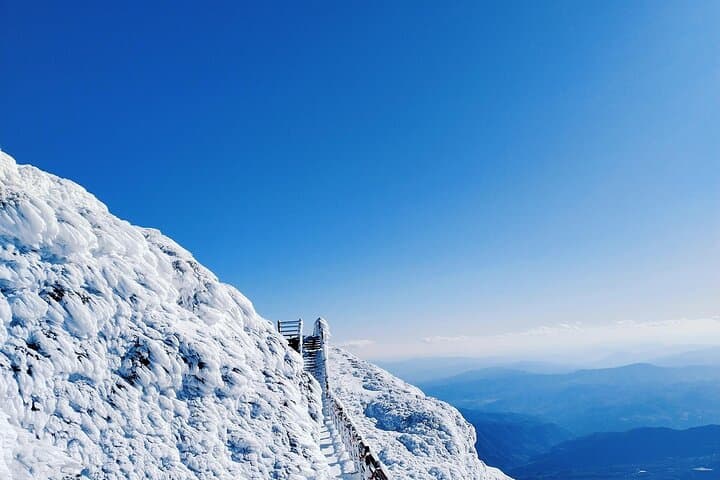
Before dawn the ridge is a dark blade against the sky. You push upward through thin air and the last stars fade as the summit opens to a broad, cold horizon — a sunrise that spills light across glaciers, frozen waterfalls and a mirror of alpine lakes below. On Jiaozi Snow Mountain, the climb is less about conquest and more about keeping pace with the landscape as it jockeys between snowfields, moraine and open alpine grass.
Before dawn the ridge is a dark blade against the sky. You push upward through thin air and the last stars fade as the summit opens to a broad, cold horizon — a sunrise that spills light across glaciers, frozen waterfalls and a mirror of alpine lakes below. On Jiaozi Snow Mountain, the climb is less about conquest and more about keeping pace with the landscape as it jockeys between snowfields, moraine and open alpine grass.
Geologically part of the Hengduan uplift, Jiaozi rises above 4,200 m, carved by glacial action into sharp ridges and cirques. Local Yi and Naxi communities have long used the lower slopes for summer pastures; shepherd trails and terraced fields give way to rock and ice as elevation increases. In winter the waterfalls lock into blue-white ice, and melt-season runoff feeds clear lakes that reflect the peaks.
Expect high-altitude hiking with sections of snow and loose scree. Weather swings quickly: wind can sting, sun can bake exposed ridgelines, and temperatures often drop below freezing at night. Guides time the ascent for a pre-dawn push so you reach the summit for sunrise, then descend to a campsite or mountain hut for the night.
Practical notes: acclimatize in Kunming or nearby villages for 24–48 hours before the climb, pack layers, and carry crampons or microspikes in winter. Water sources at altitude may be limited; treat meltwater. With careful pacing and proper gear, the overnight summit delivers one of Yunnan’s most dramatic high-altitude sunrises.