THE ADVENTURE COLLECTIVE® · Independent discovery and booking for outdoor travel

Hike the raw, unrestored Jiankou and finish on the rebuilt terraces at Mutianyu on a private, full-day tour from Beijing. Expect steep scrambling, Ming-era masonry, and a post-hike meal in a local village.
Hike the raw, unrestored Jiankou and finish on the rebuilt terraces at Mutianyu on a private, full-day tour from Beijing. Expect steep scrambling, Ming-era masonry, and a post-hike meal in a local village.
Morning fog parts over steep crenellations as a small van eases out of Beijing and onto the country road toward Huairou. By the time the guide leads the group from Xizhazi village, the Great Wall rises like a series of stone ribs, alternating between wild, crumbling Jiankou and the broad, restored terraces of Mutianyu. Hikers move from raw masonry to repaired towers, trading gritty scrambling for steady switchbacks and panoramic ridgelines that frame the North China Plain.
Verified experiences and guided adventures in the surrounding area.
Operated by Untouched Great Wall Hike · Beijing, Beijing
Morning fog parts over steep crenellations as a small van eases out of Beijing and onto the country road toward Huairou. By the time the guide leads the group from Xizhazi village, the Great Wall rises like a series of stone ribs, alternating between wild, crumbling Jiankou and the broad, restored terraces of Mutianyu. Hikers move from raw masonry to repaired towers, trading gritty scrambling for steady switchbacks and panoramic ridgelines that frame the North China Plain.
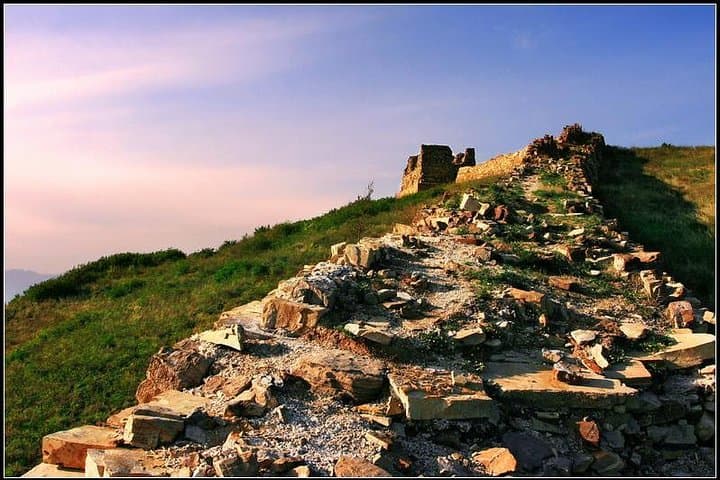
Jiankou’s ruined stretches date largely to Ming-era construction and expose original masonry, mortar, and the watchtower silhouettes that once watched for riders and smoke signals. Geologically, the line follows local ridgelines of fractured granite and schist, producing steep pitches and loose talus underfoot. Culturally, the hike stitches rural villages, local shepherding plots, and small restaurants where regional staples—noodles, braised vegetables, and cold beer—are common post-hike rewards.
Practical guidance centers on terrain and timing: expect 6–8 hours on the trail from pickup to drop-off, with sections requiring hands-on scrambling and careful foot placement. Start early to avoid midday crowds at Mutianyu; carry at least 2 liters of water, layered clothing, sun protection, and sturdy boots with good grip. Respect fragile, unrestored sections—don’t remove stones or climb unstable towers. The route offers dramatic, contrasting views of history: the untended Jiankou daring you forward, the restored Mutianyu welcoming you to wide, walkable ramparts.
challenging.
6–8 hours.
Good cardiovascular fitness and sure-footedness; comfortable with steep climbs and occasional scrambling.
No special permit is required for day hikes, but local access points are managed by villages—follow your guide’s directions.
Jiankou includes steep, unrestored masonry and basic scrambling; the Mutianyu end is walked. Good footwear and caution are important.
Participants should have moderate-to-high fitness; those with heart/back issues or limited mobility should avoid the Jiankou sections.
The tour includes bottled water and lunch at a local restaurant; bring extra water and snacks if you metabolize quickly.
Much of the visible stonework on both Jiankou and Mutianyu dates to Ming-era reconstruction; Jiankou remains largely unrestored while Mutianyu underwent later restoration for preservation and tourism.
Unrestored sections are fragile—stay on stable lines, avoid removing stones, and support local businesses to encourage sustainable tourism.
Untouched Great Wall Hike operates guided outdoor trips and adventures with an emphasis on safety, stewardship, and memorable experiences.
Morning fog parts over steep crenellations as a small van eases out of Beijing and onto the country road toward Huairou. By the time the guide leads the group from Xizhazi village, the Great Wall rises like a series of stone ribs, alternating between wild, crumbling Jiankou and the broad, restored terraces of Mutianyu. Hikers move from raw masonry to repaired towers, trading gritty scrambling for steady switchbacks and panoramic ridgelines that frame the North China Plain.
Morning fog parts over steep crenellations as a small van eases out of Beijing and onto the country road toward Huairou. By the time the guide leads the group from Xizhazi village, the Great Wall rises like a series of stone ribs, alternating between wild, crumbling Jiankou and the broad, restored terraces of Mutianyu. Hikers move from raw masonry to repaired towers, trading gritty scrambling for steady switchbacks and panoramic ridgelines that frame the North China Plain.
Jiankou’s ruined stretches date largely to Ming-era construction and expose original masonry, mortar, and the watchtower silhouettes that once watched for riders and smoke signals. Geologically, the line follows local ridgelines of fractured granite and schist, producing steep pitches and loose talus underfoot. Culturally, the hike stitches rural villages, local shepherding plots, and small restaurants where regional staples—noodles, braised vegetables, and cold beer—are common post-hike rewards.
Practical guidance centers on terrain and timing: expect 6–8 hours on the trail from pickup to drop-off, with sections requiring hands-on scrambling and careful foot placement. Start early to avoid midday crowds at Mutianyu; carry at least 2 liters of water, layered clothing, sun protection, and sturdy boots with good grip. Respect fragile, unrestored sections—don’t remove stones or climb unstable towers. The route offers dramatic, contrasting views of history: the untended Jiankou daring you forward, the restored Mutianyu welcoming you to wide, walkable ramparts.