THE ADVENTURE COLLECTIVE® · Independent discovery and booking for outdoor travel

A rugged, photographer-favored section of the Ming-era Great Wall, Jiankou offers steep dolomite ridgelines, ancient towers and exposed traverses. This guide explains what to expect, safety considerations and how to prepare for the hike.
A rugged, photographer-favored section of the Ming-era Great Wall, Jiankou offers steep dolomite ridgelines, ancient towers and exposed traverses. This guide explains what to expect, safety considerations and how to prepare for the hike.
You begin on a ridge where the wall drops and climbs like a stubborn spine across the skyline. Wind pushes at your face and the broken crenellations loom above — steep steps, abrupt towers and raw white dolomite that catches the sun. The trail feels less like a tourist attraction and more like a route reclaimed by the mountains.
Verified experiences and guided adventures in the surrounding area.
Operated by Great Wall Expert · Beijing, Beijing
You begin on a ridge where the wall drops and climbs like a stubborn spine across the skyline. Wind pushes at your face and the broken crenellations loom above — steep steps, abrupt towers and raw white dolomite that catches the sun. The trail feels less like a tourist attraction and more like a route reclaimed by the mountains.
This stretch of the Great Wall dates to the Ming Dynasty and links to Mutianyu in the east and Huanghuacheng to the west. Built from local dolomite, Jiankou is geologically striking: hard white rock that weathers into jagged battlements and narrow steps. Historically it hosted military posts such as Zhenbeilou Tower; today photographers prize the dramatic profiles and the Beijing Knot where three wall directions intersect.
Expect steep ascents, loose stone and sections with exposure — the route is raw, often un-restored, and can be closed for fire prevention. Local villages in Huairou reflect rural Beijing life; vendors are sparse on the route so bring supplies.
Practical guidance: start early to avoid midday heat, carry at least 2 liters of water, and wear ankle-supporting boots with good grip. Trekking poles reduce knee strain on descents. Check weather and closures — operators cancel during bad weather or fire risk. If you’re uncomfortable with heights or have limited fitness, choose Mutianyu or Huanghuacheng instead.
The hike rewards effort with sweeping mountain views, ancient towers and the sense of walking a living piece of history — demanding but utterly memorable.
challenging.
6–10 hours.
Requires a high level of cardiovascular fitness, good balance and experience on uneven, exposed terrain
Routes vary; guided hikes typically take 6–10 hours round-trip depending on start/end points and pace.
Not recommended for beginners or those afraid of heights; the terrain is steep, uneven and sometimes exposed.
No formal permit for hiking Jiankou, but sections can be closed by authorities for fire prevention or maintenance—check ahead.
Most operators include hotel pickup and drop-off; public transport is limited—plan logistics in advance.
Jiankou is a Ming Dynasty section built from local dolomite; it connects to Mutianyu and Huanghuacheng and contains strategic towers like Zhenbeilou.
The section is fragile—erosion and unmanaged foot traffic accelerate damage; follow closures, stay off restored towers and pack out all waste.
Great Wall Expert operates guided outdoor trips and adventures with an emphasis on safety, stewardship, and memorable experiences.
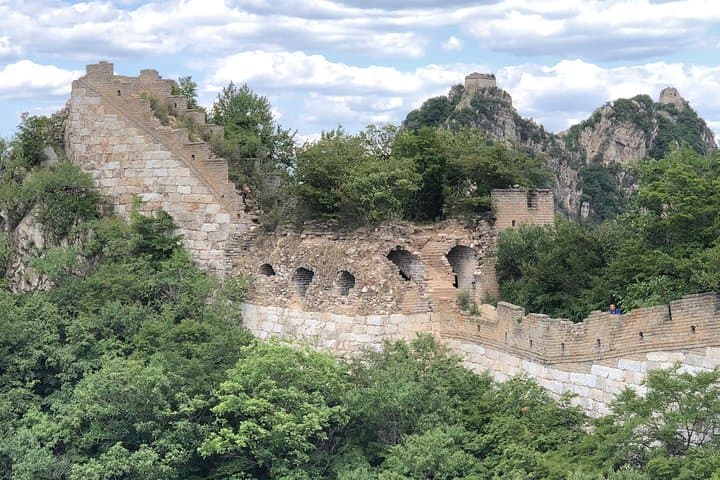
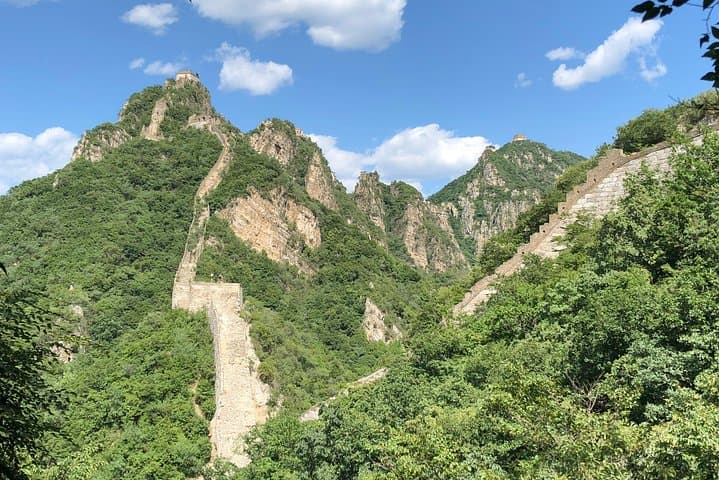
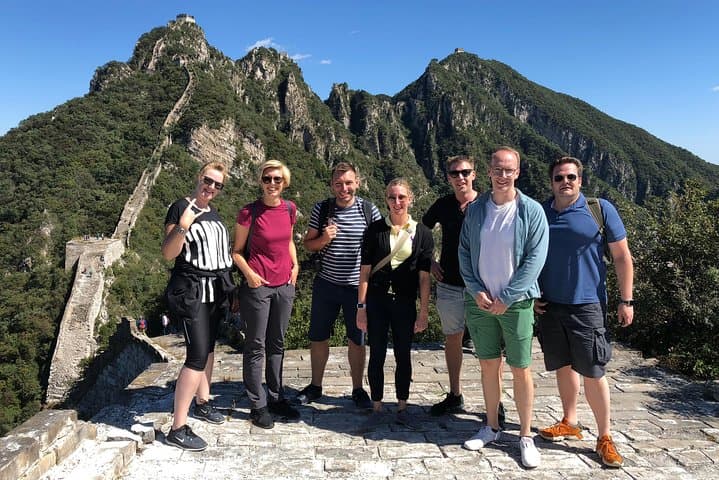
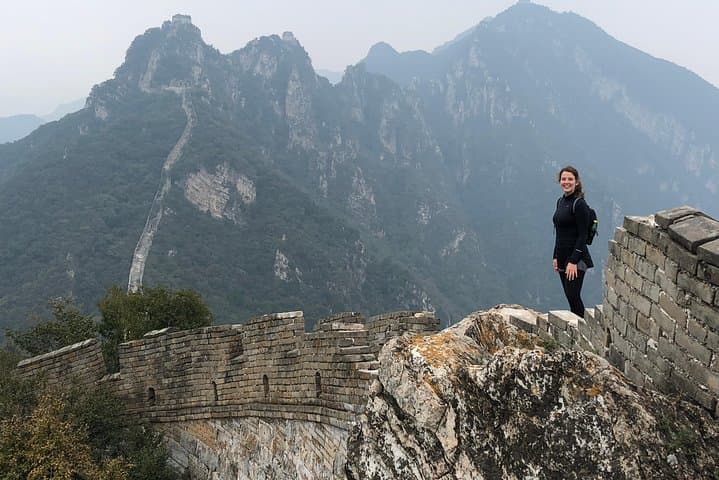
You begin on a ridge where the wall drops and climbs like a stubborn spine across the skyline. Wind pushes at your face and the broken crenellations loom above — steep steps, abrupt towers and raw white dolomite that catches the sun. The trail feels less like a tourist attraction and more like a route reclaimed by the mountains.
You begin on a ridge where the wall drops and climbs like a stubborn spine across the skyline. Wind pushes at your face and the broken crenellations loom above — steep steps, abrupt towers and raw white dolomite that catches the sun. The trail feels less like a tourist attraction and more like a route reclaimed by the mountains.
This stretch of the Great Wall dates to the Ming Dynasty and links to Mutianyu in the east and Huanghuacheng to the west. Built from local dolomite, Jiankou is geologically striking: hard white rock that weathers into jagged battlements and narrow steps. Historically it hosted military posts such as Zhenbeilou Tower; today photographers prize the dramatic profiles and the Beijing Knot where three wall directions intersect.
Expect steep ascents, loose stone and sections with exposure — the route is raw, often un-restored, and can be closed for fire prevention. Local villages in Huairou reflect rural Beijing life; vendors are sparse on the route so bring supplies.
Practical guidance: start early to avoid midday heat, carry at least 2 liters of water, and wear ankle-supporting boots with good grip. Trekking poles reduce knee strain on descents. Check weather and closures — operators cancel during bad weather or fire risk. If you’re uncomfortable with heights or have limited fitness, choose Mutianyu or Huanghuacheng instead.
The hike rewards effort with sweeping mountain views, ancient towers and the sense of walking a living piece of history — demanding but utterly memorable.