THE ADVENTURE COLLECTIVE® · Independent discovery and booking for outdoor travel

Start at the Fountain of the Turtles and walk two millennia of Roman life—from the Portico d’Ottavia in the Jewish Ghetto to the alleys and trattorias of Trastevere. A 1 hour 45 minute, pay-what-you-want tour focused on candid history, architecture and local flavor.
Start at the Fountain of the Turtles and walk two millennia of Roman life—from the Portico d’Ottavia in the Jewish Ghetto to the alleys and trattorias of Trastevere. A 1 hour 45 minute, pay-what-you-want tour focused on candid history, architecture and local flavor.
A morning at the Fountain of the Turtles starts like a page turning: bronze shells glint under a Roman sun while narrow lanes lead away toward a neighborhood that refuses to be quiet. The guide steps forward with a sign; the city’s pulse—traders, scooters and the Tiber’s slow current—frames the group as stories begin.
Verified experiences and guided adventures in the surrounding area.
Operated by What About Tours · Rome, Lazio
A morning at the Fountain of the Turtles starts like a page turning: bronze shells glint under a Roman sun while narrow lanes lead away toward a neighborhood that refuses to be quiet. The guide steps forward with a sign; the city’s pulse—traders, scooters and the Tiber’s slow current—frames the group as stories begin.
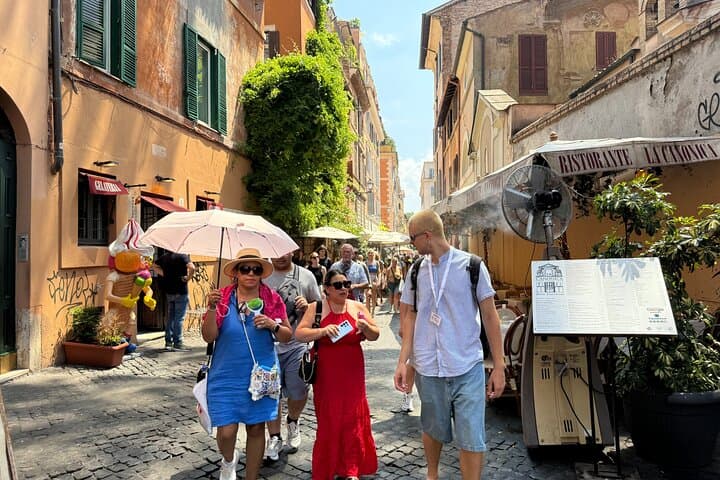
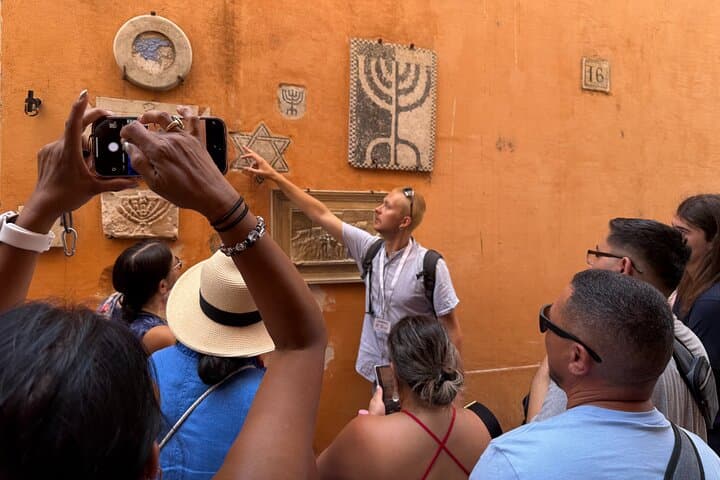
The tour threads two contrasting quarters. In the Jewish Ghetto, stone and porticos keep memory close: the Portico d’Ottavia, the Tempio Maggiore, and plaques that mark centuries of containment and resilience. Across the river, Trastevere answers with rough-hewn alleys, medieval mosaics at Santa Maria, and piazzas that still echo with poets and street musicians.
Geology here is urban: ancient travertine and tufa foundations, Renaissance fountains reshaped by Baroque hands, and bridges that map Rome’s expansion. Cultural layers reveal Roman law, papal decrees, and a living Jewish community whose cuisine—carciofi alla giudia, kosher bakeries—speaks history through taste.
Practical notes: the route covers roughly 2–3 kilometers on mostly flat cobbles; expect uneven paving and short, narrow stairways. The tour runs about 1 hour 45 minutes, ends in Piazza Trilussa, and follows a pay-what-you-want model—bring cash or card for tips. Wear sturdy shoes, carry water, and pace yourself: shade spots are intermittent and churches provide welcome rest stops. For curious travelers, this walk delivers context as much as scenes—sharp, candid, and thoroughly Roman.
easy.
1.5–2 hours.
Suitable for most fitness levels; requires walking on uneven cobbles for the full duration
Reservations are recommended due to group limits, but some tours accept walk-ups; check the listing and book to secure a spot.
The route is stroller-accessible in many sections, but cobblestones and occasional narrow alleys can be challenging—contact the operator for arrangements.
Guides typically offer the tour in English; check the tour page for other language options or private tour availability.
Food is not included, but guides point out local specialties and recommend places to try Roman-Jewish dishes; plan to pay separately if you stop to eat.
The Jewish Ghetto was established by papal decree in 1555 and remained a confined quarter until the late 19th century; the community’s synagogue and cuisine reflect centuries of adaptation.
Historic districts face wear from foot traffic and tourism; stick to marked paths, avoid touching fragile mosaics, and support local businesses to keep heritage sites economically viable.
What About Tours operates guided outdoor trips and adventures with an emphasis on safety, stewardship, and memorable experiences.

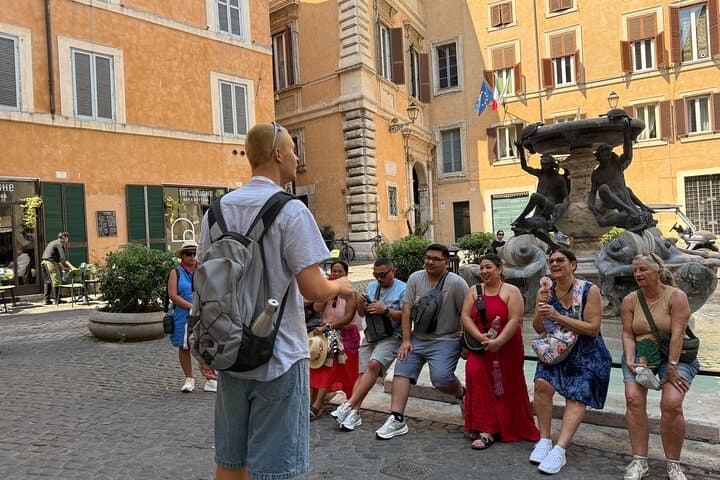
A morning at the Fountain of the Turtles starts like a page turning: bronze shells glint under a Roman sun while narrow lanes lead away toward a neighborhood that refuses to be quiet. The guide steps forward with a sign; the city’s pulse—traders, scooters and the Tiber’s slow current—frames the group as stories begin.
A morning at the Fountain of the Turtles starts like a page turning: bronze shells glint under a Roman sun while narrow lanes lead away toward a neighborhood that refuses to be quiet. The guide steps forward with a sign; the city’s pulse—traders, scooters and the Tiber’s slow current—frames the group as stories begin.
The tour threads two contrasting quarters. In the Jewish Ghetto, stone and porticos keep memory close: the Portico d’Ottavia, the Tempio Maggiore, and plaques that mark centuries of containment and resilience. Across the river, Trastevere answers with rough-hewn alleys, medieval mosaics at Santa Maria, and piazzas that still echo with poets and street musicians.
Geology here is urban: ancient travertine and tufa foundations, Renaissance fountains reshaped by Baroque hands, and bridges that map Rome’s expansion. Cultural layers reveal Roman law, papal decrees, and a living Jewish community whose cuisine—carciofi alla giudia, kosher bakeries—speaks history through taste.
Practical notes: the route covers roughly 2–3 kilometers on mostly flat cobbles; expect uneven paving and short, narrow stairways. The tour runs about 1 hour 45 minutes, ends in Piazza Trilussa, and follows a pay-what-you-want model—bring cash or card for tips. Wear sturdy shoes, carry water, and pace yourself: shade spots are intermittent and churches provide welcome rest stops. For curious travelers, this walk delivers context as much as scenes—sharp, candid, and thoroughly Roman.