THE ADVENTURE COLLECTIVE® · Independent discovery and booking for outdoor travel

Walk the streets where the first Jewish settlers arrived in North America. This private 2.5-hour Lower Manhattan tour traces colonial-era arrivals, Revolutionary ties, and the early congregations that shaped the American Jewish story.
Walk the streets where the first Jewish settlers arrived in North America. This private 2.5-hour Lower Manhattan tour traces colonial-era arrivals, Revolutionary ties, and the early congregations that shaped the American Jewish story.
Morning light pools on the stone steps outside the National Museum of the American Indian, and the city smells of salt and roasted chestnuts as you step off the curb. The guide folds a city map into an oral map of people — the first Jews who arrived in New Amsterdam in 1654, later congregations, and the streets where public life and private faith intertwined.
Verified experiences and guided adventures in the surrounding area.
Operated by Cicerone Travel · New York, NY
Morning light pools on the stone steps outside the National Museum of the American Indian, and the city smells of salt and roasted chestnuts as you step off the curb. The guide folds a city map into an oral map of people — the first Jews who arrived in New Amsterdam in 1654, later congregations, and the streets where public life and private faith intertwined.
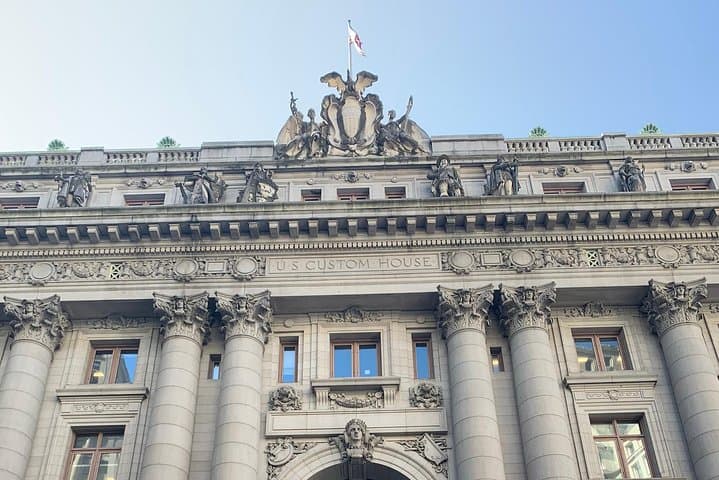
The route threads Battery Park and Castle Clinton, passes the old Customs House and through the narrow lanes of early Manhattan. You’ll stand at Federal Hall where the first Congress met, trace money and migration at Wall Street, and cross into the Lower East Side where 18th- and 19th-century Jewish households gave way to mass immigration. Geology here is concrete and landfill over harbor clay; the story is social and maritime — merchants, traders and refugees shaping a colonial port.
Guides on this private 150‑minute walk set the colonial period beside Revolutionary-era episodes, pointing out surviving masonry and the plaques that mark vanished neighborhoods. Expect accessible sidewalks, short uphill stretches, and plenty of stops for context and questions.
Practical notes: wear sturdy shoes, carry a refillable bottle, and bring a MetroCard or contactless pay — you’ll use public transit to return or extend your day. Morning or late afternoon departures reduce heat and crowds. This is a research-forward, people-centered tour: it invites curiosity, asks for respectful conduct at religious sites, and rewards anyone who likes layered history told on the city’s streets.
easy.
2–2.5 hours.
Suitable for casual walkers and visitors with normal mobility; minimal elevation and frequent stops
Yes — the route uses city sidewalks and is listed as wheelchair accessible; notify booking of any mobility needs so the guide can adjust stops.
This is a private tour booked per group; check the provider’s booking policy for maximum guest counts.
Stops are primarily outdoor and interpretive; entry to active houses of worship or paid museums is not included unless arranged in advance.
The tour is offered in English; inquire with the operator about other language options when booking.
The first group of Jewish settlers arrived in New Amsterdam in 1654 and established Congregation Shearith Israel; their presence predates much of the later 19th-century immigration remembered in the Lower East Side.
Lower Manhattan’s historic sites are vulnerable to heavy foot traffic and sea-level risks; follow marked paths, avoid touching fragile markers, and support local preservation through donations or buying from nearby independent businesses.
Cicerone Travel operates guided outdoor trips and adventures with an emphasis on safety, stewardship, and memorable experiences.
Morning light pools on the stone steps outside the National Museum of the American Indian, and the city smells of salt and roasted chestnuts as you step off the curb. The guide folds a city map into an oral map of people — the first Jews who arrived in New Amsterdam in 1654, later congregations, and the streets where public life and private faith intertwined.
Morning light pools on the stone steps outside the National Museum of the American Indian, and the city smells of salt and roasted chestnuts as you step off the curb. The guide folds a city map into an oral map of people — the first Jews who arrived in New Amsterdam in 1654, later congregations, and the streets where public life and private faith intertwined.
The route threads Battery Park and Castle Clinton, passes the old Customs House and through the narrow lanes of early Manhattan. You’ll stand at Federal Hall where the first Congress met, trace money and migration at Wall Street, and cross into the Lower East Side where 18th- and 19th-century Jewish households gave way to mass immigration. Geology here is concrete and landfill over harbor clay; the story is social and maritime — merchants, traders and refugees shaping a colonial port.
Guides on this private 150‑minute walk set the colonial period beside Revolutionary-era episodes, pointing out surviving masonry and the plaques that mark vanished neighborhoods. Expect accessible sidewalks, short uphill stretches, and plenty of stops for context and questions.
Practical notes: wear sturdy shoes, carry a refillable bottle, and bring a MetroCard or contactless pay — you’ll use public transit to return or extend your day. Morning or late afternoon departures reduce heat and crowds. This is a research-forward, people-centered tour: it invites curiosity, asks for respectful conduct at religious sites, and rewards anyone who likes layered history told on the city’s streets.