THE ADVENTURE COLLECTIVE® · Independent discovery and booking for outdoor travel

Race a jet car past Dubai’s engineered coastline and pause for photos beneath the Burj Al Arab. This private 30‑minute ride is a short, high-adrenaline way to see the city from the water with minimal skill required.
Race a jet car past Dubai’s engineered coastline and pause for photos beneath the Burj Al Arab. This private 30‑minute ride is a short, high-adrenaline way to see the city from the water with minimal skill required.
You push off the marina platform and the salt-slick water rises like a challenge, the jet car answering with a soft, electric roar as the Burj Al Arab looms on the horizon. In thirty minutes the city’s engineered coast—man-made beaches, breakwaters and glittering hotel facades—becomes a playground: quick bursts of speed, a stop for photos beneath the sail-shaped hotel, and a close-up of the low surf daring you to lean into the curve.
Verified experiences and guided adventures in the surrounding area.
Operated by Nemo WaterSports Dubai · Dubai, Dubai
You push off the marina platform and the salt-slick water rises like a challenge, the jet car answering with a soft, electric roar as the Burj Al Arab looms on the horizon. In thirty minutes the city’s engineered coast—man-made beaches, breakwaters and glittering hotel facades—becomes a playground: quick bursts of speed, a stop for photos beneath the sail-shaped hotel, and a close-up of the low surf daring you to lean into the curve.
Dubai’s shoreline is recent geology in human time: reclaimed sand and engineered jetties that turned a desert coast into a staged waterfront. The Burj Al Arab, opened in 1999, is less a historical artifact and more an emblem of Dubai’s rapid transformation—luxury built on plan and poured concrete. Local culture on the water mixes family beach days, fishing dhows at dawn, and a growing scene of new watercraft like jet cars that mirror the city’s love of high-tech toys.
Practical guidance: arrive at least 30 minutes early to change and get a full safety briefing; operators provide life jackets and lockers. The water is usually calm in the morning—best for learning—while midday winds can add chop. Wear a swimsuit or quick-dry layers, bring a waterproof camera or phone in a dry bag, and expect staff to lead the way on a jet ski.
This is an accessible, high-adrenaline coastal run that delivers iconic photo stops and minimal skill requirements—ideal for visitors who want a short, private taste of Dubai from the sea.
easy.
30 minutes.
Basic mobility and balance suffice; minimal exertion required.
Operators typically allow children aged 5 and up; confirm at booking and note that young riders must follow instructor guidance.
No license is necessary; instructors give a safety briefing and usually lead on a jet ski with the guest controlling the jet car under supervision.
Trips are canceled in rough conditions for safety; the operator’s policy allows full refunds if canceled 24 hours prior or for bad weather.
Accessible to people with wheelchairs up to the pontoon; staff can assist but boarding may require some mobility—check specifics when booking.
The Burj Al Arab opened in 1999 as part of Dubai’s rapid coastal transformation—today the shoreline is largely reclaimed and engineered for tourism and sport.
Respect local marine life by not littering and following operator guidance; stay clear of marked conservation zones and avoid disturbing wildlife.
Nemo WaterSports Dubai operates guided outdoor trips and adventures with an emphasis on safety, stewardship, and memorable experiences.


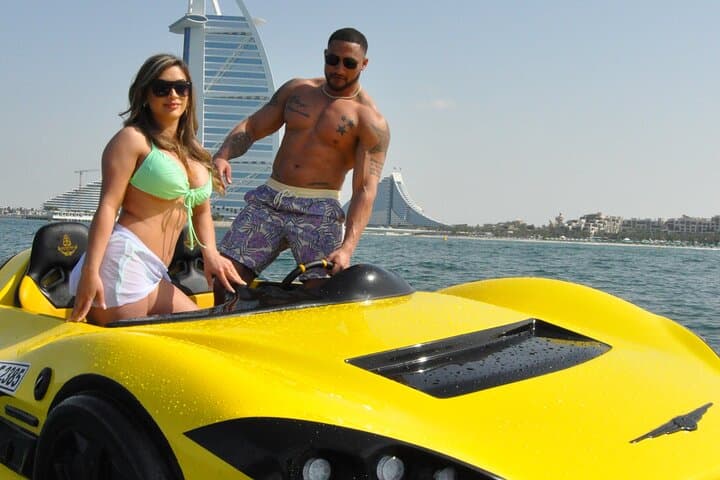

You push off the marina platform and the salt-slick water rises like a challenge, the jet car answering with a soft, electric roar as the Burj Al Arab looms on the horizon. In thirty minutes the city’s engineered coast—man-made beaches, breakwaters and glittering hotel facades—becomes a playground: quick bursts of speed, a stop for photos beneath the sail-shaped hotel, and a close-up of the low surf daring you to lean into the curve.
You push off the marina platform and the salt-slick water rises like a challenge, the jet car answering with a soft, electric roar as the Burj Al Arab looms on the horizon. In thirty minutes the city’s engineered coast—man-made beaches, breakwaters and glittering hotel facades—becomes a playground: quick bursts of speed, a stop for photos beneath the sail-shaped hotel, and a close-up of the low surf daring you to lean into the curve.
Dubai’s shoreline is recent geology in human time: reclaimed sand and engineered jetties that turned a desert coast into a staged waterfront. The Burj Al Arab, opened in 1999, is less a historical artifact and more an emblem of Dubai’s rapid transformation—luxury built on plan and poured concrete. Local culture on the water mixes family beach days, fishing dhows at dawn, and a growing scene of new watercraft like jet cars that mirror the city’s love of high-tech toys.
Practical guidance: arrive at least 30 minutes early to change and get a full safety briefing; operators provide life jackets and lockers. The water is usually calm in the morning—best for learning—while midday winds can add chop. Wear a swimsuit or quick-dry layers, bring a waterproof camera or phone in a dry bag, and expect staff to lead the way on a jet ski.
This is an accessible, high-adrenaline coastal run that delivers iconic photo stops and minimal skill requirements—ideal for visitors who want a short, private taste of Dubai from the sea.