THE ADVENTURE COLLECTIVE® · Independent discovery and booking for outdoor travel

Spend a half-day from Sedona exploring Tuzigoot National Monument and the cliff-lined town of Jerome. Expect ancient Sinagua ruins, steep miner-era streets, local art galleries, and panoramic river and canyon views.
Spend a half-day from Sedona exploring Tuzigoot National Monument and the cliff-lined town of Jerome. Expect ancient Sinagua ruins, steep miner-era streets, local art galleries, and panoramic river and canyon views.
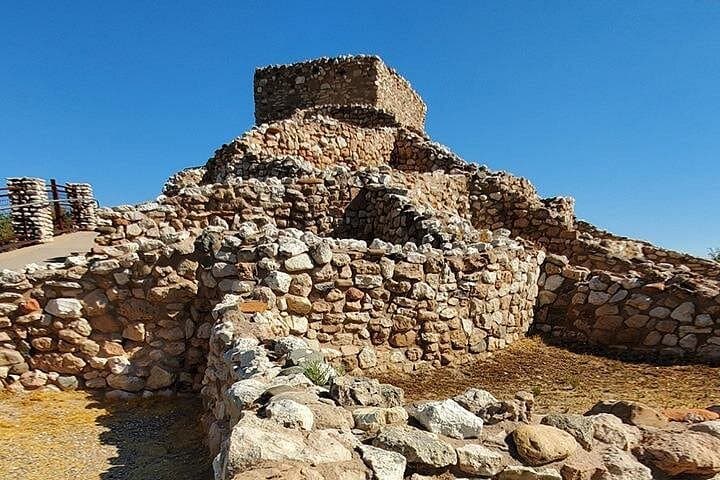
A clear Arizona morning finds the van threading oak-studded slopes toward Tuzigoot, the ruin perched like a low, sun-warmed wall above a bend of the Verde River. Wind tugs at scrub and the ruins seem to sit in conversation with the river, stones holding seasons of human life.
Verified experiences and guided adventures in the surrounding area.
Operated by Great West Tours · Jerome, Arizona
A clear Arizona morning finds the van threading oak-studded slopes toward Tuzigoot, the ruin perched like a low, sun-warmed wall above a bend of the Verde River. Wind tugs at scrub and the ruins seem to sit in conversation with the river, stones holding seasons of human life.
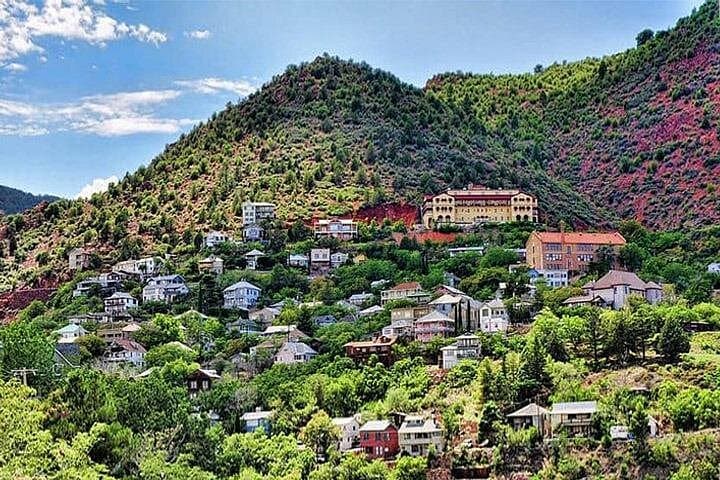
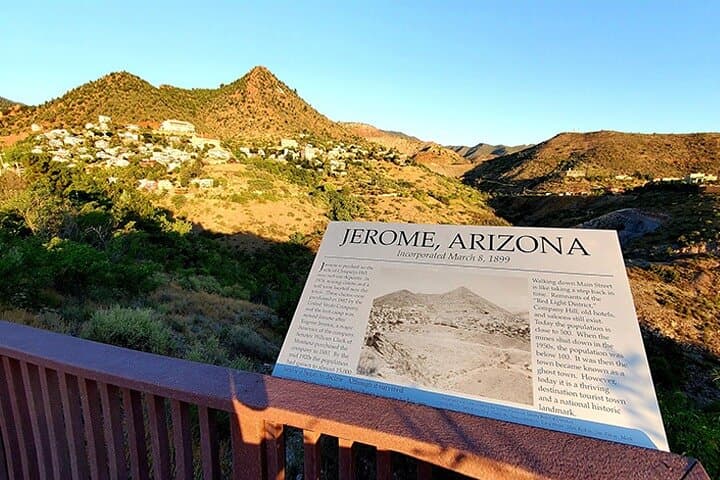
The itinerary folds history into landscape: Tuzigoot is a Sinagua masonry pueblo dating from roughly 1100–1400 CE, its spine of rooms and plazas built on limestone terraces. Geology here is visible — limestone benches, river-carved canyons and the volcanic ridges of the Black Hills that give Jerome its steep, stacked streets. Jerome itself rose in the late 19th century as a copper boomtown; its converted miner’s buildings and quirky, cliff-hugging homes now house galleries and cafes.
Visitors will feel the town’s dual pulse — archaeological silence at Tuzigoot and a livelier, slightly theatrical energy in Jerome, where folklore about mines and ghosts mixes with local artists selling prints and metalwork. The route often includes Jerome State Historic Park and the Copper Museum for context.
Practical guidance: this is a mostly vehicle-driven half-day with short walks on uneven dirt and paved streets. Wear sturdy walking shoes for short climbs and street steps in Jerome, sun protection for exposed overlooks, and carry water — bottled water is often provided but refill options are limited. Timing: arrive early in the day to avoid midday heat and to secure parking or seating at popular cafés. Respect all marked areas at Tuzigoot; do not climb on ruins. With basic preparation, the tour offers a compact, layered look at human and geological history in central Arizona.
easy.
6 hours.
Suitable for most fitness levels; involves short walks and standing periods with some stairs and uneven ground
The tour lasts about six hours and includes guided stops at Tuzigoot and Jerome with pick-up/drop-off for most Sedona hotels; lunch is on your own.
Walking is limited to short trails at Tuzigoot and exploring Jerome’s streets; expect stairs and uneven pavement but no technical climbing.
Admission to Tuzigoot is sometimes included depending on the operator; confirm when booking as some additional stops may require separate fees.
Children can join, but Arizona law requires car seats for kids eight and younger and guests must provide them; check hotel pickup details 72 hours in advance.
Tuzigoot preserves a Sinagua pueblo complex from roughly 1100–1400 CE; Jerome grew into a copper boomtown in the late 1800s and later transitioned into an artist community.
Tuzigoot is managed to protect fragile archaeological remains—stay on designated paths and avoid touching masonry; support local businesses to sustain Jerome’s cultural economy.
Great West Tours operates guided outdoor trips and adventures with an emphasis on safety, stewardship, and memorable experiences.

A clear Arizona morning finds the van threading oak-studded slopes toward Tuzigoot, the ruin perched like a low, sun-warmed wall above a bend of the Verde River. Wind tugs at scrub and the ruins seem to sit in conversation with the river, stones holding seasons of human life.
A clear Arizona morning finds the van threading oak-studded slopes toward Tuzigoot, the ruin perched like a low, sun-warmed wall above a bend of the Verde River. Wind tugs at scrub and the ruins seem to sit in conversation with the river, stones holding seasons of human life.
The itinerary folds history into landscape: Tuzigoot is a Sinagua masonry pueblo dating from roughly 1100–1400 CE, its spine of rooms and plazas built on limestone terraces. Geology here is visible — limestone benches, river-carved canyons and the volcanic ridges of the Black Hills that give Jerome its steep, stacked streets. Jerome itself rose in the late 19th century as a copper boomtown; its converted miner’s buildings and quirky, cliff-hugging homes now house galleries and cafes.
Visitors will feel the town’s dual pulse — archaeological silence at Tuzigoot and a livelier, slightly theatrical energy in Jerome, where folklore about mines and ghosts mixes with local artists selling prints and metalwork. The route often includes Jerome State Historic Park and the Copper Museum for context.
Practical guidance: this is a mostly vehicle-driven half-day with short walks on uneven dirt and paved streets. Wear sturdy walking shoes for short climbs and street steps in Jerome, sun protection for exposed overlooks, and carry water — bottled water is often provided but refill options are limited. Timing: arrive early in the day to avoid midday heat and to secure parking or seating at popular cafés. Respect all marked areas at Tuzigoot; do not climb on ruins. With basic preparation, the tour offers a compact, layered look at human and geological history in central Arizona.