THE ADVENTURE COLLECTIVE® · Independent discovery and booking for outdoor travel

Walk Roman colonnades, climb a Crusader-era hilltop castle, and finish with sweeping views from the ancient city of Gadara. This full-day trip from Amman packs archaeology, panoramic viewpoints, and local culture into one long, walkable adventure.
Walk Roman colonnades, climb a Crusader-era hilltop castle, and finish with sweeping views from the ancient city of Gadara. This full-day trip from Amman packs archaeology, panoramic viewpoints, and local culture into one long, walkable adventure.
You step through Hadrian’s Arch and into a long line of stone columns—sunlight slices between ancient pillars and the colonnaded street seems to push you toward the heart of Gerasa. The air carries the dust of old roads and the faint scent of thyme from nearby hills as the South Theatre’s tiers rise like a carved memory of Roman pageantry.
Verified experiences and guided adventures in the surrounding area.
Operated by Monte Carlo Rent A Car · Jerash, Jerash Governorate
You step through Hadrian’s Arch and into a long line of stone columns—sunlight slices between ancient pillars and the colonnaded street seems to push you toward the heart of Gerasa. The air carries the dust of old roads and the faint scent of thyme from nearby hills as the South Theatre’s tiers rise like a carved memory of Roman pageantry.
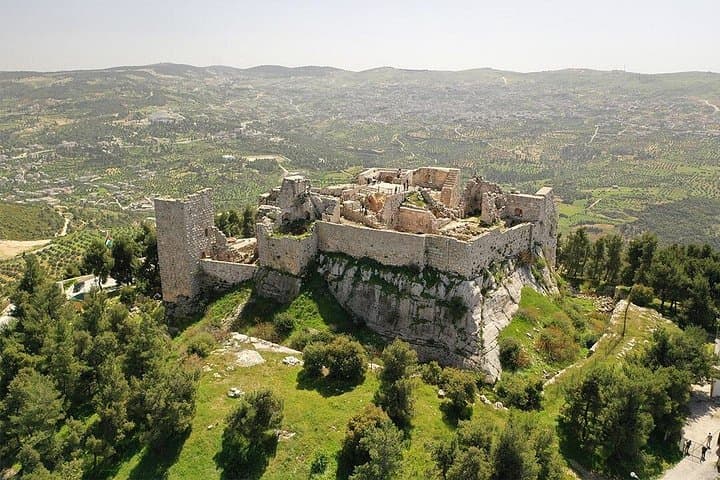
A short drive takes you into higher country where Ajloun Castle crowns a green ridge. The 12th-century fortress was built to control trade routes and now commands sweeping views over olive groves and terraced valleys; wind across the parapets dares you to imagine medieval scouts scanning the horizon.
Finish at Umm Qais (ancient Gadara), where black basalt blocks meet limestone ruins and a Roman theatre faces the Golan Heights and the Sea of Galilee. The sites trace layers of history—Roman urbanism, Byzantine churches, Ottoman houses—set on geology that shaped roads and agriculture for millennia.
Practical guidance: expect an 8–12 hour day with substantial walking on uneven stone and steps. Admissions are typically paid on site; official guides are optional but deepen context. Start early to avoid midday heat in summer and bring cash for small vendors. Wear sturdy shoes, sun protection, and a light layer for spring or winter breezes. Vehicle transfers are included in many tours, but verify pickup/drop-off in Amman.
These ruins reward those who move deliberately—pause on theatre steps, scan the valleys from Ajloun’s towers, and let the landscape’s angles and textures tell the region’s long story.
moderate.
8–12 hours.
Suitable for average fitness: several hours of walking and negotiating steps; not strenuous but requires mobility on uneven terrain.
Most tours do not include site admission; expect to pay on arrival at Jerash, Ajloun Castle and Umm Qais unless specifically stated.
Plan for several kilometers of walking across uneven ground and steps—roughly moderate effort over an entire day with pauses at viewpoints.
Yes—full-day tours typically include round-trip transfers from Amman; confirm pickup location and time when booking.
Sites contain uneven stones and steps; infants and small children can use strollers on flatter sections, but full accessibility is limited—bring infant seats if needed as available on request.
Jerash (ancient Gerasa) is one of the best-preserved Roman provincial cities; Ajloun Castle was built in the 12th century to secure routes during the Ayyubid period, while Umm Qais was the Hellenistic-Roman Gadara, part of the Decapolis.
Visitor pressure and erosion threaten exposed ruins and terraces; stay on marked paths, avoid climbing fragile masonry, and support local guides and entrance fees that fund site maintenance.
Monte Carlo Rent A Car operates guided outdoor trips and adventures with an emphasis on safety, stewardship, and memorable experiences.

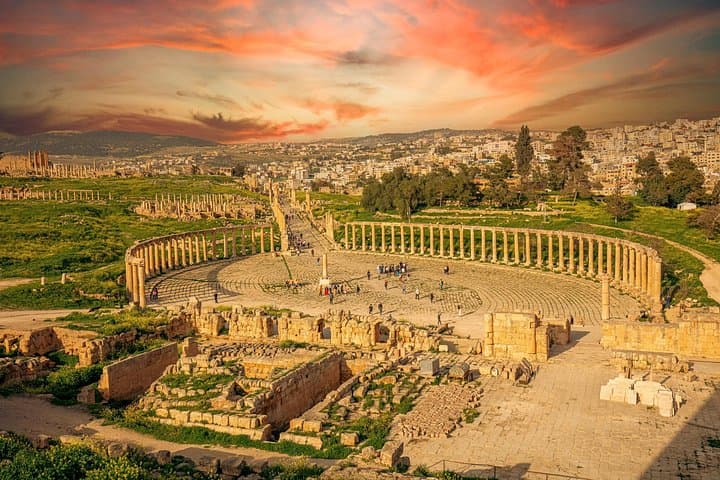
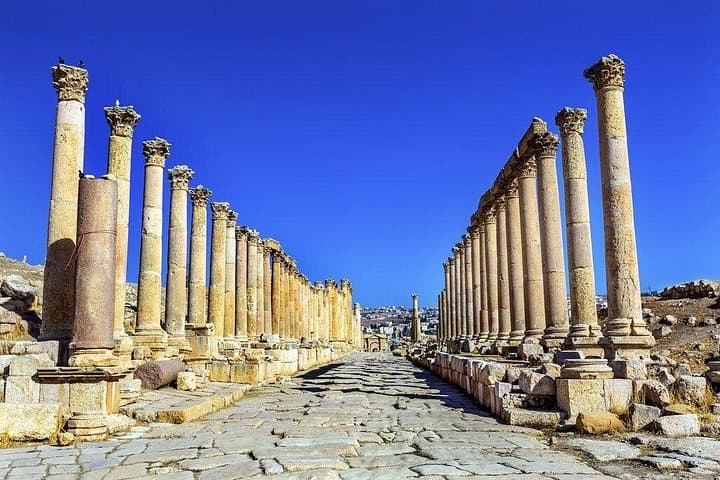
You step through Hadrian’s Arch and into a long line of stone columns—sunlight slices between ancient pillars and the colonnaded street seems to push you toward the heart of Gerasa. The air carries the dust of old roads and the faint scent of thyme from nearby hills as the South Theatre’s tiers rise like a carved memory of Roman pageantry.
You step through Hadrian’s Arch and into a long line of stone columns—sunlight slices between ancient pillars and the colonnaded street seems to push you toward the heart of Gerasa. The air carries the dust of old roads and the faint scent of thyme from nearby hills as the South Theatre’s tiers rise like a carved memory of Roman pageantry.
A short drive takes you into higher country where Ajloun Castle crowns a green ridge. The 12th-century fortress was built to control trade routes and now commands sweeping views over olive groves and terraced valleys; wind across the parapets dares you to imagine medieval scouts scanning the horizon.
Finish at Umm Qais (ancient Gadara), where black basalt blocks meet limestone ruins and a Roman theatre faces the Golan Heights and the Sea of Galilee. The sites trace layers of history—Roman urbanism, Byzantine churches, Ottoman houses—set on geology that shaped roads and agriculture for millennia.
Practical guidance: expect an 8–12 hour day with substantial walking on uneven stone and steps. Admissions are typically paid on site; official guides are optional but deepen context. Start early to avoid midday heat in summer and bring cash for small vendors. Wear sturdy shoes, sun protection, and a light layer for spring or winter breezes. Vehicle transfers are included in many tours, but verify pickup/drop-off in Amman.
These ruins reward those who move deliberately—pause on theatre steps, scan the valleys from Ajloun’s towers, and let the landscape’s angles and textures tell the region’s long story.