THE ADVENTURE COLLECTIVE® · Independent discovery and booking for outdoor travel

Explore Lebanon’s dramatic underground river and a sinkhole waterfall in one full day. This private tour links Jeita Grotto’s caverns, the Harissa cable car panorama and the Baatara Gorge for a compact, geology-rich outing from Beirut.
Explore Lebanon’s dramatic underground river and a sinkhole waterfall in one full day. This private tour links Jeita Grotto’s caverns, the Harissa cable car panorama and the Baatara Gorge for a compact, geology-rich outing from Beirut.
You step out of the car and the air cools—limestone breathes around you as Jeita’s cavern mouth narrows. Inside the upper gallery, stalactites hang like slow-dripping chandeliers; farther in, a low electric boat carries you past a reflective underground river that seems to hide centuries of water-carved patience.
Verified experiences and guided adventures in the surrounding area.
Operated by Explore Lebanon Tours · Jeita, Keserwan
You step out of the car and the air cools—limestone breathes around you as Jeita’s cavern mouth narrows. Inside the upper gallery, stalactites hang like slow-dripping chandeliers; farther in, a low electric boat carries you past a reflective underground river that seems to hide centuries of water-carved patience.
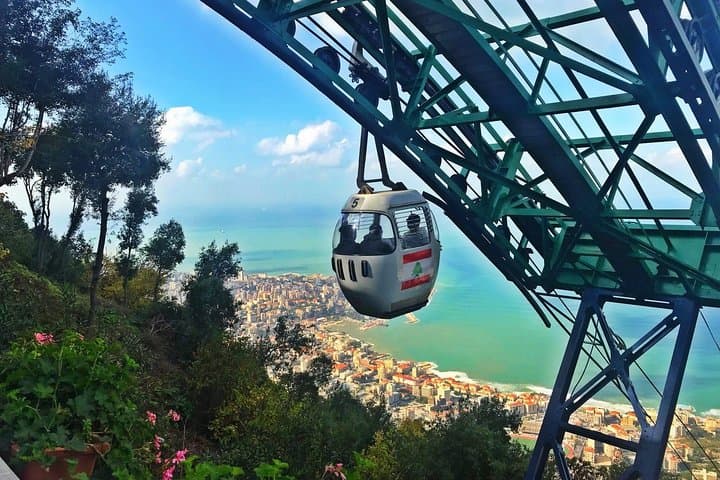
The route then slides toward Jounieh Bay, where a fifteen-minute cable car climbs the face of the mountain and opens onto the Shrine of Our Lady of Lebanon. The bay spreads below like a living map of coastal towns; pilgrims and day-trippers mix with the breeze that tugs at the rosaries and scarves.
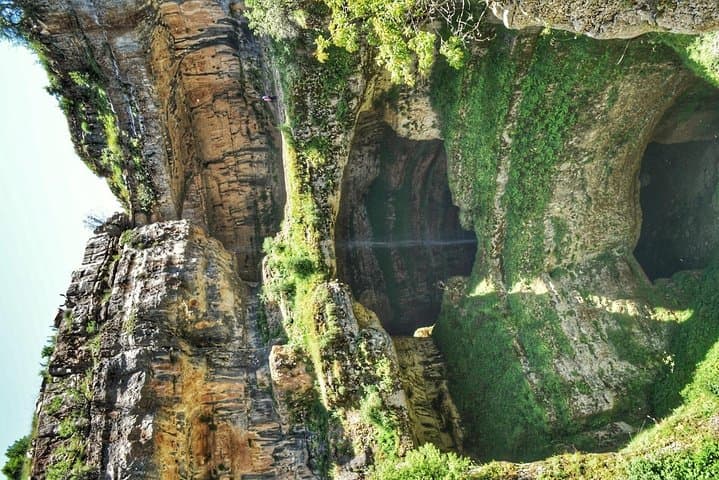
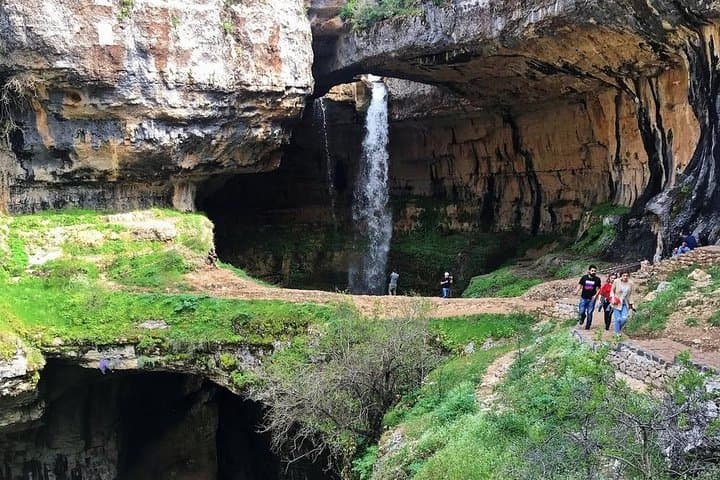
Geology writes the loudest lines here: Jeita’s karst system formed as acidic rainwater dissolved limestone over millennia, while Baatara Gorge (the Pothole) is a dramatic sinkhole carved through Jurassic limestone, its three natural bridges stepping down to catch a waterfall that vanishes into the earth.
Culturally, the day threads religious pilgrimage, Ottoman-era roads and modern Lebanese seaside life. Expect short walks, boat transfer inside the lower grotto, and viewpoints that reward a brief climb.
Practical guidance: bring sturdy shoes for wet cave floors and stairways, a light jacket for the grotto and wind at Harissa, cash for private-entry fees, and a charged camera with a fast shutter for waterfalls and panoramic bay shots. Hydrate early, allow time for traffic when returning to Beirut, and avoid touching cave formations—those fragile surfaces took millennia to grow.
easy.
7–10 hours.
Suitable for most fitness levels; involves short walks, stairs and a brief boat ride; ability to climb steps recommended.
No; the tour price excludes the on-site entrance fees for Jeita Grotto, the Harissa cable car and Baatara Gorge—bring cash for those payments.
The tour involves stairs and a short low-boat ride inside Jeita; it’s generally suitable for children but may be challenging for visitors with limited mobility—notify the operator in advance.
Typical stops are about 60–90 minutes each at Jeita (upper and lower), Harissa viewpoint via cable car, and Baatara Gorge, with travel time between sites included in the full-day schedule.
Wear closed shoes and a light layer—the grotto remains cool and floors can be damp; avoid bright flash photography on guided boat passages if requested by staff.
The coastal ascent to Harissa has been a pilgrimage site since the late 19th century; Jeita and the region’s caves are part of a long karst landscape shaped since the Jurassic period.
Karst formations and cave ecosystems are fragile—follow marked paths, avoid touching speleothems, and pack out any waste to protect these non-renewable features.
Explore Lebanon Tours operates guided outdoor trips and adventures with an emphasis on safety, stewardship, and memorable experiences.
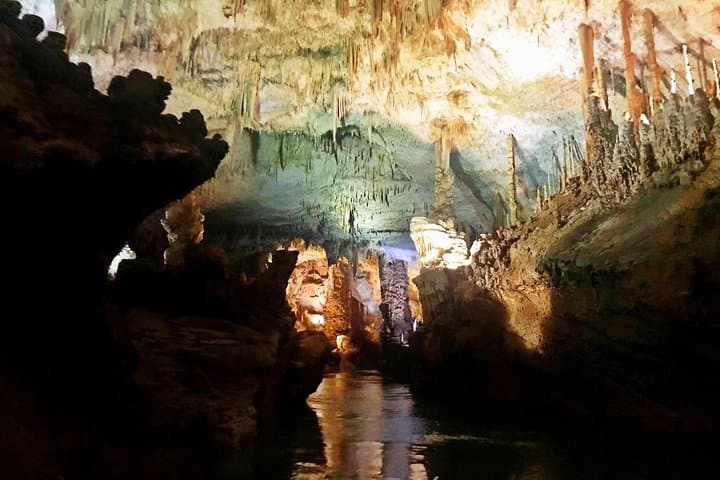
You step out of the car and the air cools—limestone breathes around you as Jeita’s cavern mouth narrows. Inside the upper gallery, stalactites hang like slow-dripping chandeliers; farther in, a low electric boat carries you past a reflective underground river that seems to hide centuries of water-carved patience.
You step out of the car and the air cools—limestone breathes around you as Jeita’s cavern mouth narrows. Inside the upper gallery, stalactites hang like slow-dripping chandeliers; farther in, a low electric boat carries you past a reflective underground river that seems to hide centuries of water-carved patience.
The route then slides toward Jounieh Bay, where a fifteen-minute cable car climbs the face of the mountain and opens onto the Shrine of Our Lady of Lebanon. The bay spreads below like a living map of coastal towns; pilgrims and day-trippers mix with the breeze that tugs at the rosaries and scarves.
Geology writes the loudest lines here: Jeita’s karst system formed as acidic rainwater dissolved limestone over millennia, while Baatara Gorge (the Pothole) is a dramatic sinkhole carved through Jurassic limestone, its three natural bridges stepping down to catch a waterfall that vanishes into the earth.
Culturally, the day threads religious pilgrimage, Ottoman-era roads and modern Lebanese seaside life. Expect short walks, boat transfer inside the lower grotto, and viewpoints that reward a brief climb.
Practical guidance: bring sturdy shoes for wet cave floors and stairways, a light jacket for the grotto and wind at Harissa, cash for private-entry fees, and a charged camera with a fast shutter for waterfalls and panoramic bay shots. Hydrate early, allow time for traffic when returning to Beirut, and avoid touching cave formations—those fragile surfaces took millennia to grow.