THE ADVENTURE COLLECTIVE® · Independent discovery and booking for outdoor travel

A full-day jeep and trekking loop from Yerevan that combines off-road driving through the Geghama ridge with a 4–5 hour high-altitude hike to Azhdahak’s summit. Expect volcanic landscapes, crater lakes, and sweeping summit views.
A full-day jeep and trekking loop from Yerevan that combines off-road driving through the Geghama ridge with a 4–5 hour high-altitude hike to Azhdahak’s summit. Expect volcanic landscapes, crater lakes, and sweeping summit views.
A dust-roared jeep peels away from Yerevan and the Geghama ridge unfurls — a series of volcanic shoulders and grassy plateaus that rise and fall like old breaths. By mid-morning you’re off-road, the driver steering over pumice fields and low shrubs, then dropping you where the trail narrows and the real ascent begins. The climb to Azhdahak’s crater ridge is exposed, high-altitude walking across volcanic scree and short grassy ledges; from the summit the northern Armenian plains and distant Mt. Ararat dominate the horizon.
Verified experiences and guided adventures in the surrounding area.
Operated by Gardman Tour · Yerevan, Kotayk Province
A dust-roared jeep peels away from Yerevan and the Geghama ridge unfurls — a series of volcanic shoulders and grassy plateaus that rise and fall like old breaths. By mid-morning you’re off-road, the driver steering over pumice fields and low shrubs, then dropping you where the trail narrows and the real ascent begins. The climb to Azhdahak’s crater ridge is exposed, high-altitude walking across volcanic scree and short grassy ledges; from the summit the northern Armenian plains and distant Mt. Ararat dominate the horizon.
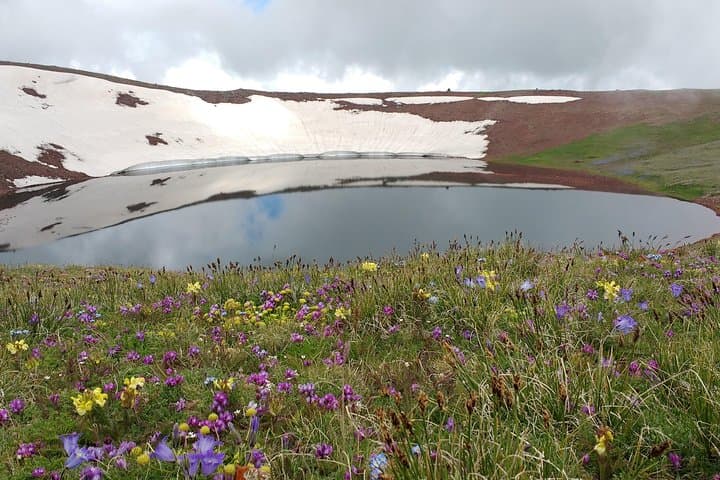
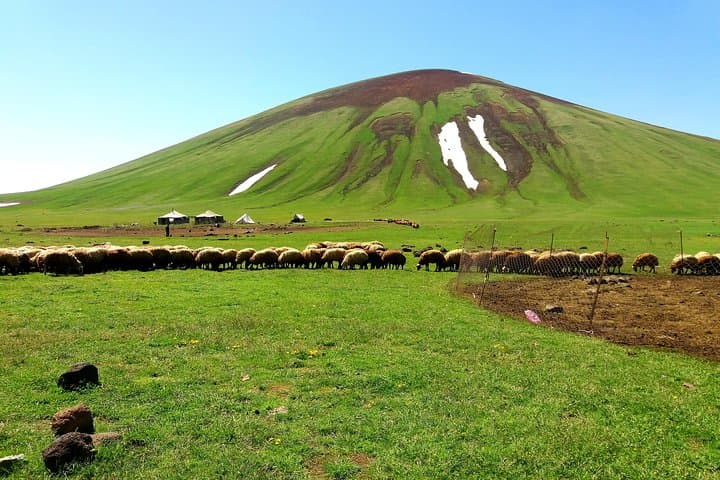
Geologically, Azhdahak is part of the Geghama volcanic massif, a chain of eroded cones and crater lakes formed by Pleistocene eruptions; walkers often pass small highland lakes that collect in old craters. Culturally the route threads close to villages with pastoral traditions — shepherd tents and simple summer camps remain part of the landscape, and Geghard and other medieval sites are an easy drive away if your day extends. Wildlife is sparse but present: raptors wheel above thermal columns; startled marmots may dart from rocks.
Practical guidance: expect 4–5 hours of hiking at altitude on uneven terrain, combined with several hours of jeep transfers — plan for a full-day outing. Bring high-traction boots, layered windproof clothing, at least 2–3 liters of water, strong sun protection, and snacks for steady energy. Time your visit for clear weather; summit visibility can change quickly. The day is equal parts off-road ride and mountain walk — prepare for both.
moderate.
8–12 hours.
Good aerobic fitness; able to sustain 4–5 hours of uphill hiking at high elevation and handle bumpy jeep rides.
The guided trek portion typically takes 4–5 hours of walking (round-trip), depending on pace and weather conditions.
No — the tour price is per vehicle that can carry one to four passengers; check booking details for capacity and cost.
Children under 8 are not recommended; those 8 and older must be accompanied by an adult due to the hike’s altitude and terrain.
No technical climbing experience is required, but moderate fitness and comfort with exposed, rocky trails at altitude are necessary.
Azhdahak is part of the Geghama volcanic chain formed during Pleistocene activity; the surrounding valleys have hosted pastoral communities for centuries.
High-altitude alpine vegetation is fragile — stay on established paths, pack out waste, and avoid disturbing grazing areas or wildlife.
Gardman Tour operates guided outdoor trips and adventures with an emphasis on safety, stewardship, and memorable experiences.
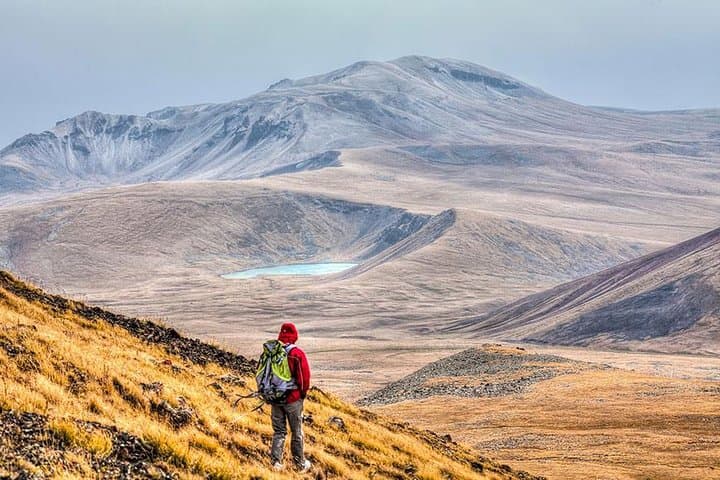
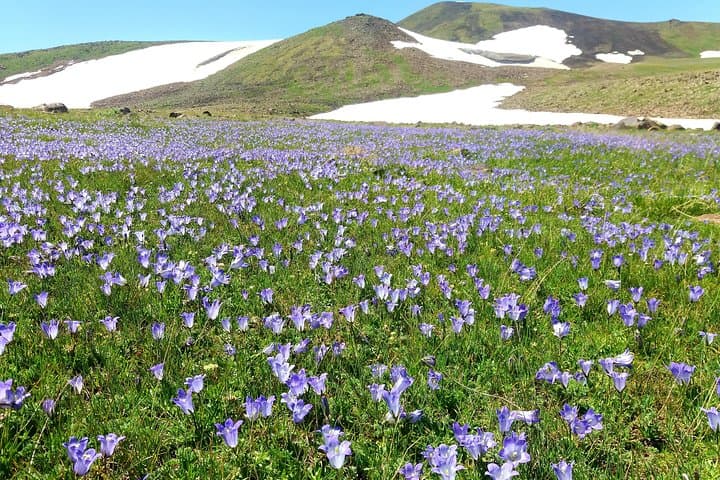
A dust-roared jeep peels away from Yerevan and the Geghama ridge unfurls — a series of volcanic shoulders and grassy plateaus that rise and fall like old breaths. By mid-morning you’re off-road, the driver steering over pumice fields and low shrubs, then dropping you where the trail narrows and the real ascent begins. The climb to Azhdahak’s crater ridge is exposed, high-altitude walking across volcanic scree and short grassy ledges; from the summit the northern Armenian plains and distant Mt. Ararat dominate the horizon.
A dust-roared jeep peels away from Yerevan and the Geghama ridge unfurls — a series of volcanic shoulders and grassy plateaus that rise and fall like old breaths. By mid-morning you’re off-road, the driver steering over pumice fields and low shrubs, then dropping you where the trail narrows and the real ascent begins. The climb to Azhdahak’s crater ridge is exposed, high-altitude walking across volcanic scree and short grassy ledges; from the summit the northern Armenian plains and distant Mt. Ararat dominate the horizon.
Geologically, Azhdahak is part of the Geghama volcanic massif, a chain of eroded cones and crater lakes formed by Pleistocene eruptions; walkers often pass small highland lakes that collect in old craters. Culturally the route threads close to villages with pastoral traditions — shepherd tents and simple summer camps remain part of the landscape, and Geghard and other medieval sites are an easy drive away if your day extends. Wildlife is sparse but present: raptors wheel above thermal columns; startled marmots may dart from rocks.
Practical guidance: expect 4–5 hours of hiking at altitude on uneven terrain, combined with several hours of jeep transfers — plan for a full-day outing. Bring high-traction boots, layered windproof clothing, at least 2–3 liters of water, strong sun protection, and snacks for steady energy. Time your visit for clear weather; summit visibility can change quickly. The day is equal parts off-road ride and mountain walk — prepare for both.