THE ADVENTURE COLLECTIVE® · Independent discovery and booking for outdoor travel

Escape Cairo for an 8‑hour jeep safari to Fayoum’s Wadi Hitan and Wadi El Rayan: see 40‑million‑year‑old whale fossils, a rare desert waterfall, and try sandboarding on Saharan dunes. This day trip pairs geology, birds, and hands‑on desert adventure.
Escape Cairo for an 8‑hour jeep safari to Fayoum’s Wadi Hitan and Wadi El Rayan: see 40‑million‑year‑old whale fossils, a rare desert waterfall, and try sandboarding on Saharan dunes. This day trip pairs geology, birds, and hands‑on desert adventure.
You kick off before dawn in Cairo, the city shrinking behind the windshield as the road unfurls toward Fayoum’s broad oasis. Sand shifts shape outside the window; dunes rise and fall like a slow, patient sea. By midmorning your jeep crunches across a salt-scarred plain and Wadi Hitan — the Valley of the Whales — opens with fossilized skeletons jutting from ancient limestone.
Verified experiences and guided adventures in the surrounding area.
Operated by Travel all Egypt · Fayoum, Fayoum Governorate
You kick off before dawn in Cairo, the city shrinking behind the windshield as the road unfurls toward Fayoum’s broad oasis. Sand shifts shape outside the window; dunes rise and fall like a slow, patient sea. By midmorning your jeep crunches across a salt-scarred plain and Wadi Hitan — the Valley of the Whales — opens with fossilized skeletons jutting from ancient limestone.
Wadi Hitan preserves 40‑million‑year‑old whale ancestors that lived when the Mediterranean stretched inland; the museum there contextualizes bones and vertebrae found right in the rock. Geology here is blunt and readable: wind-polished ridges, fossil beds, and silt from an ancient seabed. Nearby Qarun (Birket Qarun) is a shallow lake fed by irrigation and life — its shores attract migratory birds that use the oasis as a rest stop.
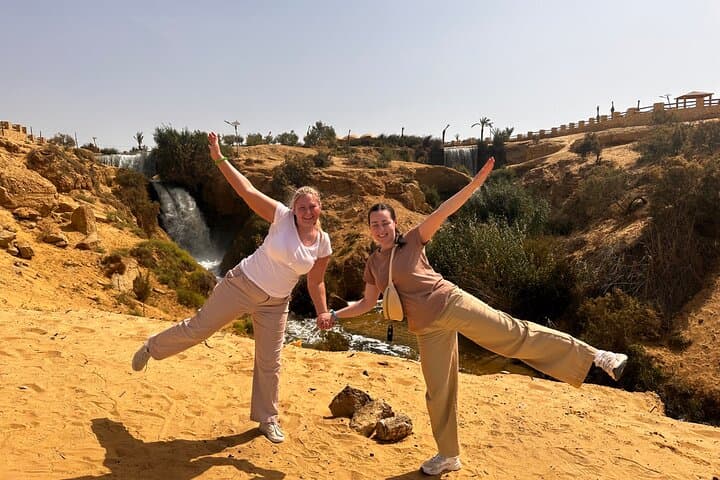
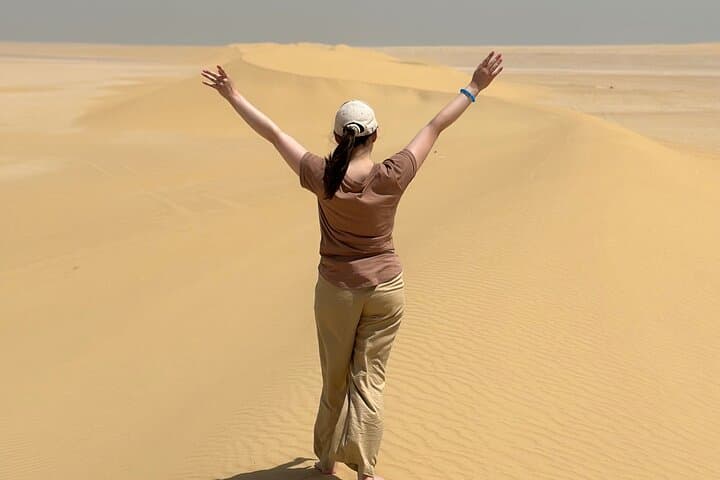
Later the jeep threads to Wadi El Rayan, where the unusual desert waterfall and paired lakes illustrate groundwater and human-made changes to the landscape. Climbing Medwara Mountain gives a vantage where the “magic lake” shifts color with the sun, and the sand dunes invite a short, physical play session: sandboarding runs that are more balance and boldness than technique.
Practical notes: this is a full 8‑hour day with mostly gentle walking, jeep transfers, and short dune climbs; sun protection, steady footwear, and plenty of water make the difference. Respect fenced areas around fossils — collecting is illegal — and pace your runs on soft sand to avoid strain. A guided day here balances hands‑on geology, birds and desert sculpted by wind — a concise way to read Egypt’s buried seas and live dunes in a single day trip.
moderate.
8 hours.
Moderate — suitable for travelers comfortable with several short hikes, climbing sand dunes, and getting in/out of a 4x4.
The transfer is about 1.5–2 hours each way depending on traffic; the full tour is roughly 8 hours including travel time.
No — Wadi Hitan is a protected site (UNESCO); visitors should not remove or disturb fossils and must follow guides and signage.
No prior experience needed; guides provide equipment and basic instruction — expect short runs and to use balance over technique.
The waterfall is primarily fed by the managed lakes of Wadi El Rayan and is unusual in Egypt for appearing within a desert landscape.
Fayoum’s basin preserves marine sediments from when the Tethys and later Mediterranean waters covered the region; Wadi Hitan contains early archaeocete whale fossils that document whale evolution.
Both Wadi Hitan and Wadi El Rayan are managed protected areas — stick to trails, don’t collect fossils, and dispose of waste to minimize impact.
Travel all Egypt operates guided outdoor trips and adventures with an emphasis on safety, stewardship, and memorable experiences.


You kick off before dawn in Cairo, the city shrinking behind the windshield as the road unfurls toward Fayoum’s broad oasis. Sand shifts shape outside the window; dunes rise and fall like a slow, patient sea. By midmorning your jeep crunches across a salt-scarred plain and Wadi Hitan — the Valley of the Whales — opens with fossilized skeletons jutting from ancient limestone.
You kick off before dawn in Cairo, the city shrinking behind the windshield as the road unfurls toward Fayoum’s broad oasis. Sand shifts shape outside the window; dunes rise and fall like a slow, patient sea. By midmorning your jeep crunches across a salt-scarred plain and Wadi Hitan — the Valley of the Whales — opens with fossilized skeletons jutting from ancient limestone.
Wadi Hitan preserves 40‑million‑year‑old whale ancestors that lived when the Mediterranean stretched inland; the museum there contextualizes bones and vertebrae found right in the rock. Geology here is blunt and readable: wind-polished ridges, fossil beds, and silt from an ancient seabed. Nearby Qarun (Birket Qarun) is a shallow lake fed by irrigation and life — its shores attract migratory birds that use the oasis as a rest stop.
Later the jeep threads to Wadi El Rayan, where the unusual desert waterfall and paired lakes illustrate groundwater and human-made changes to the landscape. Climbing Medwara Mountain gives a vantage where the “magic lake” shifts color with the sun, and the sand dunes invite a short, physical play session: sandboarding runs that are more balance and boldness than technique.
Practical notes: this is a full 8‑hour day with mostly gentle walking, jeep transfers, and short dune climbs; sun protection, steady footwear, and plenty of water make the difference. Respect fenced areas around fossils — collecting is illegal — and pace your runs on soft sand to avoid strain. A guided day here balances hands‑on geology, birds and desert sculpted by wind — a concise way to read Egypt’s buried seas and live dunes in a single day trip.