THE ADVENTURE COLLECTIVE® · Independent discovery and booking for outdoor travel

Drive into the world’s largest urban forest on a four-hour jeep loop through Tijuca’s waterfalls, viewpoints and historic chapels. This guided tour combines short walks and photo stops with interpretation of the forest’s recovery and ecology.
Drive into the world’s largest urban forest on a four-hour jeep loop through Tijuca’s waterfalls, viewpoints and historic chapels. This guided tour combines short walks and photo stops with interpretation of the forest’s recovery and ecology.
You jolt over a rocky service road and the city noise thins to birdsong — the jeep threads a green canyon and drops you at a viewpoint where rainforest slopes push toward the Atlantic. The air smells of wet leaf litter and distant sea salt; a waterfall murmurs below, daring you to step closer for a better look.
Verified experiences and guided adventures in the surrounding area.
Operated by Rio 40 Graus Turismo · Rio de Janeiro, Rio de Janeiro
You jolt over a rocky service road and the city noise thins to birdsong — the jeep threads a green canyon and drops you at a viewpoint where rainforest slopes push toward the Atlantic. The air smells of wet leaf litter and distant sea salt; a waterfall murmurs below, daring you to step closer for a better look.
Tijuca is the world’s largest urban forest, largely replanted in the 19th century under Emperor D. Pedro II and later restoration efforts. Geologically, the park sits on ancient granite and gneiss ridgelines carved into steep escarpments that form dramatic lookouts like Vista Chinesa and paths to small cascades. Culturally, it’s threaded into carioca life — weekend hikers, informal samba gatherings, and religious shrines on cliffside chapels.
On this guided jeep loop you’ll visit viewpoints, a chapel, marked waterfalls and short walk sections; expect brief interpretive stops where guides explain flora, fauna and the park’s role in Rio’s water and climate balance. Many sites require short, uneven walks on rock and packed earth; the jeep handles the rough approach.
Practical side: tours run about four hours, require a minimum of four participants and do not pick up in Barra or Recreio neighborhoods. Bring sun protection, insect repellent, a light rain layer in summer, and charged cameras — cell signal is patchy in gullies. The park is managed for conservation; stick to trails, avoid feeding wildlife, and pack out rubbish. Whether you want quick nature immersion or photo vistas over Rio, the Tijuca jeep loop delivers an efficient, sensory-rich slice of Atlantic Forest without leaving the city.
easy.
4 hours.
Light — suitable for most people who can climb short uneven sections and tolerate bumpy jeep rides
The tour lasts approximately four hours and includes multiple short stops and brief walks to viewpoints and waterfalls.
No — this tour does not offer boarding in Barra da Tijuca or Recreio; confirm your pickup point when booking.
The jeep portion accommodates most ages, but short uneven walks may be challenging for those with mobility limitations; infants must sit on an adult’s lap.
The operator does not automatically cancel for bad weather but will cancel if the minimum of four participants is not met; cancel at least 24 hours prior for a full refund.
Much of Tijuca Forest was replanted in the 19th century after deforestation for coffee and grazing; restoration efforts created the urban greenbelt that supports Rio’s water supply.
The park is a protected national forest; visitors should stay on trails, avoid disturbing wildlife, and carry out all trash to reduce human impact.
Rio 40 Graus Turismo operates guided outdoor trips and adventures with an emphasis on safety, stewardship, and memorable experiences.

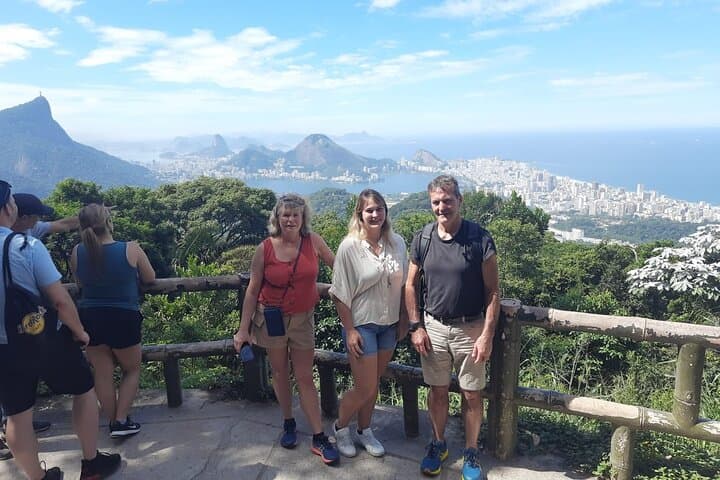


You jolt over a rocky service road and the city noise thins to birdsong — the jeep threads a green canyon and drops you at a viewpoint where rainforest slopes push toward the Atlantic. The air smells of wet leaf litter and distant sea salt; a waterfall murmurs below, daring you to step closer for a better look.
You jolt over a rocky service road and the city noise thins to birdsong — the jeep threads a green canyon and drops you at a viewpoint where rainforest slopes push toward the Atlantic. The air smells of wet leaf litter and distant sea salt; a waterfall murmurs below, daring you to step closer for a better look.
Tijuca is the world’s largest urban forest, largely replanted in the 19th century under Emperor D. Pedro II and later restoration efforts. Geologically, the park sits on ancient granite and gneiss ridgelines carved into steep escarpments that form dramatic lookouts like Vista Chinesa and paths to small cascades. Culturally, it’s threaded into carioca life — weekend hikers, informal samba gatherings, and religious shrines on cliffside chapels.
On this guided jeep loop you’ll visit viewpoints, a chapel, marked waterfalls and short walk sections; expect brief interpretive stops where guides explain flora, fauna and the park’s role in Rio’s water and climate balance. Many sites require short, uneven walks on rock and packed earth; the jeep handles the rough approach.
Practical side: tours run about four hours, require a minimum of four participants and do not pick up in Barra or Recreio neighborhoods. Bring sun protection, insect repellent, a light rain layer in summer, and charged cameras — cell signal is patchy in gullies. The park is managed for conservation; stick to trails, avoid feeding wildlife, and pack out rubbish. Whether you want quick nature immersion or photo vistas over Rio, the Tijuca jeep loop delivers an efficient, sensory-rich slice of Atlantic Forest without leaving the city.