THE ADVENTURE COLLECTIVE® · Independent discovery and booking for outdoor travel

Walk Al-Balad’s coral-stone lanes and lively souqs on a focused three-hour heritage tour that combines UNESCO architecture, coastal views on the Corniche, and optional cycling or running add-ons. Ideal for travelers who want a compact, tactile introduction to Jeddah’s past and present.
Walk Al-Balad’s coral-stone lanes and lively souqs on a focused three-hour heritage tour that combines UNESCO architecture, coastal views on the Corniche, and optional cycling or running add-ons. Ideal for travelers who want a compact, tactile introduction to Jeddah’s past and present.
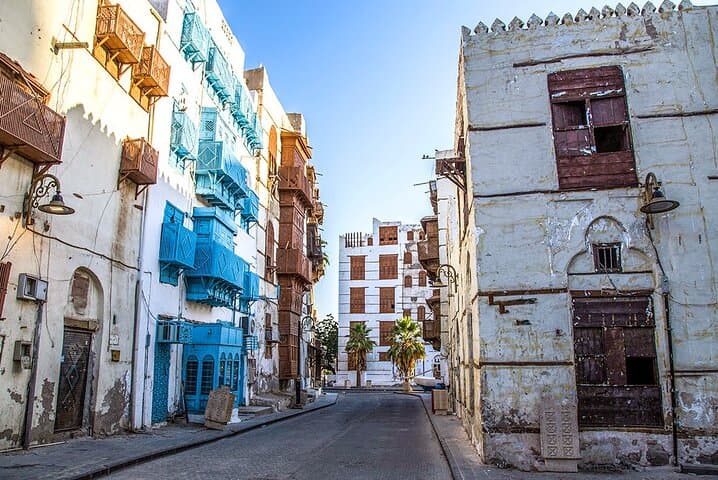
The morning sun slides off the Red Sea and onto the coral-stone facades of Al-Balad as your guide leads you down a lane where wooden lattice windows watch the street like quiet witnesses.
Verified experiences and guided adventures in the surrounding area.
Operated by Hesham · Jeddah, Makkah Province
The morning sun slides off the Red Sea and onto the coral-stone facades of Al-Balad as your guide leads you down a lane where wooden lattice windows watch the street like quiet witnesses.
You begin in the heart of old Jeddah, where narrow alleys open into small souqs and the air smells of spices and frying sambusas. Over three hours you move between UNESCO-listed architecture, ornate merchant houses such as Nasif House, and bustling market stalls that still trade gold, textiles and traditional dress.
Geology and history are visible in the very walls: coral stone and gypsum blocks—materials used for centuries—hold up Ottoman-era mashrabiyas and carved wooden doors. Culture here is civic and tactile: bargaining at the souq, coffee poured with ceremony, and the constant pull of the Corniche where the sea nudges the city’s edge.
Practical guidance: expect 2–3 km of walking on mostly paved or worn stone streets with minimal elevation gain but some uneven surfaces and occasional steps. The tour is wheelchair-accessible in many areas but can include tighter alleys best avoided by larger mobility devices. Options to cycle or run portions can be arranged—bring a rental bike or running shoes if you choose that add-on.
Timing matters: mornings or late afternoons are cooler and less crowded; midday brings heat and stronger sun. Carry water, sun protection and comfortable walking shoes; keep valuables secure in market crowds. This is a slow, sensory exploration of Jeddah’s living history rather than a rush through monuments.
easy.
3 hours.
Suitable for most fitness levels; expect 2–3 km of walking with frequent stops and some uneven surfaces
Many main streets and selected sites in Al-Balad are wheelchair accessible, and transportation options are listed as accessible, but some narrow alleys may be difficult for larger mobility devices.
Yes—the operator offers cycling or running options as a customized add-on; let them know your preference and fitness level at booking.
Pick-up and drop-off are available and will be confirmed at booking; alternatively meet at a central point in Al-Balad if preferred.
Cold water and a hot or cold drink are provided on request; full meals are not included but stops at local eateries can be arranged.
Al-Balad is a UNESCO-registered historic district built from coral stone and gypsum, showcasing Ottoman-period merchant houses and Jeddah’s centuries-long role as a Red Sea trading hub.
Conservation efforts focus on preserving coral-stone buildings and managing tourism impact; visitors are encouraged to avoid touching fragile facades and reduce single-use plastic.
Hesham operates guided outdoor trips and adventures with an emphasis on safety, stewardship, and memorable experiences.
The morning sun slides off the Red Sea and onto the coral-stone facades of Al-Balad as your guide leads you down a lane where wooden lattice windows watch the street like quiet witnesses.
The morning sun slides off the Red Sea and onto the coral-stone facades of Al-Balad as your guide leads you down a lane where wooden lattice windows watch the street like quiet witnesses.
You begin in the heart of old Jeddah, where narrow alleys open into small souqs and the air smells of spices and frying sambusas. Over three hours you move between UNESCO-listed architecture, ornate merchant houses such as Nasif House, and bustling market stalls that still trade gold, textiles and traditional dress.
Geology and history are visible in the very walls: coral stone and gypsum blocks—materials used for centuries—hold up Ottoman-era mashrabiyas and carved wooden doors. Culture here is civic and tactile: bargaining at the souq, coffee poured with ceremony, and the constant pull of the Corniche where the sea nudges the city’s edge.
Practical guidance: expect 2–3 km of walking on mostly paved or worn stone streets with minimal elevation gain but some uneven surfaces and occasional steps. The tour is wheelchair-accessible in many areas but can include tighter alleys best avoided by larger mobility devices. Options to cycle or run portions can be arranged—bring a rental bike or running shoes if you choose that add-on.
Timing matters: mornings or late afternoons are cooler and less crowded; midday brings heat and stronger sun. Carry water, sun protection and comfortable walking shoes; keep valuables secure in market crowds. This is a slow, sensory exploration of Jeddah’s living history rather than a rush through monuments.