THE ADVENTURE COLLECTIVE® · Independent discovery and booking for outdoor travel

Drive from Muscat into the Hajar to stand on the rim of Oman’s Jebel Shams — a 3,000m peak with dramatic views over Wadi Nakhr. This full-day private tour mixes short rim walks, village visits, and a picnic with opportunities to buy handwoven rugs.
Drive from Muscat into the Hajar to stand on the rim of Oman’s Jebel Shams — a 3,000m peak with dramatic views over Wadi Nakhr. This full-day private tour mixes short rim walks, village visits, and a picnic with opportunities to buy handwoven rugs.
You crest the rim before sunrise and the canyon opens like a mapped cut through the Hajar — sheer limestone walls dropping into Wadi Nakhr while a cool desert wind pushes at your jacket. The road from Muscat winds through Fanjah, past date plantations in Izki and the market bustle of Nizwa, then climbs into villages clinging to steep terraces.
Verified experiences and guided adventures in the surrounding area.
Operated by Oman Day Tours · Al Hamra, Ad Dakhiliyah
You crest the rim before sunrise and the canyon opens like a mapped cut through the Hajar — sheer limestone walls dropping into Wadi Nakhr while a cool desert wind pushes at your jacket. The road from Muscat winds through Fanjah, past date plantations in Izki and the market bustle of Nizwa, then climbs into villages clinging to steep terraces.
This is Jebel Shams — Oman’s highest peak at roughly 3,000 meters — and the so-called "Grand Canyon" formed by tectonic uplift and millennia of erosion. Human history here is visible in Nizwa’s fort and in the woven rugs sold in mountain villages; many communities historically farmed terraced fields and traded livestock along these routes. The geology is dominated by folded limestone and fossil-rich strata; views across Wadi Nakhr reveal layered cliffs and narrow gullies carved by episodic flash floods.
Expect short rim walks rather than long alpine climbs: flat but rocky viewpoints, loose scree on side trails, and bright sun above a cold morning air. A picnic near the rim is standard; vendors and local weavers in nearby villages offer handwoven rugs and simple refreshments.
Practical notes: start early from Muscat to avoid midday heat, carry sun protection and at least 2 liters of water, and wear sturdy shoes for uneven trail edges. Altitude is moderate but can affect breathing; guests with heart or back issues should consult a doctor. Respect local customs when visiting villages — modest dress and polite bargaining are appreciated. With clear weather the canyon rewards patient photographers and hikers with dramatic, wide-angle panoramas and a strong sense of place.
moderate.
7–9 hours.
Suitable for travelers in reasonable fitness able to do short walks and handle altitude-related exertion.
Expect roughly 2.5–3.5 hours each way depending on traffic and stops; the full tour is generally 7–9 hours.
Yes—this private, vehicle-based tour accommodates a range of ages, but those with heart or back conditions should avoid it; short walks are optional.
Yes—stops at mountain villages and Misfat often include time to visit local weavers selling rugs and textiles; be ready to haggle politely.
National park or access fees are typically included in the tour; bring your passport and any cruise details if joining from a ship.
Nizwa served historically as a regional capital and trading hub; mountain settlements here developed terraced agriculture and distinct weaving traditions.
The Hajar’s fragile wadis and terraced fields are sensitive to erosion and litter; stick to marked viewpoints, carry out trash, and avoid off-trail driving.
Oman Day Tours operates guided outdoor trips and adventures with an emphasis on safety, stewardship, and memorable experiences.


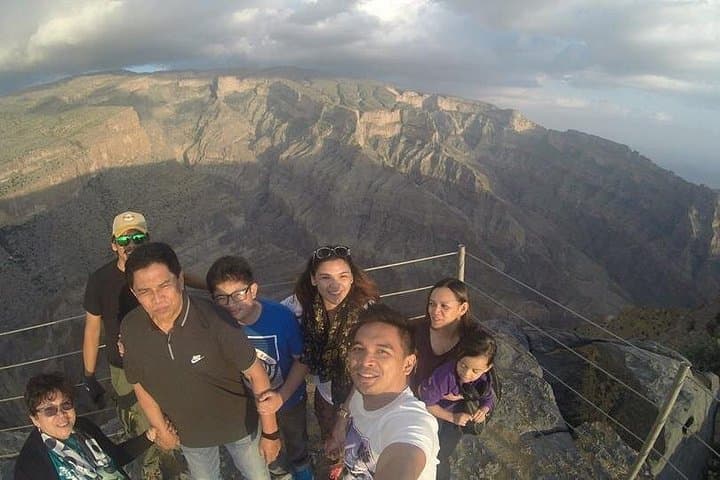

You crest the rim before sunrise and the canyon opens like a mapped cut through the Hajar — sheer limestone walls dropping into Wadi Nakhr while a cool desert wind pushes at your jacket. The road from Muscat winds through Fanjah, past date plantations in Izki and the market bustle of Nizwa, then climbs into villages clinging to steep terraces.
You crest the rim before sunrise and the canyon opens like a mapped cut through the Hajar — sheer limestone walls dropping into Wadi Nakhr while a cool desert wind pushes at your jacket. The road from Muscat winds through Fanjah, past date plantations in Izki and the market bustle of Nizwa, then climbs into villages clinging to steep terraces.
This is Jebel Shams — Oman’s highest peak at roughly 3,000 meters — and the so-called "Grand Canyon" formed by tectonic uplift and millennia of erosion. Human history here is visible in Nizwa’s fort and in the woven rugs sold in mountain villages; many communities historically farmed terraced fields and traded livestock along these routes. The geology is dominated by folded limestone and fossil-rich strata; views across Wadi Nakhr reveal layered cliffs and narrow gullies carved by episodic flash floods.
Expect short rim walks rather than long alpine climbs: flat but rocky viewpoints, loose scree on side trails, and bright sun above a cold morning air. A picnic near the rim is standard; vendors and local weavers in nearby villages offer handwoven rugs and simple refreshments.
Practical notes: start early from Muscat to avoid midday heat, carry sun protection and at least 2 liters of water, and wear sturdy shoes for uneven trail edges. Altitude is moderate but can affect breathing; guests with heart or back issues should consult a doctor. Respect local customs when visiting villages — modest dress and polite bargaining are appreciated. With clear weather the canyon rewards patient photographers and hikers with dramatic, wide-angle panoramas and a strong sense of place.