THE ADVENTURE COLLECTIVE® · Independent discovery and booking for outdoor travel

Fly 2.83 km at up to 160 km/h along Jebel Jais, the UAE’s highest peak. Choose a pulse-racing single run or a scenic 5 km Sky Tour across six ziplines—both come with harnessed safety and cliff-top viewpoints.
Fly 2.83 km at up to 160 km/h along Jebel Jais, the UAE’s highest peak. Choose a pulse-racing single run or a scenic 5 km Sky Tour across six ziplines—both come with harnessed safety and cliff-top viewpoints.
You step onto the launch platform with the mountain wind already testing your resolve—the Hajar Ridge ahead a raw cut of limestone and scree that seems to tilt the horizon. Below, ribboned roadways snake away toward Ras Al Khaimah; above, the sky opens. The rope hums; harnesses click. Then you’re off: the world’s longest zipline, a 2.83 km single run that pushes riders toward 160 km/h, pulls your breath forward and leaves the valley to chase the peaks.
Verified experiences and guided adventures in the surrounding area.
Operated by My Travelons Ltd · Ras Al Khaimah, Ras Al Khaimah
You step onto the launch platform with the mountain wind already testing your resolve—the Hajar Ridge ahead a raw cut of limestone and scree that seems to tilt the horizon. Below, ribboned roadways snake away toward Ras Al Khaimah; above, the sky opens. The rope hums; harnesses click. Then you’re off: the world’s longest zipline, a 2.83 km single run that pushes riders toward 160 km/h, pulls your breath forward and leaves the valley to chase the peaks.
Jebel Jais is the UAE’s highest point, the crown of the Hajar Mountains. Geologically, these peaks are ancient ocean floors thrust skyward by tectonic collision—hard limestone and jagged ridgelines that catch light differently through the day. The zipline itself is a recent addition to a broader push by Ras Al Khaimah to open alpine terrain for adventure tourism; modest picnic terraces and the Sky Bridge speak to a pragmatic design ethic—give access, then step back.
Culturally the region has long been a crossroads between mountain Bedouin life and coastal trade. On clear days you can see the line where people reworked stone for generations, and hear wind as if it carries fragments of that work: callused hands and simple, resilient routes.
There are two ways to fly here: the adrenaline-first Jais Flight, a single-shot, high-speed plunge certified by Guinness World Records; or the Sky Tour, a measured 5 km sequence of six ziplines that favors scenery and rhythm over velocity. Both open onto the same set of cliff-top viewpoints and the Jais Viewing Deck Park—ideal for slower family members.
Practically: book in advance and arrive early to allow time for the safety briefing and harness fitting—operators provide suits, helmets and trained guides. The whole experience takes about 1–2 hours including transfers, but the on-line airtime is short and intense. Weather matters: high winds or heavy rain can close operations; a 24-hour cancellation policy applies for a full refund.
Wear closed-toe shoes and layers—the mountain can be surprisingly cool even in winter mornings. Bring a small action camera or use the operator’s photos; if you’re photo-focused, choose the Sky Tour for multiple launches and lower speeds. Hydrate and sun-protect: the altitude cuts sun’s angle and the wind eats moisture.
This is an experience built on controlled risk—adrenaline engineered with meticulous safety systems. For travelers who want the sensation of flying across an Arabian ridge, Jebel Jais delivers a rare, elemental rush: the mountain seems to pull you along and the valley dares you to look down.
moderate.
1–2 hours.
No special fitness required, but you should be comfortable with heights and able to follow safety instructions.
Specific limits can vary by operator and by run type; infants must sit on an adult’s lap and guides will confirm weight/height during booking—check at reservation.
Plan on 1–2 hours including briefing and gearing; the actual zip runs are brief (seconds to minutes per line) depending on chosen option.
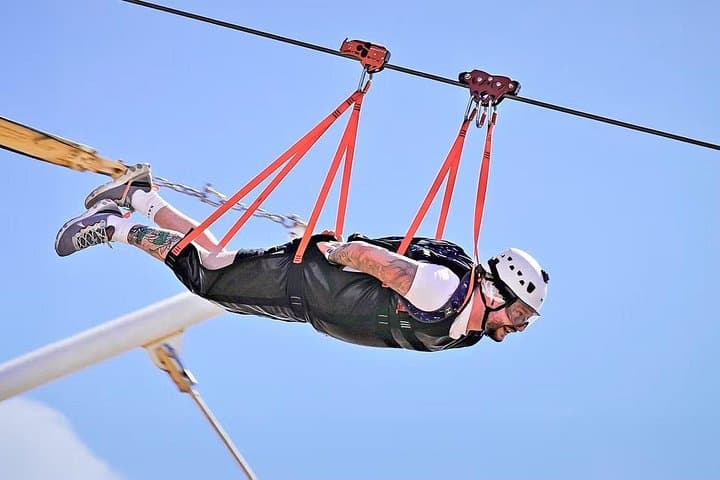
Helmet, harness and safety suits are supplied and guides run a mandatory briefing and safety checks before each launch.
Yes if mounted securely in an approved chest or helmet mount; loose devices are not allowed on the ride.
Operations may close for high winds or rain; the booking offers a full refund if canceled at least 24 hours prior—on-day changes follow operator policy.
Public transport options exist toward Ras Al Khaimah but most visitors drive or use private transfer services to reach the mountain access road and start point.
Jebel Jais is part of the Hajar Mountains, an uplifted chain whose tectonic history shaped UAE’s highest terrain and later attracted infrastructure projects to open it for tourism.
Respect designated trails, carry out all waste, and avoid off-trail driving—development is concentrated to limit wider habitat disturbance.
My Travelons Ltd operates guided outdoor trips and adventures with an emphasis on safety, stewardship, and memorable experiences.
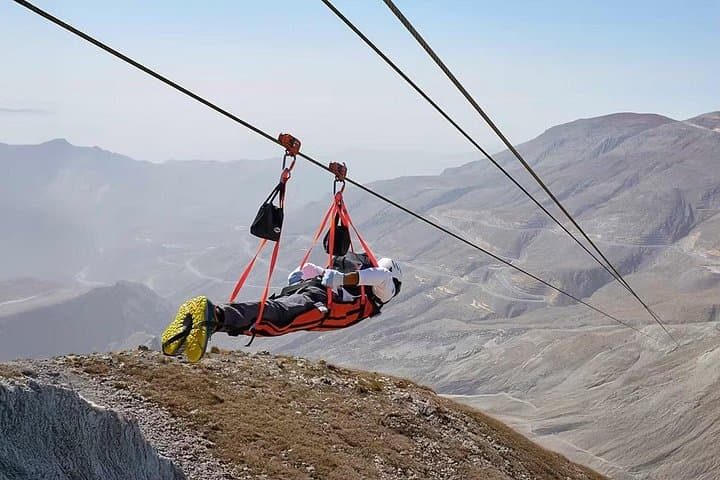

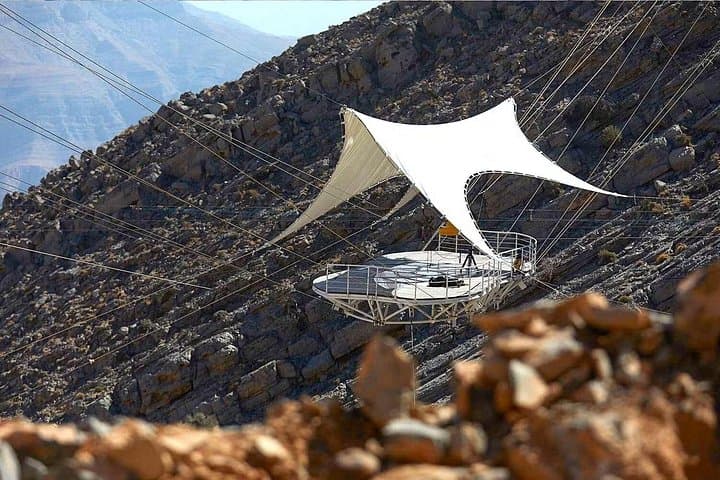
You step onto the launch platform with the mountain wind already testing your resolve—the Hajar Ridge ahead a raw cut of limestone and scree that seems to tilt the horizon. Below, ribboned roadways snake away toward Ras Al Khaimah; above, the sky opens. The rope hums; harnesses click. Then you’re off: the world’s longest zipline, a 2.83 km single run that pushes riders toward 160 km/h, pulls your breath forward and leaves the valley to chase the peaks.
You step onto the launch platform with the mountain wind already testing your resolve—the Hajar Ridge ahead a raw cut of limestone and scree that seems to tilt the horizon. Below, ribboned roadways snake away toward Ras Al Khaimah; above, the sky opens. The rope hums; harnesses click. Then you’re off: the world’s longest zipline, a 2.83 km single run that pushes riders toward 160 km/h, pulls your breath forward and leaves the valley to chase the peaks.
Jebel Jais is the UAE’s highest point, the crown of the Hajar Mountains. Geologically, these peaks are ancient ocean floors thrust skyward by tectonic collision—hard limestone and jagged ridgelines that catch light differently through the day. The zipline itself is a recent addition to a broader push by Ras Al Khaimah to open alpine terrain for adventure tourism; modest picnic terraces and the Sky Bridge speak to a pragmatic design ethic—give access, then step back.
Culturally the region has long been a crossroads between mountain Bedouin life and coastal trade. On clear days you can see the line where people reworked stone for generations, and hear wind as if it carries fragments of that work: callused hands and simple, resilient routes.
There are two ways to fly here: the adrenaline-first Jais Flight, a single-shot, high-speed plunge certified by Guinness World Records; or the Sky Tour, a measured 5 km sequence of six ziplines that favors scenery and rhythm over velocity. Both open onto the same set of cliff-top viewpoints and the Jais Viewing Deck Park—ideal for slower family members.
Practically: book in advance and arrive early to allow time for the safety briefing and harness fitting—operators provide suits, helmets and trained guides. The whole experience takes about 1–2 hours including transfers, but the on-line airtime is short and intense. Weather matters: high winds or heavy rain can close operations; a 24-hour cancellation policy applies for a full refund.
Wear closed-toe shoes and layers—the mountain can be surprisingly cool even in winter mornings. Bring a small action camera or use the operator’s photos; if you’re photo-focused, choose the Sky Tour for multiple launches and lower speeds. Hydrate and sun-protect: the altitude cuts sun’s angle and the wind eats moisture.
This is an experience built on controlled risk—adrenaline engineered with meticulous safety systems. For travelers who want the sensation of flying across an Arabian ridge, Jebel Jais delivers a rare, elemental rush: the mountain seems to pull you along and the valley dares you to look down.