THE ADVENTURE COLLECTIVE® · Independent discovery and booking for outdoor travel

A two-day guided hike to Jebal Al Hash combines a moderate ascent across sandstone peaks, a white-desert visit and an overnight Bedouin camp—perfect for travelers who want immersive desert time without technical climbing.
A two-day guided hike to Jebal Al Hash combines a moderate ascent across sandstone peaks, a white-desert visit and an overnight Bedouin camp—perfect for travelers who want immersive desert time without technical climbing.
Sand and stone shift underfoot as the jeep drops you at the edge of Um Snenah valley and the desert opens like a quiet arena. The first steps on the trail feel small against the scale of rust-red cliffs and plateaus that push the sky wider. Overhead, wind scours striations into sandstone; below, a narrow track threads between boulders and scattering bushes as your guide sets the pace.
Verified experiences and guided adventures in the surrounding area.
Operated by Wadi Rum Fire Camp · Wadi Rum Village, Aqaba Governorate
Sand and stone shift underfoot as the jeep drops you at the edge of Um Snenah valley and the desert opens like a quiet arena. The first steps on the trail feel small against the scale of rust-red cliffs and plateaus that push the sky wider. Overhead, wind scours striations into sandstone; below, a narrow track threads between boulders and scattering bushes as your guide sets the pace.
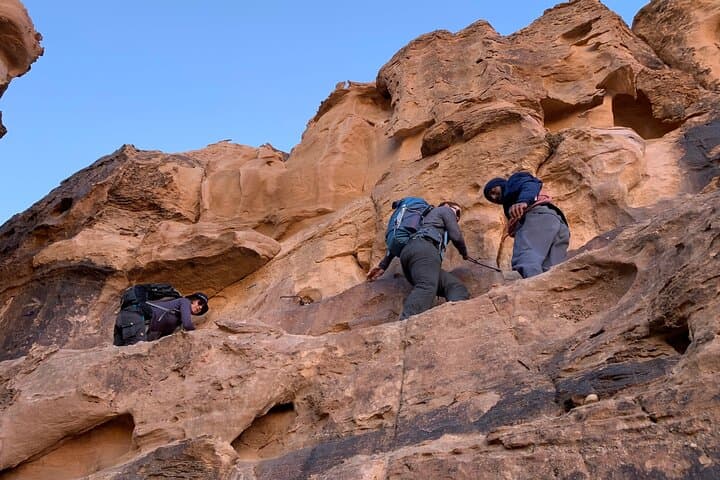
Jebal Al Hash is one of Wadi Rum’s highest massifs, rising to about 1,700 meters above sea level. The hike described by local guides is approachable—expect roughly 8–10 km total and an ascent of 400–600 vertical meters depending on your chosen line—yet the terrain varies: loose sand, compacted rock, short sections of scrambling and a few ledges that demand steady boots and a careful foothold.
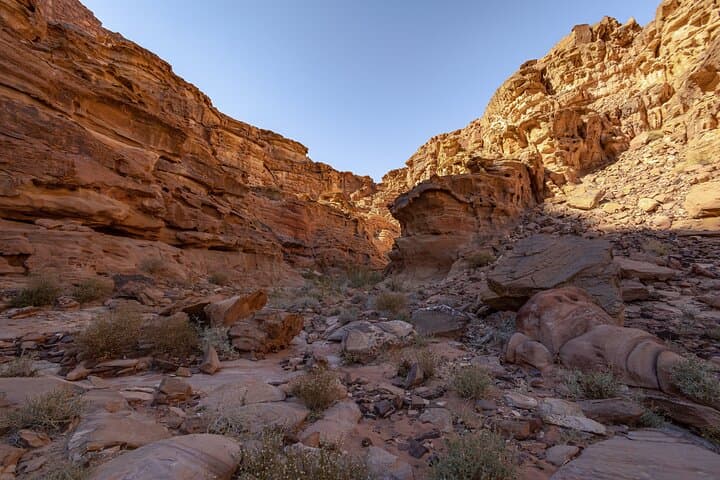
Geology here reads like a slow-motion epic. Layers of Cambrian sandstone tilt, peel and bulge, revealing ancient sea beds and wind-polished faces. The white desert on the return leg switches the palette to pale limestone flats and low mounds, where eroded domes look like sleeping whales. Culturally, the area remains shaped by Bedouin life: guides share coffee and stories at a fire, cook a communal lunch under a low awning, and explain how seasonal water holes and natural dams once guided grazing routes.
Practical guidance is blunt and useful. The tour runs as a small-group hike with a 40–60 minute jeep transfer from Wadi Rum village; the on-trail portion is about five hours. Bring at least 2–3 liters of water, sun protection, and layered clothing—the desert thermals swing from hot midday to sharp night cold. Purchase the Jordan Pass beforehand or budget a 5 JD entrance fee at the Wadi Rum Visitor Centre. If you’re camping, expect a private Bedouin tent with shared facilities and hearty meals prepared in traditional style.
Wildlife is sparse but alive: rock hyraxes and desert foxes are possible sightings, and raptors patrol thermals overhead. Photography rewards early and late light—sunrise and sunset cast the cliffs into saturated red and gold. Safety is straightforward: follow the guide, watch for unstable rock on descents, and respect cultural cues in camps. The payoff is immediate—a high-point vista that makes the effort feel like an exchange, and a night under stars where the desert seems intent on keeping its secrets close.
moderate.
1.5–2 days (about 5 hours hiking on day 1).
Suitable for hikers with basic endurance; expect steady uphill sections and some scrambling—regular walkers will be comfortable.
No technical climbing experience is required; the route includes short scrambling but the guide leads and assists where needed.
The jeep transfer to Jebal Al Hash takes approximately 40–60 minutes depending on road and group pickup arrangements.
Yes—show your Jordan Pass at the Visitor Centre or be prepared to pay a 5 JD entrance fee.
Vegetarian and vegan options are available if you specify dietary needs when booking.
You’ll stay in a private Bedouin tent with shared bathroom facilities and traditional meals included.
The tour is considered suitable for all fitness levels, but people with cardiovascular issues or pregnancy are advised not to participate; check with the guide for specific concerns.
Wadi Rum has been inhabited for millennia and served as a caravan route; its modern map is shaped by Bedouin tribes and glimpses of Lawrence of Arabia-era paths.
Wadi Rum is a UNESCO-protected area—stay on designated tracks, minimize campfire impact and pack out all trash to protect fragile desert soils.
Wadi Rum Fire Camp operates guided outdoor trips and adventures with an emphasis on safety, stewardship, and memorable experiences.
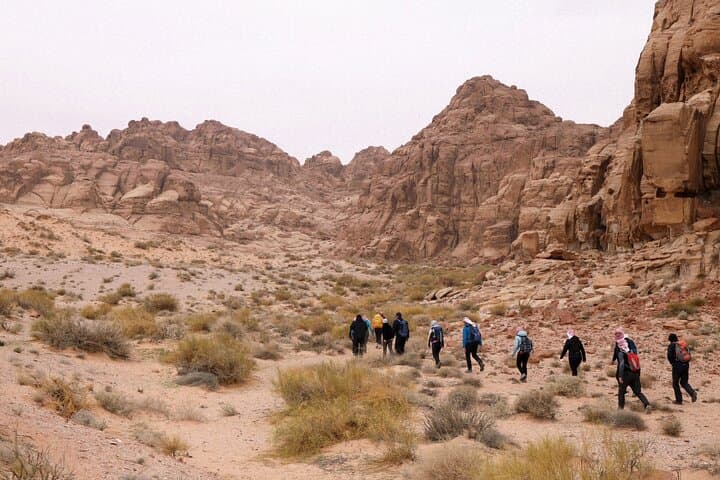
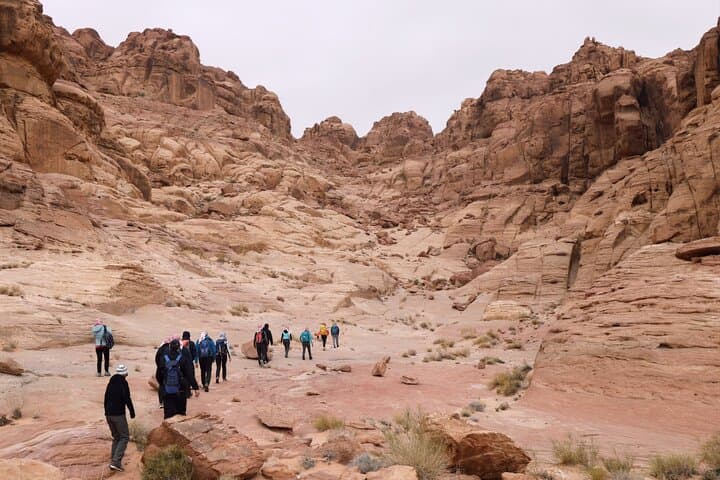
Sand and stone shift underfoot as the jeep drops you at the edge of Um Snenah valley and the desert opens like a quiet arena. The first steps on the trail feel small against the scale of rust-red cliffs and plateaus that push the sky wider. Overhead, wind scours striations into sandstone; below, a narrow track threads between boulders and scattering bushes as your guide sets the pace.
Sand and stone shift underfoot as the jeep drops you at the edge of Um Snenah valley and the desert opens like a quiet arena. The first steps on the trail feel small against the scale of rust-red cliffs and plateaus that push the sky wider. Overhead, wind scours striations into sandstone; below, a narrow track threads between boulders and scattering bushes as your guide sets the pace.
Jebal Al Hash is one of Wadi Rum’s highest massifs, rising to about 1,700 meters above sea level. The hike described by local guides is approachable—expect roughly 8–10 km total and an ascent of 400–600 vertical meters depending on your chosen line—yet the terrain varies: loose sand, compacted rock, short sections of scrambling and a few ledges that demand steady boots and a careful foothold.
Geology here reads like a slow-motion epic. Layers of Cambrian sandstone tilt, peel and bulge, revealing ancient sea beds and wind-polished faces. The white desert on the return leg switches the palette to pale limestone flats and low mounds, where eroded domes look like sleeping whales. Culturally, the area remains shaped by Bedouin life: guides share coffee and stories at a fire, cook a communal lunch under a low awning, and explain how seasonal water holes and natural dams once guided grazing routes.
Practical guidance is blunt and useful. The tour runs as a small-group hike with a 40–60 minute jeep transfer from Wadi Rum village; the on-trail portion is about five hours. Bring at least 2–3 liters of water, sun protection, and layered clothing—the desert thermals swing from hot midday to sharp night cold. Purchase the Jordan Pass beforehand or budget a 5 JD entrance fee at the Wadi Rum Visitor Centre. If you’re camping, expect a private Bedouin tent with shared facilities and hearty meals prepared in traditional style.
Wildlife is sparse but alive: rock hyraxes and desert foxes are possible sightings, and raptors patrol thermals overhead. Photography rewards early and late light—sunrise and sunset cast the cliffs into saturated red and gold. Safety is straightforward: follow the guide, watch for unstable rock on descents, and respect cultural cues in camps. The payoff is immediate—a high-point vista that makes the effort feel like an exchange, and a night under stars where the desert seems intent on keeping its secrets close.