THE ADVENTURE COLLECTIVE® · Independent discovery and booking for outdoor travel

Join a small-club JDM drive from Akihabara through Rainbow Bridge to Daikoku PA and Tokyo Tower. Expect high-performance cars, late-night photo ops, and insider culture on a 3–4 hour urban cruise.
Join a small-club JDM drive from Akihabara through Rainbow Bridge to Daikoku PA and Tokyo Tower. Expect high-performance cars, late-night photo ops, and insider culture on a 3–4 hour urban cruise.
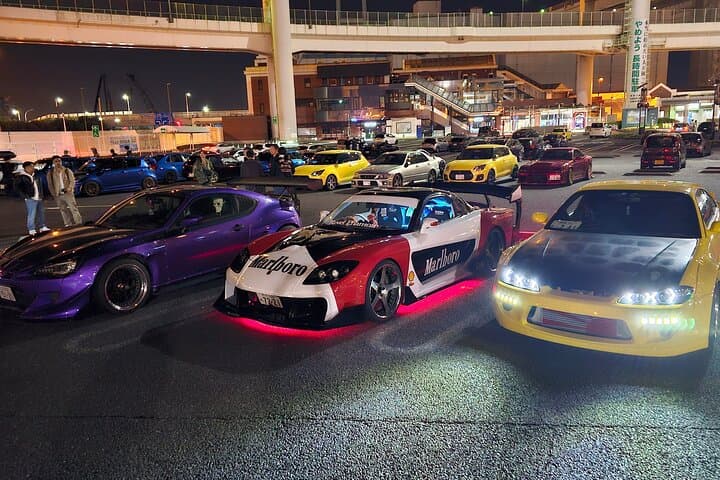
Night settles over Tokyo Bay and the neon of Akihabara fades behind you as a line of Honda Civic FK8s, Toyota 86s and Silvia S15s slip onto the expressway.
Verified experiences and guided adventures in the surrounding area.
Operated by Tokyo Top Travel · Tokyo, Tokyo
Night settles over Tokyo Bay and the neon of Akihabara fades behind you as a line of Honda Civic FK8s, Toyota 86s and Silvia S15s slip onto the expressway.
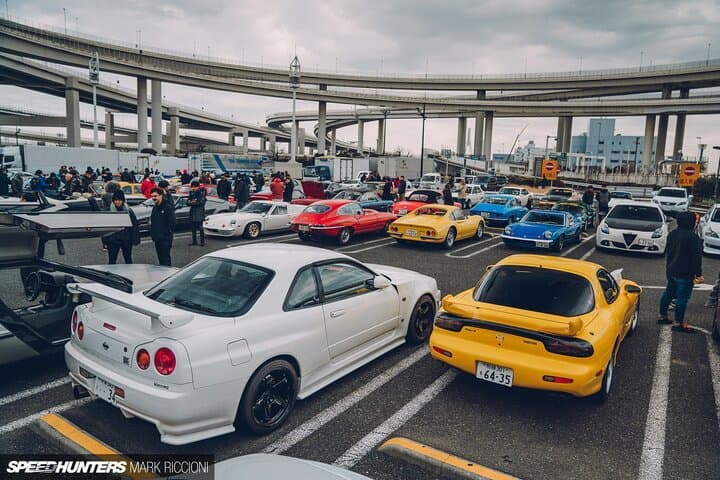
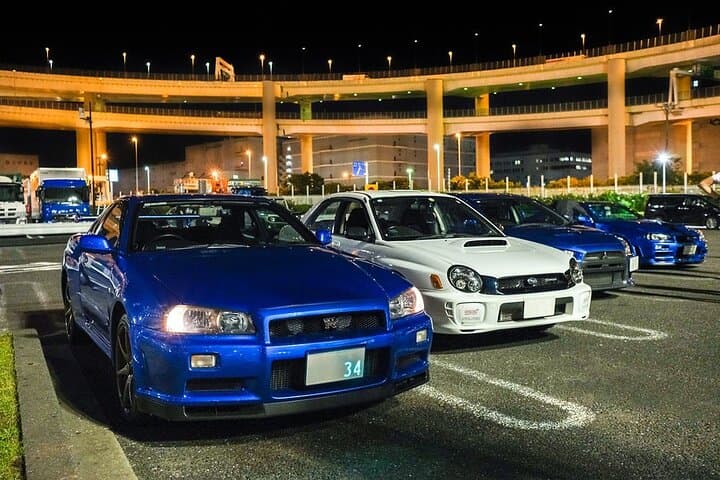
This three- to four-hour driving loop threads city lights, bay air and one of Japan’s most storied automotive gatherings: Daikoku Parking Area. Daikoku PA grew from an informal hangout into hallowed ground for JDM enthusiasts across Greater Tokyo, where modified chassis, aftermarket parts and club culture converge under floodlights. The route typically pauses at a large auto-parts shop favored by DIY tuners, then runs along Rainbow Bridge with the island of Odaiba sprawled below, finishing with a photo stop at Tokyo Tower — the 333-meter steel spire completed in 1958 that still dominates the skyline.
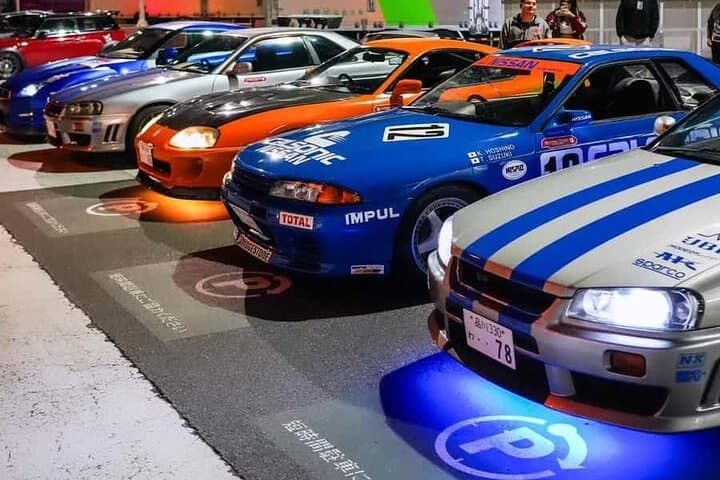
Culturally the experience spotlights Japan’s post-war tuning scene: factory models reborn through suspension, aero, and tire choices; guides fluent in English and Japanese add context about local clubs, the etiquette of meets, and where parts are sourced. Geologically there’s little drama — this is urban coastline — but the bay’s breeze and the bridge’s cable rhythm give the night a physical pulse.
Practically: trips run 180–240 minutes, operate with a max of six guests, and include bottled water, parking fees and air-conditioned vehicles. Bring ID, a camera with a low-light lens, ear protection for close passes, and a light jacket for the bay breeze. Respect owners’ cars, obey traffic laws, and expect crowds — this is a living automotive community, not a static display.
easy.
3–4 hours.
Minimal walking required; suitable for most fitness levels but expect standing and short walks for photos.
You’ll be a passenger in club cars arranged by the operator; no driving of the hosts’ vehicles is permitted.
Families are allowed, but infants must sit on laps and noise levels can be high—check booking rules before bringing young children.
Pick-up is arranged from central Tokyo (Akihabara area) with public transport options nearby; exact meeting point is provided after booking.
Photography is encouraged, but always ask permission before touching vehicles or equipment; respect owners’ requests for privacy.
Daikoku PA became a central meet spot as Japan’s car culture expanded in the 1980s–90s; Tokyo Tower, completed in 1958, symbolizes the city’s postwar modernization.
Keep meets low-impact by packing out trash, avoiding unnecessary idling, and following local noise ordinances to reduce disturbance.
Tokyo Top Travel operates guided outdoor trips and adventures with an emphasis on safety, stewardship, and memorable experiences.
Night settles over Tokyo Bay and the neon of Akihabara fades behind you as a line of Honda Civic FK8s, Toyota 86s and Silvia S15s slip onto the expressway.
Night settles over Tokyo Bay and the neon of Akihabara fades behind you as a line of Honda Civic FK8s, Toyota 86s and Silvia S15s slip onto the expressway.
This three- to four-hour driving loop threads city lights, bay air and one of Japan’s most storied automotive gatherings: Daikoku Parking Area. Daikoku PA grew from an informal hangout into hallowed ground for JDM enthusiasts across Greater Tokyo, where modified chassis, aftermarket parts and club culture converge under floodlights. The route typically pauses at a large auto-parts shop favored by DIY tuners, then runs along Rainbow Bridge with the island of Odaiba sprawled below, finishing with a photo stop at Tokyo Tower — the 333-meter steel spire completed in 1958 that still dominates the skyline.
Culturally the experience spotlights Japan’s post-war tuning scene: factory models reborn through suspension, aero, and tire choices; guides fluent in English and Japanese add context about local clubs, the etiquette of meets, and where parts are sourced. Geologically there’s little drama — this is urban coastline — but the bay’s breeze and the bridge’s cable rhythm give the night a physical pulse.
Practically: trips run 180–240 minutes, operate with a max of six guests, and include bottled water, parking fees and air-conditioned vehicles. Bring ID, a camera with a low-light lens, ear protection for close passes, and a light jacket for the bay breeze. Respect owners’ cars, obey traffic laws, and expect crowds — this is a living automotive community, not a static display.