THE ADVENTURE COLLECTIVE® · Independent discovery and booking for outdoor travel

Ride the Tárcoles River with veteran guides to watch American crocodiles, wading birds, and mangrove channels up close. This accessible 1.5–2 hour boat tour blends natural history, photography, and practical safety for first-time wildlife watchers.
Ride the Tárcoles River with veteran guides to watch American crocodiles, wading birds, and mangrove channels up close. This accessible 1.5–2 hour boat tour blends natural history, photography, and practical safety for first-time wildlife watchers.
The boat slips away from the mangrove-studded banks and the Tárcoles River widens, the water reflecting a sky that seems to watch as closely as the animals do. Guides position the vessel where currents fold into calm eddies and the river, almost deliberately, reveals its inhabitants: toes of rough skin, the slow blink of crocodiles sunning on mud flats, and a chorus of wading birds that punctuate the quiet.
Verified experiences and guided adventures in the surrounding area.
Operated by Jason Crocodile Tours · Tárcoles, Puntarenas
The boat slips away from the mangrove-studded banks and the Tárcoles River widens, the water reflecting a sky that seems to watch as closely as the animals do. Guides position the vessel where currents fold into calm eddies and the river, almost deliberately, reveals its inhabitants: toes of rough skin, the slow blink of crocodiles sunning on mud flats, and a chorus of wading birds that punctuate the quiet.
The Tárcoles has long been a crossroads for wildlife and humans. Once a transport route and local fishing ground, the river today draws photographers and scientists keen to study its large American crocodile population. The estuary sits at the interface of volcanic soils and Pacific tidal processes, which build the sandbars and mudbanks crocodiles favor. Local guides like Jason Vargas—locally known for his decades on the river—blend natural history with cultural context, explaining how fishing, tourism, and conservation intersect here.
Expect close but respectful viewing from stable, low-profile boats; guides keep the boat steady while explaining behavior, ecology, and safety. Visits emphasize minimal disturbance—no feeding, no loud engines—and encourage birdwatching and photography alongside crocodile observation.
Practical guidance: mornings often offer calmer water and more active sunning; bring a zoom lens or binoculars, sun protection, and insect repellent. Tours are short (about 1.5–2 hours) and accessible to most fitness levels, making this a high-value wildlife encounter for travelers staying in nearby Jaco or Puntarenas.
easy.
1.5–2 hours.
Light activity; suitable for most people who can board a small boat and sit for the tour
Guides maintain safe viewing distances from crocodiles; the risk is low if visitors follow instructions and remain seated on the boat.
Early mornings tend to be best for visibility and active crocodile sunning; late afternoon can also be good but mornings usually have calmer water.
Tours are marketed as accessible and suitable for most fitness levels; boats have low freeboard—ask the operator about specific mobility needs before booking.
Yes—expect herons, egrets, kingfishers, and often shorebirds; sightings vary by season and tide.
The Tárcoles estuary has long supported local fisheries and, more recently, conservation-aware tourism; guides often combine stories of river life with decades of on-water experience.
Tours emphasize non-intrusive viewing and support local awareness—visitors should avoid feeding wildlife and follow leave-no-trace practices to reduce disturbance.
Jason Crocodile Tours operates guided outdoor trips and adventures with an emphasis on safety, stewardship, and memorable experiences.

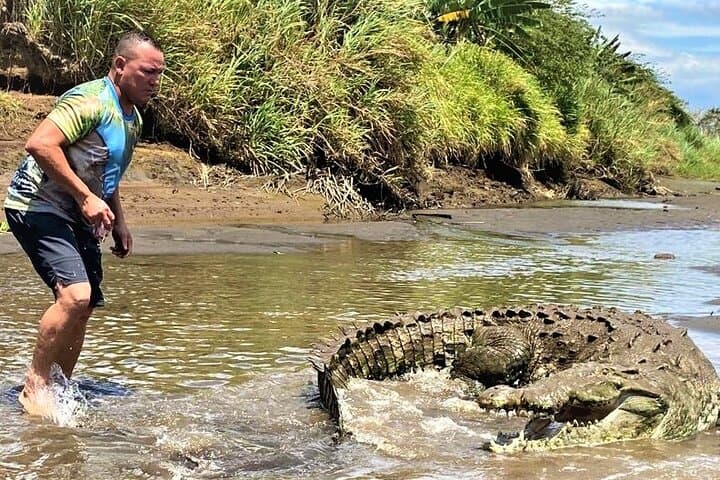


The boat slips away from the mangrove-studded banks and the Tárcoles River widens, the water reflecting a sky that seems to watch as closely as the animals do. Guides position the vessel where currents fold into calm eddies and the river, almost deliberately, reveals its inhabitants: toes of rough skin, the slow blink of crocodiles sunning on mud flats, and a chorus of wading birds that punctuate the quiet.
The boat slips away from the mangrove-studded banks and the Tárcoles River widens, the water reflecting a sky that seems to watch as closely as the animals do. Guides position the vessel where currents fold into calm eddies and the river, almost deliberately, reveals its inhabitants: toes of rough skin, the slow blink of crocodiles sunning on mud flats, and a chorus of wading birds that punctuate the quiet.
The Tárcoles has long been a crossroads for wildlife and humans. Once a transport route and local fishing ground, the river today draws photographers and scientists keen to study its large American crocodile population. The estuary sits at the interface of volcanic soils and Pacific tidal processes, which build the sandbars and mudbanks crocodiles favor. Local guides like Jason Vargas—locally known for his decades on the river—blend natural history with cultural context, explaining how fishing, tourism, and conservation intersect here.
Expect close but respectful viewing from stable, low-profile boats; guides keep the boat steady while explaining behavior, ecology, and safety. Visits emphasize minimal disturbance—no feeding, no loud engines—and encourage birdwatching and photography alongside crocodile observation.
Practical guidance: mornings often offer calmer water and more active sunning; bring a zoom lens or binoculars, sun protection, and insect repellent. Tours are short (about 1.5–2 hours) and accessible to most fitness levels, making this a high-value wildlife encounter for travelers staying in nearby Jaco or Puntarenas.