THE ADVENTURE COLLECTIVE® · Independent discovery and booking for outdoor travel

A compact overnight that pairs the UNESCO Wassu Stone Circles with a 2–3 hour River Gambia cruise and an island walk on Janjangbureh. Expect wildlife viewing, cultural markets and a hands-on introduction to central Gambia’s river life.
A compact overnight that pairs the UNESCO Wassu Stone Circles with a 2–3 hour River Gambia cruise and an island walk on Janjangbureh. Expect wildlife viewing, cultural markets and a hands-on introduction to central Gambia’s river life.
The river leans in close here—broad, slow water cutting a green channel through sandy banks as the small local launch slips past forested islands. On arrival at Janjangbureh (formerly Georgetown) the town’s colonial warehouses and a market still guided by river time give way to the hush of River Gambia National Park.
Verified experiences and guided adventures in the surrounding area.
Operated by VIP Exclusive Tours (Ebrima Camara) · Janjangbureh, Central River Region
The river leans in close here—broad, slow water cutting a green channel through sandy banks as the small local launch slips past forested islands. On arrival at Janjangbureh (formerly Georgetown) the town’s colonial warehouses and a market still guided by river time give way to the hush of River Gambia National Park.
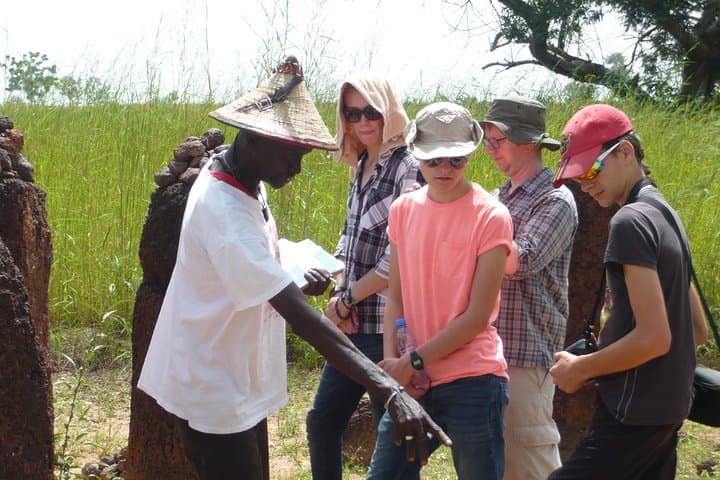
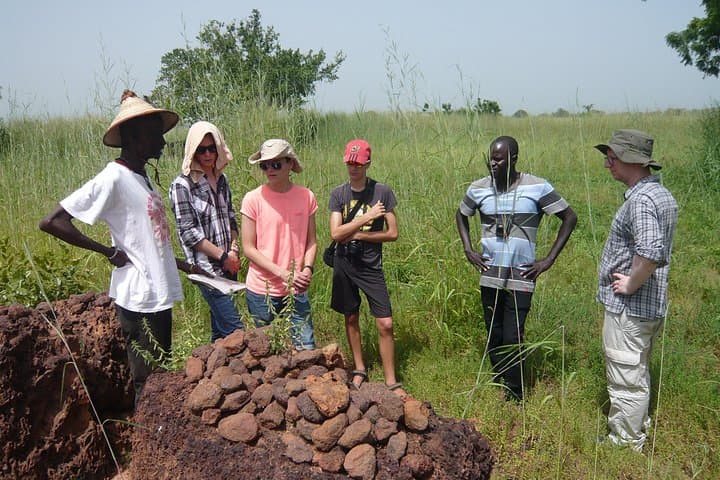
This two-day route links archaeology and wildlife. Start at the Wassu Stone Circles, a UNESCO site dated roughly 750–1000 AD thought to mark ceremonial and burial grounds for regional leaders. Geologically the plain is alluvium from the Gambia River, a flat, fertile corridor that feeds the park’s riverine forests and island clusters where chimpanzees are kept and hippos haul out.
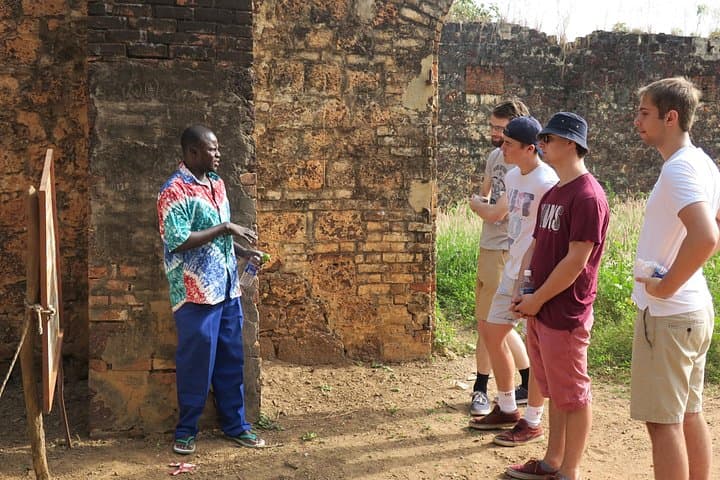
Culturally the trip moves through Senegambian rhythms: barter at a Lumo market, visits to family compounds, and colonial-era remnants on Janjangbureh Island. Guides explain local livelihoods—fishing, rice agriculture and small-scale trade—while pointing out management efforts around the national park and chimpanzee islands.
Practical notes: boat cruises typically run 2–3 hours each way through RGNP channels; expect slow, shaded stretches plus open river crossings with sun exposure. Walking on Janjangbureh is low-to-moderate effort but surfaces include packed dirt, sand and some uneven colonial-era masonry. Wildlife sightings—hippos, crocodiles, baboons and a wide variety of birds—are common; chimpanzees are observed from the water only. Bring insect repellent, a sun hat, and small cash for market purchases. Accommodations are basic but comfortable; itineraries are best scheduled in the dry season for easier river access.
moderate.
2 days.
Moderate fitness: able to handle 2–3 hours of easy to moderate walking plus boat transfers and short drives
Chimpanzees in River Gambia National Park are on islands; visitors sail around them for observation but do not land on those islands.
Accommodations like Baobolong Annex Camp provide en-suite rooms with fans and limited A/C hours—expect simple, locally run lodging.
Most local river craft are basic; long cruises will include stops at river towns but facilities are limited—plan accordingly.
Travelers should consult a travel clinic for up-to-date malaria prevention and routine vaccinations before visiting The Gambia.
The Wassu Stone Circles date to roughly 750–1000 AD and are part of a broader Senegambian megalithic tradition tied to ancestral and funerary practices.
River Gambia National Park focuses on protecting riparian forest islands and primate populations; visitors are encouraged to follow guide instructions to minimize disturbance.
VIP Exclusive Tours (Ebrima Camara) operates guided outdoor trips and adventures with an emphasis on safety, stewardship, and memorable experiences.
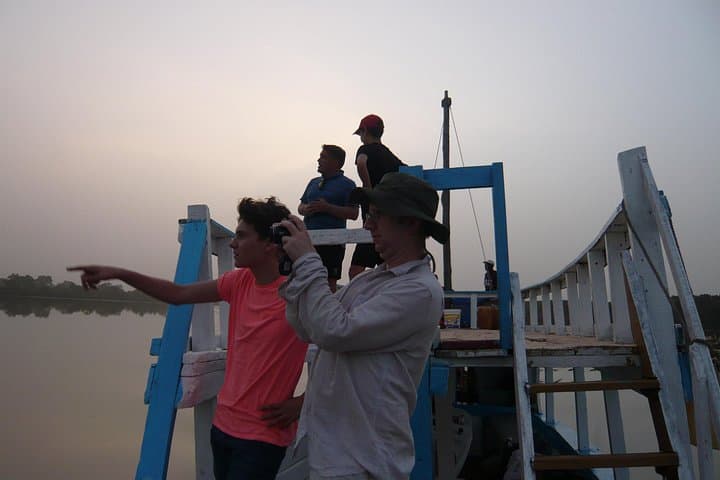
The river leans in close here—broad, slow water cutting a green channel through sandy banks as the small local launch slips past forested islands. On arrival at Janjangbureh (formerly Georgetown) the town’s colonial warehouses and a market still guided by river time give way to the hush of River Gambia National Park.
The river leans in close here—broad, slow water cutting a green channel through sandy banks as the small local launch slips past forested islands. On arrival at Janjangbureh (formerly Georgetown) the town’s colonial warehouses and a market still guided by river time give way to the hush of River Gambia National Park.
This two-day route links archaeology and wildlife. Start at the Wassu Stone Circles, a UNESCO site dated roughly 750–1000 AD thought to mark ceremonial and burial grounds for regional leaders. Geologically the plain is alluvium from the Gambia River, a flat, fertile corridor that feeds the park’s riverine forests and island clusters where chimpanzees are kept and hippos haul out.
Culturally the trip moves through Senegambian rhythms: barter at a Lumo market, visits to family compounds, and colonial-era remnants on Janjangbureh Island. Guides explain local livelihoods—fishing, rice agriculture and small-scale trade—while pointing out management efforts around the national park and chimpanzee islands.
Practical notes: boat cruises typically run 2–3 hours each way through RGNP channels; expect slow, shaded stretches plus open river crossings with sun exposure. Walking on Janjangbureh is low-to-moderate effort but surfaces include packed dirt, sand and some uneven colonial-era masonry. Wildlife sightings—hippos, crocodiles, baboons and a wide variety of birds—are common; chimpanzees are observed from the water only. Bring insect repellent, a sun hat, and small cash for market purchases. Accommodations are basic but comfortable; itineraries are best scheduled in the dry season for easier river access.