THE ADVENTURE COLLECTIVE® · Independent discovery and booking for outdoor travel

Explore two cornerstone sites of early American history with a 7-day unlimited pass. Visit Jamestown Settlement’s recreated fort and ships, then trace the Revolutionary story at Yorktown’s immersive museum and waterfront—both linked by the scenic Colonial Parkway.
Explore two cornerstone sites of early American history with a 7-day unlimited pass. Visit Jamestown Settlement’s recreated fort and ships, then trace the Revolutionary story at Yorktown’s immersive museum and waterfront—both linked by the scenic Colonial Parkway.
You step onto sun-warmed brick paths and the air carries salt from the York River, museum plazas opening like chapters along a 23-mile stretch of road. The Jamestown Settlement and the American Revolution Museum at Yorktown operate as complementary portals: one reconstructs the earliest English colonial experiment and encounters with Powhatan and African cultures, the other stages the Revolution’s final military and social convulsions.
Verified experiences and guided adventures in the surrounding area.
Operated by Jamestown Settlement and American Revolution Museum at Yorktown · Williamsburg, Virginia
You step onto sun-warmed brick paths and the air carries salt from the York River, museum plazas opening like chapters along a 23-mile stretch of road. The Jamestown Settlement and the American Revolution Museum at Yorktown operate as complementary portals: one reconstructs the earliest English colonial experiment and encounters with Powhatan and African cultures, the other stages the Revolution’s final military and social convulsions.
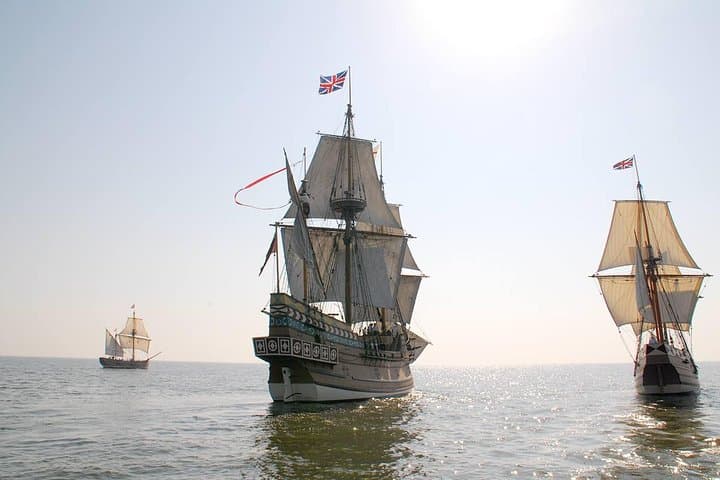
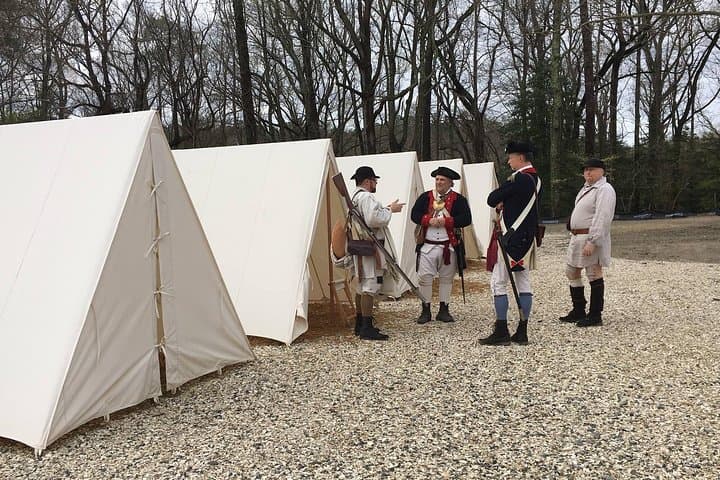
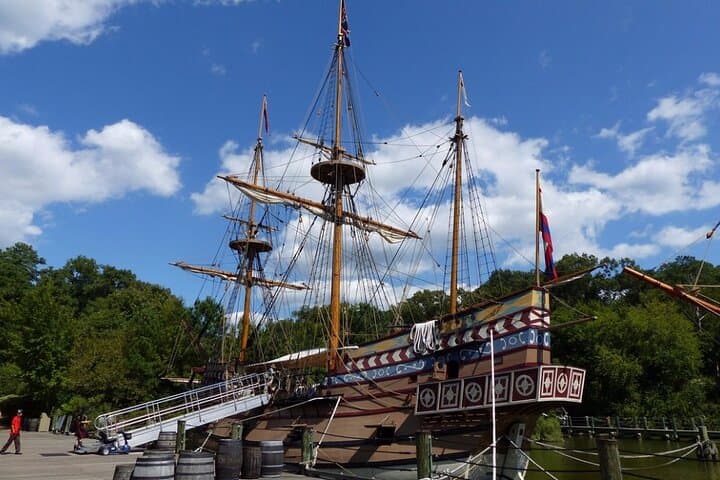
Jamestown (1607) set the stage for English permanence in North America; Yorktown (Siege of 1781) closed the major military chapter of the Revolution. The geology here is low-lying coastal plain—estuarine rivers that shaped settlement patterns and provided strategic waterways. Costumed interpreters, ship and fort reconstructions, interactive galleries, and a 4D theater at both museums move artifacts off pedestals into lived experience.
Local culture still reflects colonial and maritime legacies: seafood-focused cafes, small museums, and the Colonial Parkway’s unhurried viewpoints. Archaeological work at nearby Historic Jamestowne continues to revise the early narrative, and Yorktown’s waterfront retains working docks and riverfront restaurants.
Practical guidance: print or download the 7-day ticket and plan two half-days—one for Jamestown, one for Yorktown—so you can absorb exhibits and living-history demos without rushing. Both sites are wheelchair accessible, have cafés and free parking, and are open 9 a.m.–5 p.m. Pack comfortable walking shoes, sun protection, and a refillable bottle. Visit early in the day for cooler temperatures and smaller crowds; winter brings the quietest interpretation programs. Respect signage around reconstructions and archaeological areas to help preserve fragile sites.
easy.
3–8 hours per visit; pass valid 7 consecutive days.
Suitable for all fitness levels; involves moderate walking and some uneven surfaces
The pass provides unlimited admission to both sites for seven consecutive days starting on the first day of use.
Yes—both Jamestown Settlement and the American Revolution Museum at Yorktown offer free on-site parking.
Yes, but each site has extensive exhibits and living-history programs so two half-day visits are recommended for a fuller experience.
Both facilities are wheelchair accessible and provide services for visitors with mobility needs; check specific program accessibility in advance.
Jamestown (1607) was the first permanent English settlement in North America; Yorktown’s 1781 siege effectively ended major Revolutionary War fighting.
Both sites balance public access with artifact preservation—follow signage, avoid touching reconstructions, and use marked paths to protect archaeological deposits.
Jamestown Settlement and American Revolution Museum at Yorktown operates guided outdoor trips and adventures with an emphasis on safety, stewardship, and memorable experiences.
You step onto sun-warmed brick paths and the air carries salt from the York River, museum plazas opening like chapters along a 23-mile stretch of road. The Jamestown Settlement and the American Revolution Museum at Yorktown operate as complementary portals: one reconstructs the earliest English colonial experiment and encounters with Powhatan and African cultures, the other stages the Revolution’s final military and social convulsions.
You step onto sun-warmed brick paths and the air carries salt from the York River, museum plazas opening like chapters along a 23-mile stretch of road. The Jamestown Settlement and the American Revolution Museum at Yorktown operate as complementary portals: one reconstructs the earliest English colonial experiment and encounters with Powhatan and African cultures, the other stages the Revolution’s final military and social convulsions.
Jamestown (1607) set the stage for English permanence in North America; Yorktown (Siege of 1781) closed the major military chapter of the Revolution. The geology here is low-lying coastal plain—estuarine rivers that shaped settlement patterns and provided strategic waterways. Costumed interpreters, ship and fort reconstructions, interactive galleries, and a 4D theater at both museums move artifacts off pedestals into lived experience.
Local culture still reflects colonial and maritime legacies: seafood-focused cafes, small museums, and the Colonial Parkway’s unhurried viewpoints. Archaeological work at nearby Historic Jamestowne continues to revise the early narrative, and Yorktown’s waterfront retains working docks and riverfront restaurants.
Practical guidance: print or download the 7-day ticket and plan two half-days—one for Jamestown, one for Yorktown—so you can absorb exhibits and living-history demos without rushing. Both sites are wheelchair accessible, have cafés and free parking, and are open 9 a.m.–5 p.m. Pack comfortable walking shoes, sun protection, and a refillable bottle. Visit early in the day for cooler temperatures and smaller crowds; winter brings the quietest interpretation programs. Respect signage around reconstructions and archaeological areas to help preserve fragile sites.